Chicken Internal Temp: What Temp Is Chicken Done?


 288 Comments


Chicken should reach a safe minimum internal temperature of 165°F (74°C), measured with a food thermometer. Check chicken breasts, thighs, wings, and other parts in the thickest area, avoiding the bone. For a whole chicken, check the thickest part of the breast and the innermost parts of the thigh and wing.
No matter which type of chicken you prefer, whether its the whole chicken, chicken breasts, chicken wings, drumsticks, or any other chicken pieces, it is essential to cook the meat to the right internal temperature to ensure tender, juicy meat worthy of enjoying yourself or serving to your family and friends. Failing to ensure the chicken is cooked to the proper cooked chicken temp can result in under-cooked chicken, which can potentially make you sick.
To cook chicken properly, it requires knowing what temp to cook chicken as well as the proper internal cooking temperatures, which differ depending on the size and type of chicken as well as the chosen cooking method.
For Temperature of Medium Rare Steak – You can refer to this Ultimate Steak Temp Chart
Table of Contents
Chicken Temp Guide
Whether you're cooking a whole chicken, chicken breast, thighs, or wings, knowing the right internal temperature is key to safe, properly cooked chicken. The USDA Food Safety and Inspection Service (FSIS) recommends a minimum internal temperature of 165°F (74°C) for poultry. Use the chart below as a quick guide to checking different cuts with a food thermometer.
| Chicken Type | Safe Internal Temperature | Where to Check |
|---|---|---|
| Whole chicken | 165°F | Thickest part of breast; innermost thigh and wing |
| Chicken breast | 165°F | Thickest part |
| Chicken thighs | 165°F | Thickest part, away from bone |
| Chicken drumsticks | 165°F | Thickest part |
| Chicken wings | 165°F | Thickest meaty section |
| Ground chicken | 165°F | Center of the meat |
| Stuffed chicken | 165°F | Chicken + center of stuffing |

Roasted or Oven Baked Chicken
Begin by allowing the chicken to come to room temperature. For the simplest and most reliable food-safety check, cook chicken to 165°F as measured with a food thermometer. Use a meat thermometer to gauge when the internal temperature reaches the right temperature.
Tip: Chicken may continue to rise in temperature after you remove it from the heat, but the USDA's safe minimum internal temperature for poultry is 165°F. For a straightforward home-cooking guideline, use 165°F as your target.
| Weight | Oven Temperature | Cooking Time |
|---|---|---|
| Unstuffed – 4 to 6 Pound Whole Chicken | 350°F | 1-3/4 to 2 hours |
| Stuffed – 4 to 6 Pound Whole Chicken | 350°F | 2 to 2-1/4 hours |
| Unstuffed – 3 to 4 Pound Whole Chicken | 350°F | 1-1/2 to 1-3/4 hours |
| Stuffed – 3 to 4 Pound Whole Chicken | 350°F | 2 to 2-1/4 hours |
| Unstuffed – 2-1/2 to 3 Pound Whole Chicken | 350°F | 1-1/4 to 1-1/2 hours |
| Stuffed – 2-1/2 to 3 Pound Whole Chicken | 350°F | 1-1/2 to 1-3/4 hours |
| Unstuffed – 1 to 2 Pound Cornish Hen | 350°F | 1 to 1-1/4 hours |
| Stuffed – 1 to 2 Pound Cornish Hen | 350°F | 1-1/4 to 1-1/2 hours |

Chicken Cooked in an Oven Bag
Begin by preheating the oven to 350°F. Next, to the oven bag, add one tablespoon of flour and then shake the bag to coat the bag evenly. Lightly coat the chicken in oil or butter and then place it into the oven bag. Once the chicken reaches an internal temperature of about 160°F, remove it from the oven and allow it to sit and continue cooking until it reaches the desired temperature.
| Weight | Oven Bag Size | Cooking Time |
|---|---|---|
| 3-1/2 to 4 Pound Whole Chicken | 10" x 16" oven bag | 1 to 1-1/4 hours |
| 5 to 7 Pound Whole Chicken | large 14" x 20" oven bag | 1-1/4 to 1-1/2 hours |
| 4 to 7 Pound Cornish Hen | large 14" x 20" oven bag | 55 to 60 minutes |
| 1-1/2 to 3-1/2 Pound Cornish Hen | standard 10" x 16" oven bag | 40 to 45 minutes |
| 2 to 2-1/2 Pound Chicken Drumsticks | large 14" x 20" oven bag | 35 to 40 minutes |
| 1 to 1-1/2 Pound Chicken Drumsticks | standard 10" x 16" oven bag | 35 to 40 minutes |
| 1-1/2 to 2-1/4 Pound Chicken Thighs | large 14" x 20" oven bag | 35 to 40 minutes |
| 1/2 to 1-1/2 Pound Chicken Thighs | standard 10" x 16" oven bag | 35 to 40 minutes |

Grilled Chicken
When grilling using direct heat, bring the coals or the burner to medium heat before grilling. When Using indirect heat, bring the coals or the burner to high heat. Grill the meat until it reaches an internal temperature of about 160°F and then allows it to sit until it reaches the final desired internal temperature.
| Parts | Weight | Cooking Time |
|---|---|---|
| Wings/Wingettes/Drumettes | 2 to 3-Ounce | 8 to 12 minutes on each side |
| Leg or Thigh | 8 or 4-Ounce | 10 to 15 on each side |
| Drumstick | 8 to 16-Ounce | 10 to 15 minutes on each side |
| Drumstick | 4-Ounce | 8 to 12 minutes on each side |
| Whole Broiler | 3 to 4 Pound | Fryer, Using Indirect Heat |
| unstuffed whole broiler | – | 60 to 70 minutes |
| stuffed whole broiler | – | 1-1/4 to 1-3/4 hours |
| Whole Roaster | 5 to 7 Pound | Using Indirect Heat |
| unstuffed roaster | – | 18 to 25 minutes per pound |
| stuffed whole roaster | – | for 23 to 25 minutes per |
| Whole Cornish Hen | 18 to 24-Ounce | Indirect Heat |
| unstuffed cornish hen | – | 45 to 55 minutes |
| stuffed Cornish hen | – | 1 to 1-1/2 hours |
Chicken Breasts
Chicken breasts are lean, to begin with; therefore, they run the risk of being overcooked, which can make them dry and stringy, as opposed to undercooked. In the meantime, cutting into or poking the breast to check its doneness allows the juices to flow out, which can cause you to lose flavor. Therefore, you should use a meat thermometer to gauge when the meat is the correct internal temperature to help maintain flavor.

Oven Baked Chicken Breasts
Before you begin, preheat the oven to 375°F. The most reliable way to tell whether chicken breast is done is to check its internal temperature with a food thermometer. Insert the probe into the thickest part of the breast, avoiding the bone. The chicken is ready when it reaches 165°F (74°C). Don't rely on the color of the meat or juices alone. Cooked chicken can remain slightly pink even after it reaches a safe temperature. Remove the chicken breast from the pan, cover it with foil and then allow it to rest for about 5 minutes. The chicken is overdone when the clear juices boil cook away and turn into a crispy crust inside the pan bottom.
| Parts | Weight | Cooking Time |
|---|---|---|
| Chicken Breast, Boneless | 8-Ounce | 30 minutes |
| Chicken Breast, Bone-In | 8-Ounce | 40 minutes |

Chicken Breasts Cooked in an Oven Bag
Evenly coat the oven bag with about one tablespoon of flour and then lightly coat the chicken in oil or butter before placing into the bag and then baking.
| Parts | Weight | Oven Bag Size | Cooking Time |
|---|---|---|---|
| Chicken Breast, Boneless | 1 to 1-1/2 Pound | large 14" x 20" oven bag | 25 to 30 minutes |
| Chicken Breast, Boneless | 3/4 to 1 Pound | standard 10" x 16" oven bag | 25 to 30 minutes |
| Chicken Breast, Bone-In | 2 to 2-1/2 Pound | large 14" x 20" oven bag | 40 to 45 minutes |
| Chicken Breast, Bone-In | 1-1/2 to 2 Pound | standard 10" x 16" oven bag | 40 to 45 minutes |

Grilled Chicken Breasts
If grilling using indirect heat, bring the gas grill burner or coal to high heat. For direct heat, allow the gas burner or the coal to come to medium-high heat.
| Parts | Weight | Cooking Time |
|---|---|---|
| Half Breast, Bone-In | 6 to 8-Ounce | 10 to 15 minutes on each side |
| Half Breast, Boneless | 4-Ounce | 8 to 10 minutes on each side |
| Half Breast, Boneless | 6 to 8-Ounce | 10 to 15 minutes on each side |
How to Check Chicken Temperature
Knowing that chicken should reach 165°F is only useful if you can accurately check its internal temperature. There are several ways to tell if chicken is done, but a meat thermometer is the most reliable option. Here are a few common methods:
Check the Color and Juices
Cutting into chicken to check whether the meat is no longer pink or the juices run clear can give you a general indication that it may be cooked. However, color and juices are not reliable indicators of food safety. Chicken can remain slightly pink even after reaching a safe internal temperature, so a meat thermometer is a better way to confirm doneness.
Check the Cooking Time
Cooking charts can give you an estimate of how long chicken may take at a particular oven, grill, or air fryer temperature. However, cooking time can vary depending on the size and thickness of the chicken, whether it is bone-in or boneless, and the cooking method. Use cooking time as a guide, but check the internal temperature before serving.
Use a Meat Thermometer
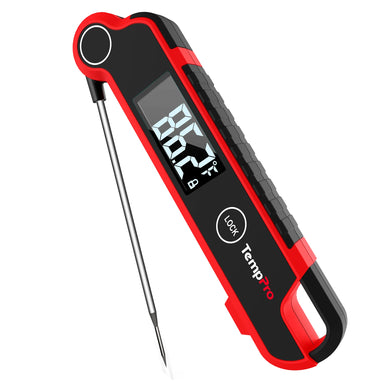
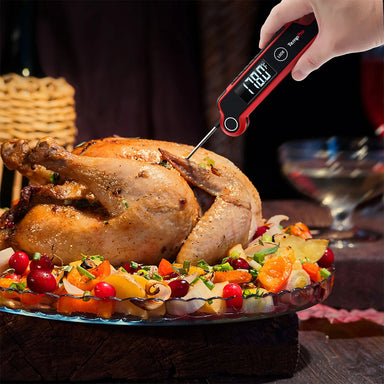
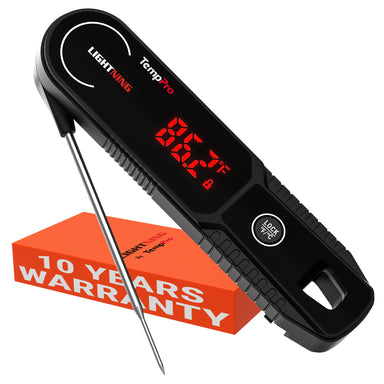
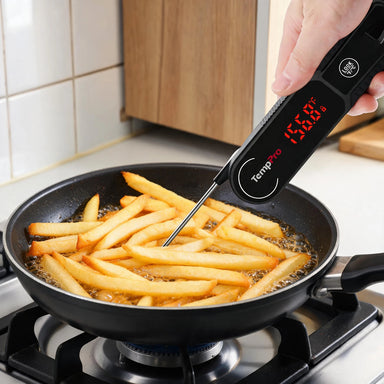
A meat thermometer gives you a direct reading of the chicken's internal temperature, so you don't have to guess based on cooking time or appearance. Insert the probe into the thickest part of the meat, avoiding bones, and check that it has reached at least 165°F (74°C). For a whole chicken, check the thickest part of the breast and the innermost part of the thigh and wing. For chicken breasts, thighs, drumsticks, and other individual pieces, insert the probe into the thickest section of the meat.
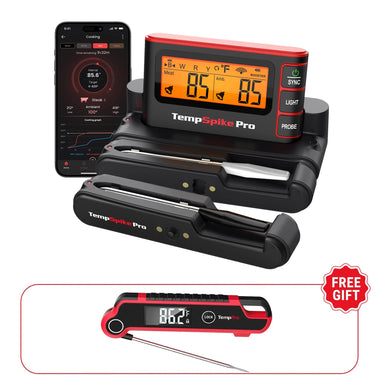
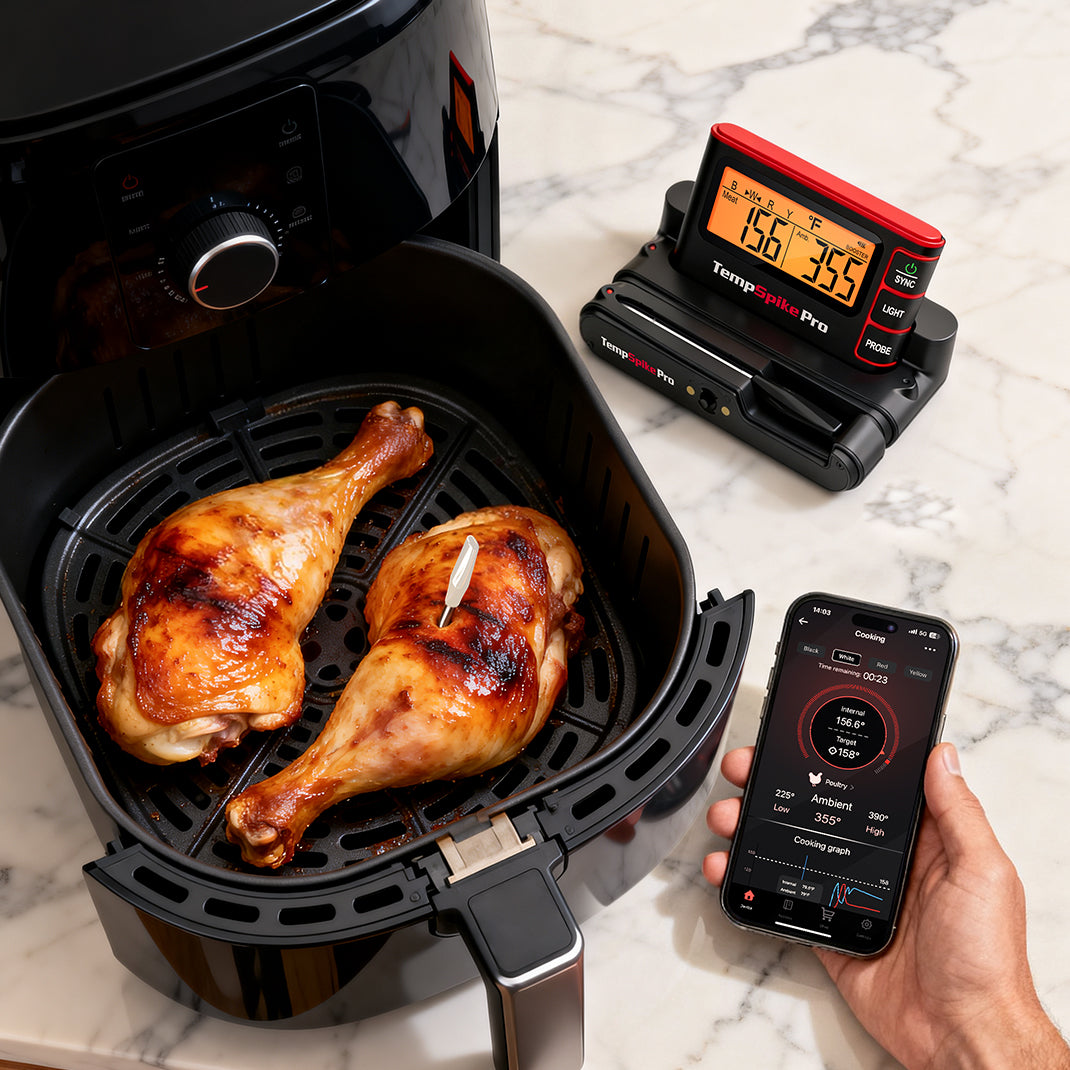
If you're grilling, roasting, or smoking chicken, a wireless meat thermometer can make temperature monitoring much easier. The TempPro TempSpike TP971 Smart Wireless Meat Thermometer lets you monitor the chicken's temperature without repeatedly opening the oven, grill, or smoker.
Key features include:
-
Truly wireless probe: No wires running from the chicken to an external transmitter, making it easier to place the probe and close the oven or grill.
-
Up to 600-ft Bluetooth range: Monitor the temperature from a distance while you prepare other food or relax nearby.
-
Real-time temperature monitoring: Keep track of the chicken's internal temperature without constantly checking it manually.
-
Temperature alerts: Set your target temperature and receive an alert when the chicken reaches the desired temperature.
-
Designed for different cooking methods: Use it for grilling, roasting, smoking, and other cooking situations where continuous temperature monitoring is helpful.
For chicken, insert the probe into the thickest part of the meat and set your target temperature to 165°F. The TP971 can then monitor the temperature while the chicken cooks, helping you know when it reaches a safe internal temperature without having to cut into the meat.

More Chicken Cooking Tips
When baking or roasting your chicken, allow it to be brown in a hot pan for about 3 to 4 minutes on all sides prior to baking it in the oven. This will help ensure uniform color on all sides of the meat and also shorten the overall cooking time by about 15 minutes.
When looking for a tasty, affordable cut of chicken, consider chicken thighs as they are delicious and more accessible and cheaper to prepare than chicken breasts.
Chicken breasts are almost always thicker on the ends, which means the thicker parts will need to be cooked longer. However, butterflying the chicken breast or just pounding the breast out will help even out the meat for even cooking.
A single whole chicken can provide at least five meals, so keep this in mind when selecting your chicken.
With this short chicken temp guide, cooking chicken, no matter the type, will never be intimidating again. Just be sure to set the heat setting to the right temperature, and use a handy meat thermometer, such as the TempSpipke TP971, to ensure the right internal cooking temperature, and you can’t go wrong.
FAQs about Chicken Cooking Temperature
What temperature should chicken be cooked to?
Chicken should reach a minimum internal temperature of 165°F (74°C) for food safety. Use a food thermometer to check the temperature in the thickest part of the meat, avoiding contact with the bone.
How do you know when chicken is done?
The most reliable way to tell if chicken is done is to check its internal temperature with a food thermometer. Chicken is safely cooked when it reaches 165°F (74°C). Do not rely on the color of the meat, juices, or cooking time alone to determine doneness.
Where should you put a meat thermometer in chicken?
Insert the thermometer probe into the thickest part of the meat, making sure the tip does not touch the bone. For a whole chicken, check the thickest part of the breast and the innermost part of the thigh and wing.

Can chicken still be pink when it reaches 165°F?
Yes. Chicken can sometimes remain slightly pink even after reaching 165°F. Color is not a reliable indicator of doneness because the appearance of cooked chicken can vary. Always use the internal temperature to determine whether chicken has reached a safe temperature.
Does chicken cooking time depend on the cooking method?
Yes. Cooking time can vary depending on whether you bake, grill, air fry, smoke, or roast the chicken, as well as its size, thickness, and whether it is bone-in or boneless. Instead of relying only on a set cooking time, use a food thermometer to confirm that the chicken reaches 165°F.
Is chicken breast cooked at the same temperature as chicken thighs?
For food safety, both chicken breast and chicken thighs should reach a minimum internal temperature of 165°F (74°C). However, they have different textures because chicken thighs contain more fat and connective tissue. Thighs are often cooked longer for tenderness, while chicken breast can become dry if overcooked.
Final Thoughts
Knowing the right chicken internal temperature is important, but having the right food thermometer makes it easier to check. Whether you're grilling chicken breasts, roasting a whole chicken, or smoking chicken thighs, a reliable meat thermometer helps you cook with greater confidence.
Looking for a deal? Check out the TempPro Clearance Sale for limited-time savings on select meat thermometers and cooking essentials.


Comments
You May Also Like
Recommended Products