13 Pork Chop Cooking Mistakes and How to Avoid Them


 288 Comments


The most common pork chop cooking mistakes are overcooking, relying on cooking time or color instead of internal temperature, measuring the temperature in the wrong spot, and skipping the resting period. For safe and juicy pork chops, cook whole-muscle pork to a minimum internal temperature of 145°F (62.8°C), then let it rest for at least 3 minutes. Insert a meat thermometer into the thickest part of the chop, avoiding the bone.
Pork chops are one of the easiest weeknight dinners to put on the table, but they can also be surprisingly easy to overcook. A pork chop that looks beautifully browned on the outside can still be undercooked in the center, while a chop that stays on the grill or in the skillet a little too long can quickly become dry and tough.
The good news is that most pork chop cooking problems are easy to prevent. The key is to pay attention to the thickness of the meat, control your cooking temperature, and most importantly, check the internal temperature instead of relying only on cooking time or appearance. Here are the most common pork chop cooking mistakes and practical ways to avoid them.
Table of Contents
13 Mistakes to Avoid when Cooking Pork Chops
Here are 13 pork chop cooking mistakes almost everyone makes, along with easy fixes to ensure your next meal is tender, flavorful, and safe.
Using the Wrong Cut or Cutting It Too Thin
When shopping at the grocery store, it’s tempting to grab thin, boneless pork chops because they look quick to cook. However, ultra-thin chops (under 1/2 inch thick) overcook in seconds. By the time you get a nice brown crust on the outside, the center is already overdone.
How to avoid it
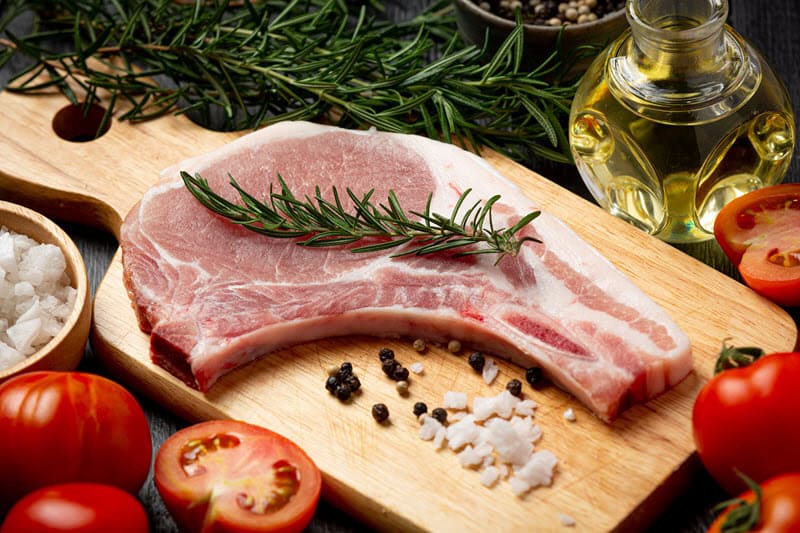
Look for thick-cut pork chops, ideally 1 to 1.5 inches thick. Bone-in chops (such as rib chops or T-bone pork chops) are even better because the bone slows down heat conduction along one side, protecting the meat from drying out too fast.

Cooking Cold Pork Chops Straight from the Fridge
This mistake is subtle but makes a huge difference. If you take a pork chop directly from the refrigerator and throw it into a hot pan, the exterior will cook much faster than the interior. By the time the center reaches a safe temperature, the outside is already dry and overcooked.
How to avoid it
Take your pork chops out of the fridge about 30 minutes before you plan to cook them. This allows the meat to come closer to room temperature, so it cooks more evenly. Use that time to pat the chops dry, season them generously, and preheat your pan or grill.
Skipping the Brine or Pre-Seasoning
Pork loin cuts, like rib chops or center-cut loin chops—are extremely lean. Unlike ribeye steaks or chicken thighs, they lack heavy intramuscular fat to keep the meat moist during high-heat cooking. If you season them right before they hit the heat, the flavor stays only on the surface, and the meat easily loses its natural juices.
How to avoid it
Use a simple wet or dry brine.
Dry Brine: Liberally sprinkle kosher salt over the chops at least 30 minutes (or up to overnight) before cooking. The salt draws out moisture, dissolves, and reabsorbs into the meat, breaking down muscle fibers for a more tender texture.
Wet Brine: Submerge the chops in a mixture of water, salt, sugar, and aromatics (like garlic and black pepper) for 1 to 2 hours. This pumps extra moisture into the muscle cells before cooking.
Cooking Pork Chops Based Only on Time
One of the most common mistakes is assuming that every pork chop needs the same amount of cooking time. A thin boneless pork chop and a thick bone-in pork chop can cook at very different speeds. The same is true when you switch from a skillet to a grill, oven, or air fryer. Even the starting temperature of the meat can affect how quickly it cooks. Following a recipe that says "cook for 5 minutes per side" may give you a general starting point, but time alone cannot tell you exactly what is happening inside the meat.
How to avoid it
Use cooking time as a guideline, not a guarantee. Start checking the internal temperature as the pork chop approaches the expected cooking time. A wireless meat thermometer makes this much easier because you can monitor the temperature while the pork chop cooks instead of repeatedly cutting into the meat.

Relying on Color Instead of Temperature
Many people grew up hearing that pork should be completely white before it is ready to eat. That idea can lead to unnecessary overcooking. Fresh pork can remain slightly pink even after reaching a safe internal temperature. USDA guidance specifically notes that color alone is not a reliable indicator of safety.
How to avoid it
Think of color as a visual cue for browning, not a safety test. Use a food thermometer to determine whether the pork chop has reached the recommended internal temperature. This simple change can help you avoid both undercooking and overcooking.
Overcooking the Pork Chop
Dry pork chops are often the result of one simple mistake: leaving them on the heat too long. Many home cooks are still uncomfortable with slightly pink pork and continue cooking until the center is completely white. However, color is not a reliable way to determine whether pork is safely cooked.
According to USDA guidance, pork chops are safe when they reach 145°F internally and rest for at least three minutes. A properly cooked pork chop can still have some pink color in the center.
How to avoid it
Use a meat thermometer instead of judging doneness by color. Once the thickest part reaches 145°F, remove the pork chop from the heat and let it rest for at least three minutes. This gives you a much better chance of serving pork that is both safe and juicy.
Undercooking the Pork Chop
The opposite problem can happen when the outside of the pork chop browns much faster than the center cooks. This is particularly common when cooking thick pork chops over high heat. The surface may look finished while the center is still below the recommended safe temperature.
How to avoid it
Check the internal temperature in the thickest part of the chop. For a bone-in pork chop, avoid touching the bone with the thermometer probe because the bone can interfere with an accurate reading. If the chop is relatively thin, insert the probe from the side so the sensing area reaches the center of the meat. This is one reason a wireless food thermometer is more dependable than simply looking at the outside of the pork chop.
Measuring the Temperature in the Wrong Place
Even when you use a food thermometer, you can get a misleading reading if you place the probe incorrectly. For example, inserting the probe too close to the surface can give you a higher temperature than the center. Touching the bone can also affect the measurement.
How to avoid it
For pork chops, place the probe in the thickest part of the meat, away from bone, fat, and gristle. If you're cooking a thin pork chop, inserting the probe horizontally through the side can help the sensing area reach the center of the meat.
The goal is simple: measure the temperature where the pork is most likely to be the last to reach the desired temperature.
Using High Heat From Start to Finish
High heat is useful when you want a browned, flavorful crust, but keeping the heat extremely high throughout the entire cooking process can cause problems. The outside may brown or even burn before the center is properly cooked. This is especially noticeable with thick-cut pork chops.
How to avoid it
Use heat strategically. For skillet cooking, you can start with higher heat to develop a browned exterior and then reduce the heat so the center can cook more gently. On a grill, you can also move the pork chop to a cooler area when the outside has browned sufficiently. A food thermometer helps you know when the center is catching up with the outside.
Constantly Flipping or Moving the Pork Chop
It's tempting to keep flipping the pork chop when you're cooking it in a skillet or on the grill. However, constantly moving the meat can make it harder to develop an even browned surface and can make cooking more difficult to manage.
How to avoid it
Give the pork chop enough time to develop a good sear before turning it. Once you turn it, continue cooking while monitoring the internal temperature. You don't need to keep opening the grill or moving the pork chop around the pan every few seconds.
Forgetting About Carryover Cooking
Cooking doesn't necessarily stop the instant you remove a pork chop from the skillet, oven, or grill. The temperature can continue to change while the meat rests. This is one reason it's important not to treat the thermometer as something you use only after the pork is already completely cooked.
How to avoid it
Monitor the temperature as the pork chop approaches your target. Once it reaches the USDA-recommended minimum of 145°F, remove it from the heat and allow it to rest for at least three minutes. This approach also helps you avoid the common mistake of cooking the pork far beyond the temperature you actually need.
Skipping the Resting Period
After spending time cooking a pork chop, it can be tempting to cut into it immediately. However, resting gives the meat time to settle before serving. If you slice immediately, some of the juices may run onto the cutting board or plate instead of staying in the meat.
How to avoid it
Place the cooked pork chop on a clean plate or cutting board and let it rest for at least three minutes before serving. Use this time to finish your vegetables, salad, mashed potatoes, or other sides. A short resting period is an easy step that can make your pork chop more enjoyable.
Using the Same Cooking Method for Every Pork Chop
A recipe that works perfectly for a 1-inch pork chop may not work the same way for a much thicker chop. The cut, thickness, bone-in or boneless design, cooking equipment, and starting temperature can all change the cooking process.
How to avoid it
Adjust your approach according to the pork chop you're cooking. For example, thick-cut chops may benefit from a combination of searing and gentler cooking, while thin chops require much closer attention because they can reach their target temperature quickly. When in doubt, trust the internal temperature rather than blindly following a fixed cooking time.
What Temperature Should Pork Chops Be?
| Doneness Level | Internal Pull Temp | Texture & Appearance |
|---|---|---|
| Medium-Rare | 140°F–145°F | Very juicy, soft center with a warm pink core |
| Medium (USDA Recommended) | 145°F (plus 3-min rest) | Juicy and tender with a slight blush in the center |
| Well-Done | 160°F+ | Firm, fully white throughout (higher risk of dry meat) |
Remember that ground pork is different. Ground pork should reach 160°F.
Why a Wireless Meat Thermometer Makes Pork Chops Easier
Checking a pork chop with a traditional instant-read thermometer works well for a quick temperature check, but it can be inconvenient when you're grilling outdoors or cooking several dishes at once. A wireless meat thermometer lets you keep the probe in the meat while it cooks and monitor the temperature without repeatedly opening the grill, oven, or cooking area. For pork chops, this is particularly useful because you can watch the internal temperature as it approaches the target instead of guessing when the meat is ready.
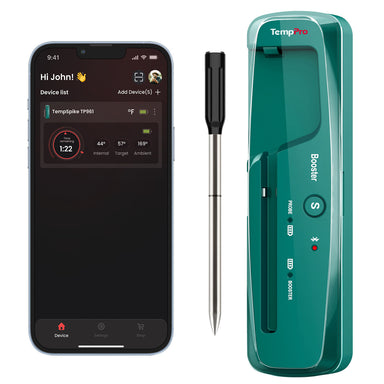
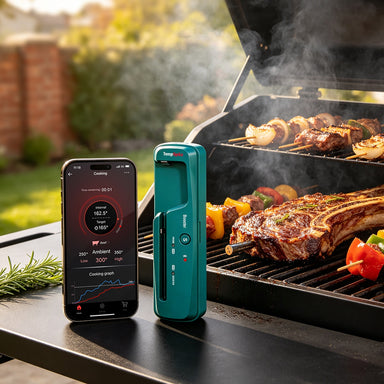
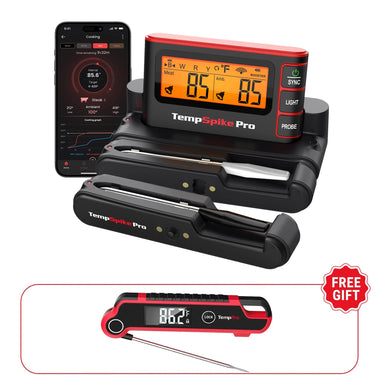
The TempPro TempSpike TP962 Wireless Meat Thermometer is designed for cooks who want to monitor meat temperature without constantly standing next to the grill or opening the cooking chamber.
Key Features
- Truly Wireless Probe: The wireless design means you don't have to deal with a cable running from the pork chop to a separate display. This gives you more freedom when grilling or cooking outdoors.
- Up to 500-Foot Bluetooth Range: The TempSpike TP962 provides a long Bluetooth range, making it easier to monitor your pork chops while you move around the kitchen, patio, or backyard.
- Dual Probes for Multiple Dishes: The TempSpike TP962 comes with two wireless probes, so you can monitor two pork chops at once. This is perfect for making sure your cooking environment is at the right temperature.
- Real-Time Temperature Monitoring: Keep an eye on the internal temperature as your pork chop cooks. Instead of relying only on a timer, you can make decisions based on the actual temperature inside the meat.
- Smart App Alerts: Sends real-time notifications to your phone when your pork reaches its ideal target temperature.
- Easy to Clean: The probes are IP67 waterproof, so you can clean them easily without worrying about damaging the electronics.
- Great for Thick Pork Chops: Thick-cut pork chops can be difficult to judge by appearance because the outside may brown well before the center is ready. Keeping the probe in the meat helps you monitor the part that matters most.
- Useful for Grill and Oven Roasting: Whether you're grilling pork chops for a summer dinner or roasting them in the oven, a wireless probe can help you monitor the cooking process while keeping your attention on other tasks.

How to Use the TempSpike TP962 for Pork Chops
Using a wireless cooking thermometer doesn't have to make cooking complicated. A simple process works well:
Step 1: Prepare the Pork Chops
Pat the pork chops dry with paper towels. Season them with your favorite combination of salt, pepper, garlic, herbs, spices, or a marinade.
Step 2: Insert the Probe Correctly
Insert the TempSpike TP962 probe into the thickest part of the pork chop. If you're cooking a thin chop, insert it through the side toward the center. For bone-in pork chops, make sure the probe does not touch the bone. Set your target temperature on the TempPro app.
Step 3: Start Cooking
Place the pork chop on your grill, skillet, or other cooking equipment according to your recipe. Instead of constantly opening the grill or checking the meat, monitor the temperature through your connected device.
Step 4: Watch the Internal Temperature
As the pork chop approaches the target temperature, pay close attention to the temperature. The exact cooking time will vary, so temperature should be your primary guide rather than assuming every pork chop will take the same amount of time.
Step 5: Remove and Rest
Once the pork chop reaches your target temperature, remove it from the heat and let it rest for at least three minutes before serving.
FAQs About Cooking Pork Chops
What temperature should pork chops be cooked to?
Whole-muscle pork chops should reach a minimum internal temperature of 145°F (62.8°C), followed by a 3-minute rest. Check the temperature in the thickest part of the chop, avoiding the bone. A meat thermometer is the most reliable way to determine when pork is safely cooked.
How do I know when pork chops are done?
The best way to tell if pork chops are done is to check their internal temperature with a food thermometer. For whole-muscle pork chops, look for at least 145°F, then let the meat rest for 3 minutes. Don't rely only on the color of the meat or a specific cooking time, since thickness and cooking method can significantly affect how quickly pork chops cook.

Can pork chops be pink in the middle?
Yes. A properly cooked pork chop can still have some pink color in the center. Color alone is not a reliable indicator of doneness. Instead, use a meat thermometer to make sure the thickest part reaches at least 145°F, followed by a 3-minute rest.
How long does it take to cook pork chops?
There is no single cooking time that works for every pork chop. Cooking time depends on the chop's thickness, whether it is bone-in or boneless, its starting temperature, and whether you're using a grill, skillet, oven, or air fryer. Use the recipe's cooking time as a starting point and check the internal temperature to determine when the pork is done.
Why are my pork chops dry and tough?
Pork chops usually become dry and tough because they are overcooked. Lean pork chops have relatively little fat, so cooking them well beyond the recommended temperature can cause them to lose moisture. Monitor the internal temperature and remove the chops from the heat once they reach the recommended minimum temperature.
Should I let pork chops rest after cooking?
Yes. USDA guidance recommends letting whole-muscle pork rest for at least 3 minutes after reaching 145°F. Resting also gives you a chance to finish your side dishes before slicing and serving the pork chops.
Should I cook pork chops with the bone in or boneless?
Both bone-in and boneless pork chops can make a great meal. Bone-in chops are often thicker and may take longer to cook, while boneless chops can cook more quickly. Whichever type you choose, focus on the internal temperature rather than using the same cooking time for every chop.
Where should I put the thermometer in a pork chop?
Insert the thermometer into the thickest part of the pork chop, preferably from the side if the chop is thin. Avoid touching the bone, fat, or gristle because you want to measure the temperature of the meat itself. If you're cooking several chops, check the thickest one first and verify the others as needed.
Should I sear pork chops before cooking them through?
Searing can help create a flavorful, browned exterior, but the pork chop still needs to reach the recommended internal temperature. For thick-cut chops, you can sear the outside over higher heat and then continue cooking at a lower temperature so the center cooks without excessively browning the outside.
Is a wireless meat thermometer useful for pork chops?
Yes. A wireless meat thermometer allows you to monitor the internal temperature while the pork chop cooks without repeatedly cutting into the meat or opening the grill or oven. The TempPro TempSpike TP962 can be especially useful for thick pork chops and outdoor grilling because you can monitor the temperature while staying away from the cooking surface.
Final Thoughts
Cooking a juicy pork chop doesn't require complicated techniques. Many disappointing pork chops come from a few basic mistakes: cooking by time alone, using excessive heat, checking the center by cutting into the meat, measuring temperature in the wrong place, or cooking well beyond the recommended temperature because the pork still looks slightly pink.
A simple meat thermometer can change the way you cook pork. By monitoring the internal temperature, you can focus on getting the outside beautifully browned while knowing what is happening inside the meat. The TempPro TempSpike TP962 Wireless Meat Thermometer makes that process even more convenient by allowing you to monitor the pork chop wirelessly while you prepare side dishes, clean up the kitchen, or enjoy time with your family.
The next time pork chops are on the menu, don't guess when they're done. Cook with temperature, not just time, and you're much more likely to end up with pork chops that are safe, juicy, tender, and full of flavor.


Comments

Recommended Products