Cold Chain: Why Checking Temperature on Arrival Matters?


 288 Comments


The convenience of home delivery has completely reshaped how we buy groceries, meal kits, and even specialty meats. But beneath the ease of tapping a few buttons on an app lies a silent risk: the cold chain.
The cold chain is the unbroken system of refrigeration that keeps perishable foods, meat, dairy, seafood, even pre-cut produce, safe from the moment they leave the supplier to the second they reach your door. If that chain fails, food enters the danger zone (40°F-140°F), where bacteria like Salmonella and E. coli can multiply in just 20 minutes.
Here's the reality: studies show that a significant number of home-delivered groceries arrive outside safe temperature ranges. But because the food often looks fine, most consumers don't think twice before tossing it in the fridge. That's where the danger begins.
Why Do You Need to Check the temperature of Cold Chain?
The Rise of Meal Kits and Premium Deliveries
In the last five years, the explosion of meal kit companies and premium butcher services has brought more temperature-sensitive packages to doorsteps than ever. These businesses promise high-quality proteins, but even the best beef is worthless if mishandled.
Several consumer reports have documented meal kits arriving above safe temperatures, particularly in warmer months. And while some companies refund, the health risk remains. A few deliveries handled incorrectly can undermine customer trust.
For households with children, elderly parents, or immune-compromised members, that risk is even more serious.
Timing Is Everything
Cold chain safety isn't just about how the box leaves the warehouse—it's about how quickly it's opened once it lands on your doorstep. In winter, a package may last longer, but in summer, foods can warm up within an hour.
Pro tip: schedule deliveries when someone is home. Most apps let you choose a window. And always bring perishable deliveries inside right away. Even better—keep a thermometer near the door and check temps immediately.

The Financial Cost of Failure
Food waste costs the average American family over $1,500 per year. Cold chain failures add directly to that number. Every spoiled chicken breast, melted ice cream tub, or questionable shrimp delivery isn't just unsafe—it's wasted money.
With inflation driving grocery prices higher, consumers can't afford to gamble. A $10 thermometer can prevent throwing away $200 worth of spoiled groceries in a single mishandled order.
Protecting Families and Building Habits
Parents know kids don't always understand food safety. If leftovers taste okay, kids will eat them—even if they've been sitting out. Teaching children to respect temperature safety, and even showing them how to use a thermometer, builds lifelong habits.
Imagine this routine: the kids help unbox groceries, insert the probe into the chicken or ground beef, and see the number for themselves. It becomes a small "science experiment" that reinforces safety and responsibility.
The Science of Bacterial Growth
To understand why this matters, consider the math:
- At room temperature, bacteria like Salmonella double every 20 minutes.
- Within two hours, a small number of bacteria can multiply into thousands.
- At 40°F and below, bacterial growth slows dramatically, buying you days instead of hours.
That's why the USDA and CDC emphasize time + temperature as the golden rules of food safety. Delivery adds new variables you can't control, but checking temperature gives you back the power.
Where Does the Cold Chain Break?
Cold chain failure can happen at any point between the supplier and your doorstep. Common culprits include:
- Warehouse storage: A freezer door left open for too long or malfunctioning cooling units.
- Transit: Delivery trucks overloaded, with poor circulation or faulty refrigeration.
- Last mile delivery: Packages left on porches for hours in sun or freezing weather.
- Packaging errors: Insufficient ice packs, thin insulation, or dry ice that evaporates too soon.
Each small lapse adds up. By the time a box arrives, meat that should be at 32–40°F might have warmed to 50°F or more.
Why Visual Checks Aren't Enough?
Most people judge food safety by sight or smell. Unfortunately, that's unreliable. Meat or fish that feels cold to the touch might still be in the bacterial danger zone. Dairy that looks fine could have already spoiled microscopically. Once bacteria multiply, reheating may not destroy all toxins they produce.
That's why temperature is the only trustworthy metric. A thermometer doesn't care how "fresh" food looks—it tells you if it's actually safe.
How to check the temperature of the Cold Chain
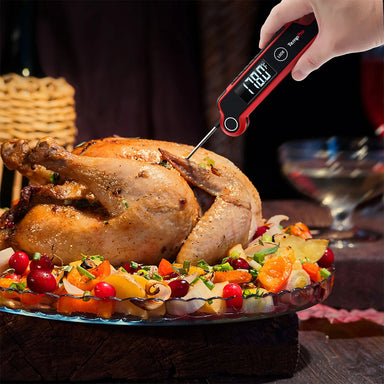
This is where instant-read food thermometers come into play. Simply insert the probe into the thickest part of meat, poultry, or fish right after unboxing.
- Below 40°F = Safe.
- Above 40°F = Risk zone—handle with caution.
- Frozen foods should register at or below 0°F.
By making temperature checks part of your delivery routine, you protect your family and your wallet from wasted or unsafe food.
What To Do If Food Arrives Unsafe
- Check temperature with a food thermometer immediately.
- Photograph the reading and packaging. This helps with refunds or complaints.
- Contact the delivery service. Most reputable companies will refund or replace.
- Do not risk it. If meat is above 40°F for more than two hours, it's unsafe—even if it smells okay.
As AI-driven delivery logistics expand, companies are starting to integrate live temperature tracking into shipments. Imagine an app notification: "Your chicken has been kept at 34°F during transit." Some premium services are already piloting this.
Until that becomes standard, household food thermometers remain the only true safeguard. Think of them as the last checkpoint in the cold chain.
The TempPro Advantage
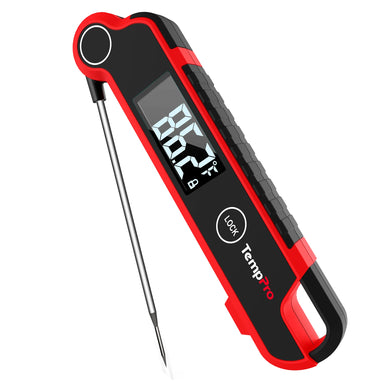
TempPro's line of instant-read food thermometers makes this process effortless:
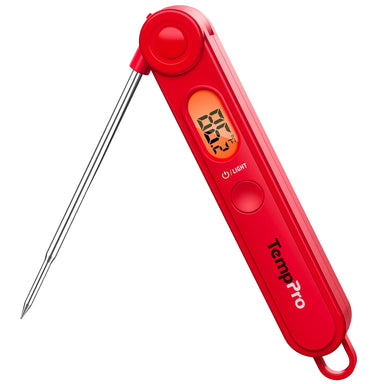
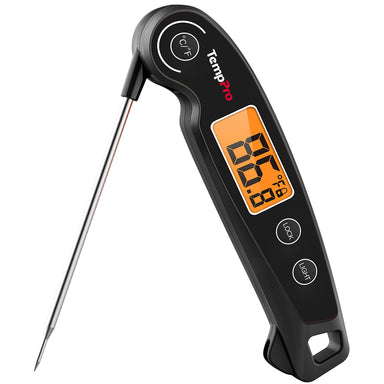
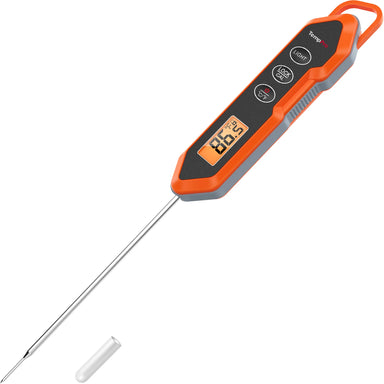
TP03B – Compact, budget-friendly, with 3-4 second readings. Perfect for quick delivery checks.

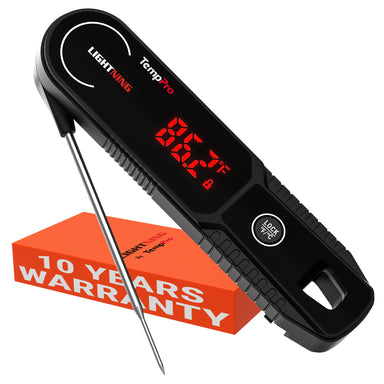
TP19H – Backlit, auto-rotating display, waterproof. Ideal for low-light porch unboxing or quick rinsing.

The two tools helps protect your investment in groceries and meal kits.
Frequently Asked Questions (FAQ) about Cold Chain Safety
Q1: What is a cold chain and why does it matter for home delivery?
A: The cold chain is the continuous refrigeration process that keeps perishable food safe from the supplier to your home. If food warms above 40°F during shipping, bacteria can multiply quickly, making it unsafe to eat.
Q2: How can I check if my delivered food is safe?
A: The most reliable method is to use a food thermometer. Insert the probe into the thickest part of meat, fish, or dairy. Perishables should be at or below 40°F, and frozen foods should be at or below 0°F.
Q3: Why can't I just check if food feels cold?
A: Touch is not reliable. Food may feel cool but still be in the bacterial "danger zone." A food thermometer provides an accurate, objective reading so you know if your food is truly safe.
Q4: Which TempPro food thermometer should I use to check deliveries?
A: Instant-read meat thermometer models like the TempPro TP03B and TP19H are ideal. They give accurate temperature readings in seconds, are compact for quick checks, and easy to clean after use.
Q5: Is the TP03B waterproof?
A: The TP03B is not waterproof, but the TP19H is rated IP65 for water resistance, making it easier to rinse under running water.
Q6: How fast do TempPro instant-read food thermometers work?
A: Most models give a reading in 2-4 seconds, allowing you to check multiple items in a delivery quickly without food warming further.
Q7: What should I do if my food arrives above 40°F?
A: Document the temperature with your food thermometer, take photos of the packaging, and contact your delivery provider for a refund or replacement. Do not consume food that has been above 40°F for more than two hours.
Q8: Can I use these food thermometers for cooking too?
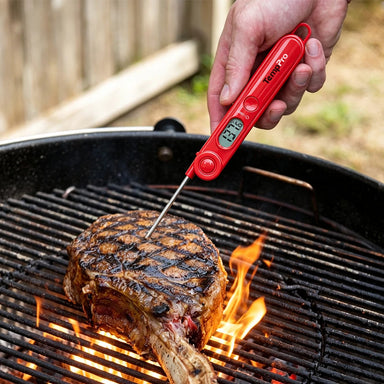
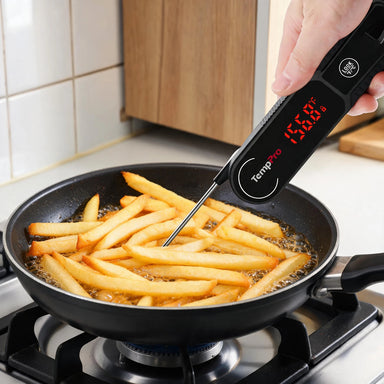
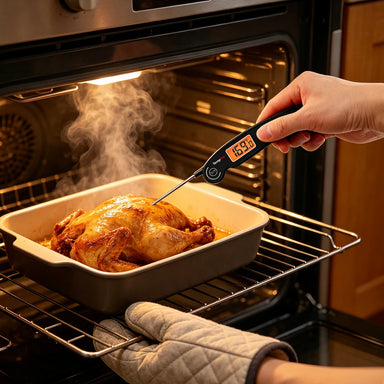
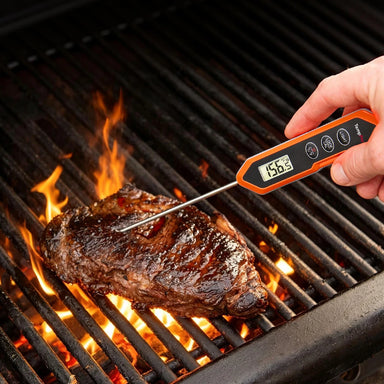
A: Absolutely. TempPro instant-read thermometers are designed for everyday cooking, including steaks, chicken, roasts, candy, or baking, so they're multipurpose kitchen tools that protect both your groceries and your meals.
Q9: Do TempPro food thermometers come with a warranty?
A: Yes. All TempPro food thermometers include a standard warranty. When you register your product on the official TempPro website, the warranty extends to 3 years, giving you long-term confidence and support.
Final Bite: Don't Trust the Box, Trust the Numbers
Home delivery isn't going away. In fact, it's only getting bigger. But with that growth comes responsibility, both for companies shipping perishable goods and for families receiving them.
Cold chain failures are invisible until it's too late. You can't see bacteria multiplying. You can't smell unsafe temperatures. But you can measure them.
By making a quick food thermometer check part of your unboxing ritual, you're not just preventing food poisoning, but you're saving money, protecting your family, and holding delivery services accountable.
So the next time a box of steaks, salmon, or ice cream lands at your door, remember: the TempPro instant-read meat thermometer is your first line of defense.
Because in the battle against cold chain failure, the smartest hosts and the safest families always check before they trust.


Comments
You May Also Like


Recommended Products