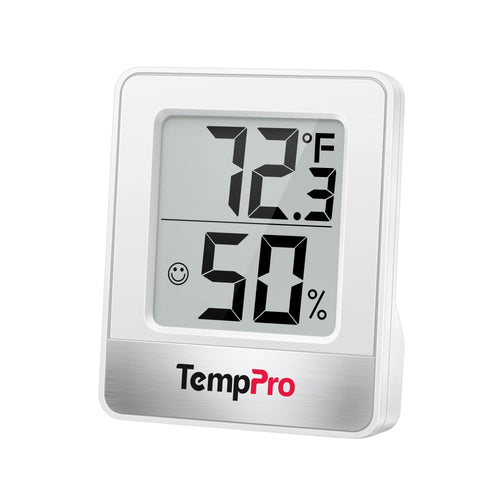
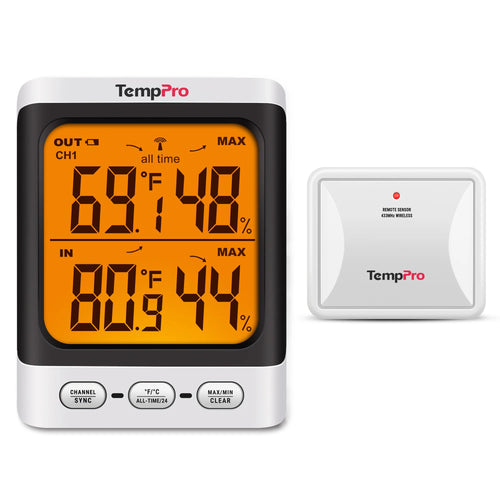
A hygrometer thermometer measures both air temperature and relative humidity. Temperature tells you how warm or cool a space is, while relative humidity shows how much moisture is in the air. Tracking both temperature and humidity helps you maintain a comfortable indoor environment, protect furniture and personal belongings, and create better conditions for houseplants, wine storage, and other humidity-sensitive spaces.
Indoor temperature and humidity can affect everyday comfort and the condition of your home. Air that's too dry may contribute to dry skin, static electricity, and damage to wood furniture, while excessive humidity can encourage mold growth and musty odors. A hygrometer thermometer helps you spot changes and decide when to use a humidifier, dehumidifier, or air conditioner.
Place your hygrometer thermometer in a spot that represents the room's normal conditions. A bedroom, living room, home office, or nursery is a good place to start. Keep it away from direct sunlight, heating and cooling vents, humidifiers, windows, and exterior doors, as these can affect readings. For a better picture of your home's humidity, consider placing monitors in several rooms.
Yes. Monitoring temperature and humidity can help you maintain a more comfortable environment in frequently used spaces. In a bedroom or nursery, it helps you keep track of overnight conditions. In a living room or home office, it can show whether the air becomes too dry or humid throughout the day. A simple indoor hygrometer is often enough if you just want to check current readings at a glance.
Yes. Many houseplants are sensitive to changes in humidity, especially tropical varieties that prefer more moisture in the air. A hygrometer thermometer placed near your plants can help you monitor their surroundings and decide whether a humidifier or other adjustments are needed. For larger plant collections or greenhouses, monitoring multiple areas can help you identify differences in growing conditions.
The main difference is how you view temperature and humidity readings:
Connects to a smartphone app, allowing you to view readings, check historical trends, and receive alerts when supported by the model. Your phone generally needs to be within Bluetooth range to receive live data.
Uses remote sensors and an indoor display to monitor multiple locations, such as a bedroom, nursery, wine cellar, garage, patio, or greenhouse. It typically doesn't require a smartphone app or Wi-Fi.
Choose the type of hygrometer thermometer that best matches how many locations you want to monitor and how you prefer to view your readings.
Not necessarily. Bluetooth hygrometers communicate directly with a compatible smartphone within the device's Bluetooth range, so Wi-Fi is generally not required. Wireless indoor outdoor models use a radio signal to send readings from remote sensors to an indoor display, without requiring Wi-Fi or an app. Always check the individual product specifications for connection requirements and transmission range.
Yes, depending on the model. Wireless indoor outdoor hygrometers, like the TempPro TempAir PLUS TP60B, use remote sensors to send readings from different locations to a central display. Some models support multiple sensors, making it easier to monitor a bedroom, basement, garage, greenhouse, or outdoor area at the same time.
Mount your outdoor remote sensor in a shaded, well-ventilated area away from direct sunlight, rain, and heat sources like dryer vents or AC exhaust units. Direct afternoon sun can artificially spike temperature readings by 20°F or more. Placing the sensor under a covered porch, beneath a roof eave, or on a north-facing wall gives you the truest ambient outdoor readings.
Start by considering where you want to monitor conditions and how you want to access the readings.
For everyday indoor use: Choose a standalone indoor hygrometer thermometer for a bedroom, living room, office, or nursery.
For smartphone monitoring: Choose a Bluetooth model if you want app access, historical data, and temperature or humidity alerts.
For multiple indoor and outdoor locations: Choose a wireless model with remote sensors and an indoor display.
Also compare sensor accuracy, display size, transmission range, alert functions, and the number of supported sensors. The right choice depends on your space and monitoring needs.
Choosing a selection results in a full page refresh.


 Filter

 4.8
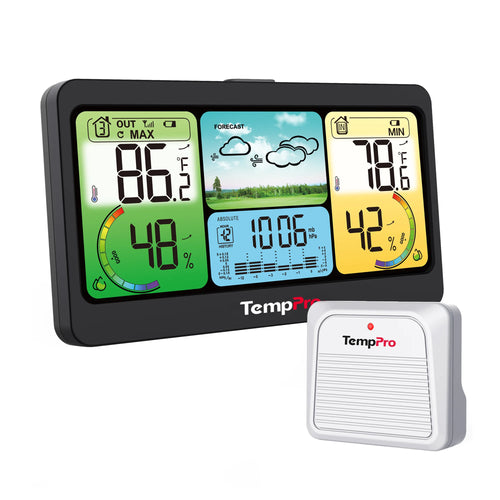 TempPro TempAir PLUS TP280B Wireless Home Weather Station — 1,000ft Range, Forecast & Barometer
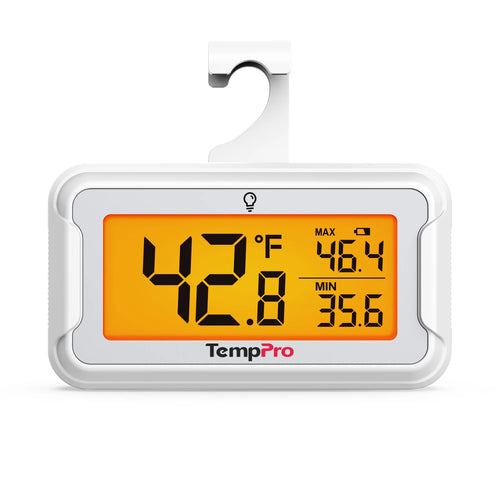 TempPro TempAir CORE TP110 Digital Refrigerator & Freezer Thermometer — IPX6 Waterproof, ±1.8℉
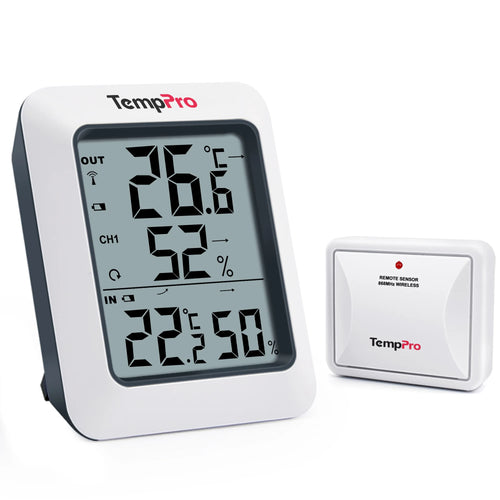 TempPro TempAir PLUS TP60B Wireless Indoor Outdoor Thermometer & Hygrometer — 500ft Range, High/Low
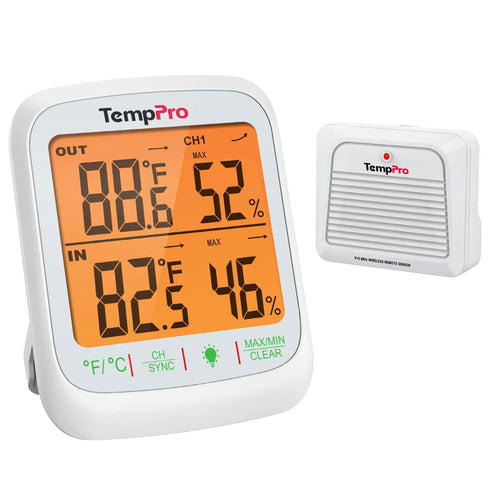 TempPro TempAir PLUS TP260B Wireless Indoor Outdoor Thermometer & Hygrometer — 1,000ft Range, 3.1" Display
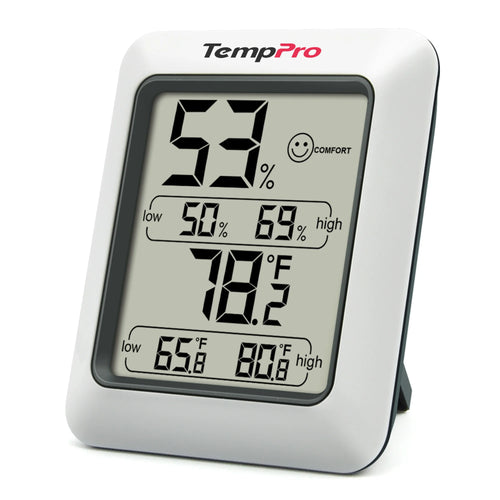
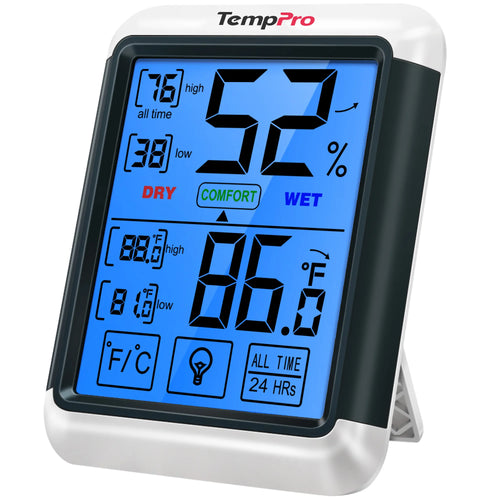 TempPro TempAir CORE TP55 Digital Indoor Thermometer & Hygrometer — ±1°F/±2% RH, High/Low Records
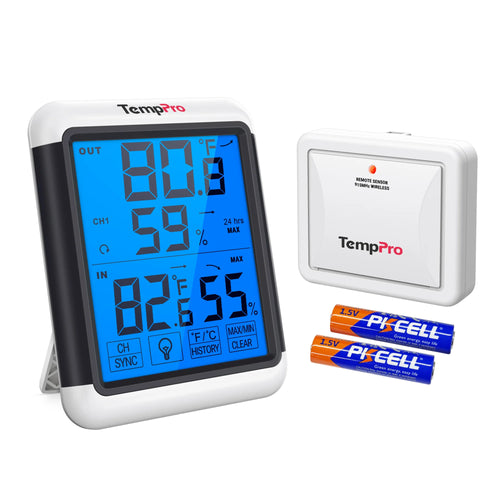 TempPro TempAir PLUS TP65B Wireless Indoor Outdoor Thermometer & Hygrometer — 4" Touchscreen, 500ft