8 astuces pour cuisiner le poulet entier qui changent tout


 288 Comments


Cuisiner un poulet entier semble simple jusqu'à ce que vous deviez cuisiner quelque chose de bon à manger. Cela peut sembler l'une des choses les plus simples que vous puissiez faire. Assaisonnez-le. Mettez-le au four ou sur le gril. Attendez. Et c'est tout. Mais en réalité, le poulet entier révèle toutes vos faiblesses pendant le processus de cuisson.
- Le blanc cuit plus vite que les cuisses
- L'extérieur brunit avant que l'intérieur ne soit cuit à point
- Alors que l'extérieur est magnifique, l'intérieur peut être cru ou sec
C'est pourquoi tant de gens ont du mal à obtenir des résultats homogènes. Certaines parties du poulet sont moelleuses, d'autres deviennent sèches ou caoutchouteuses.
Il ne s'agit pas des assaisonnements. Il ne s'agit pas des recettes. Il s'agit du contrôle. Une fois que vous apprenez à gérer correctement la chaleur, le temps de cuisson et la température interne, la cuisson d'un poulet entier devient prévisible plutôt que frustrante.
8 conseils pour cuire un poulet entier pour des résultats parfaits
Ne considérez pas le poulet comme un seul élément
C'est la plus grande erreur que la plupart des gens commettent. Un poulet entier n'est pas un seul morceau de viande uniforme. Il est composé de plusieurs éléments différents qui cuisent à des rythmes différents.
- La poitrine est une partie maigre et cuit rapidement
- Les cuisses et les pilons ont plus de gras et de tissus conjonctifs et nécessitent donc plus de temps
Par conséquent, si vous traitez le poulet entier comme une seule unité, vous sacrifierez inévitablement une partie au profit d'une autre.
Utilisez la température plutôt que de deviner
La cuisson du poulet uniquement en fonction du temps n'est pas fiable.
- Les fours varient
- Les conditions du gril diffèrent
- La taille du poulet diffère
- La température initiale de la viande varie
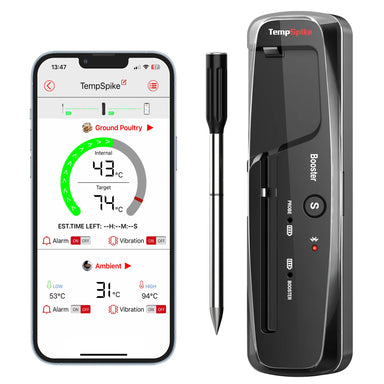
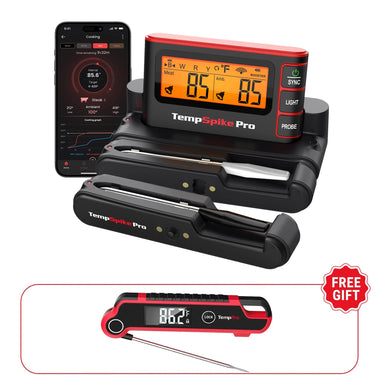
C'est là que le thermomètre à viande sans fil TempSpike XR TP862B simplifie grandement le processus. Comme vous n'avez pas besoin d'ouvrir continuellement le four ou le gril, vous pouvez surveiller les températures internes en temps réel. Grâce à la technologie de communication RF stable, le TempSpike XR communique entre les sondes insérées dans le poulet et le récepteur jusqu'à 300 mètres, et étend même cette portée à 600 mètres en utilisant un prolongateur supplémentaire. Par conséquent, vous n'avez plus à deviner quand le poulet est cuit.

Positionnez correctement la sonde
La manière dont vous prenez une mesure est aussi importante que la mesure elle-même. Si vous positionnez la sonde de manière incorrecte, vous obtiendrez des mesures inexactes. La partie la plus épaisse de la cuisse est généralement l'endroit le plus fiable, car c'est là que la cuisson prend le plus de temps. Par conséquent, mesurer à cet endroit vous assure que le reste du poulet peut être consommé en toute sécurité.
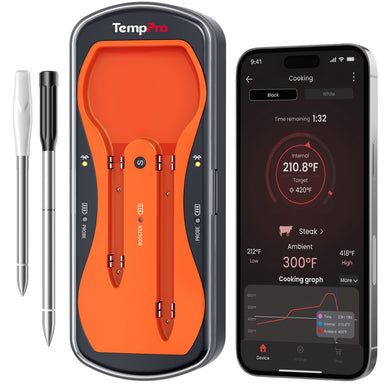
Les sondes sans fil codées par couleur du TempSpike XR vous permettent de surveiller deux emplacements simultanément, éliminant ainsi toute confusion potentielle. Cette fonction est utile si vous souhaitez évaluer les températures de la poitrine et de la cuisse en même temps.

Permettez au poulet de cuire en continu
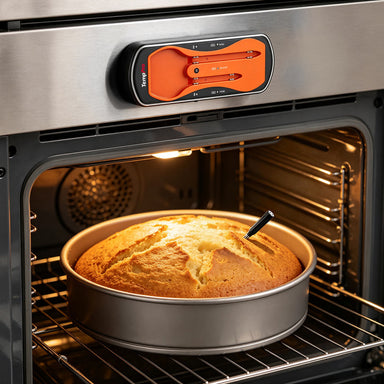
Ouvrir continuellement le four ou le gril ralentit le temps de cuisson global. Chaque fois que vous ouvrez le four ou le couvercle du gril, de la chaleur est perdue. Chaque fois que vous perdez de la chaleur, le processus de cuisson redémarre. Par conséquent, le temps de cuisson augmente, et ce, en raison d'une cuisson inégale.
Grâce au TempSpike XR, qui est :
- 100 % sans fil
- Ne nécessite pas d'application
- Facile à configurer
Vous pouvez tout surveiller à distance. Le grand écran affiche plusieurs températures simultanément. Ainsi, vous n'avez pas besoin d'arrêter la cuisson pour vérifier l'avancement. Cela permet au poulet de cuire de manière constante sans interruptions.
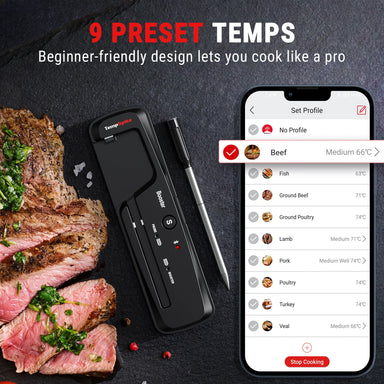
Visez des températures finales différentes
Différentes températures finales sont souhaitables pour différentes parties du poulet.
- La poitrine est mieux cuite à environ 74 °C (165 °F) pour rester moelleuse
- Les cuisses et les pilons peuvent être cuits à des températures légèrement plus élevées pour assurer la décomposition des tissus conjonctifs
Si vous essayez de cuire toutes les parties du poulet en même temps et que vous ne pouvez pas les surveiller individuellement, vous risquez d'obtenir des résultats inégaux. L'utilisation de plusieurs sondes vous offre la possibilité de surveiller des sections individuelles du poulet. Cette capacité simplifie la détermination du moment où retirer le poulet du feu plutôt que de vous fier à une seule estimation.
Évitez de vous fier aux indices visuels
La peau dorée n'indique pas que le poulet est cuit. L'apparence peut être trompeuse, surtout lors de la cuisson à haute température. Un poulet peut sembler parfaitement rôti à l'extérieur tout en restant cru ou sec à l'intérieur.
La température interne est la seule méthode fiable. Avec des relevés précis, vous éliminez l'incertitude liée au fait de ne vous fier qu'aux indices visuels.
Bénéficiez de la capacité de cuisson sans fil
L'une des plus grandes limites de la cuisson traditionnelle est d'être confiné à la cuisine ou au gril. La conception 100 % sans fil du TempSpike XR vous permet de vous déplacer librement tout en continuant à surveiller votre cuisson.
- Préparer des accompagnements
- Recevoir des invités
- Prendre du recul
Vous conservez un contrôle total sur le processus de cuisson. La longue autonomie de la batterie et la conception étanche du TempSpike XR vous offrent également la possibilité d'utiliser l'appareil pendant de longues périodes lors de sessions de cuisson prolongées, que vous rôtissiez, grilliez ou fumiez.

Laissez le poulet reposer après la cuisson
Le repos est tout aussi essentiel pour l'achèvement de la cuisson d'un poulet que pour l'achèvement de la cuisson d'un steak. Après la cuisson, les jus contenus dans la viande ont besoin de temps pour se redistribuer. Si vous commencez immédiatement à couper le poulet après la cuisson, ces jus s'échapperont. Le poulet sera alors plus sec qu'il ne devrait l'être. Laisser le poulet reposer quelques minutes achève le processus de cuisson. Cela améliore à la fois la texture et la saveur du poulet.
Pourquoi la cuisson d'un poulet entier devient plus simple lorsque vous cessez de deviner
La plupart des individus tentent de préparer un poulet entier en utilisant une approche par tâtonnements.
- Ils font des ajustements basés sur leurs expériences précédentes
- Ils comptent sur le hasard pour de meilleurs résultats
Ce type d'approche produit des améliorations lentes. Cependant, il ne produit jamais des résultats constants. Lorsque vous passez à une méthode de cuisson basée sur la température, tout devient prévisible. Vous savez quand chaque composant du poulet est cuit, quand retirer le poulet du gril ou du four, et quel résultat anticiper avant de le découper.
Le TempSpike XR facilite cela en vous offrant :
- Des données en temps réel
- Une surveillance stable à longue portée
- Une configuration facile
- Aucune application requise
Il supprime la complexité inutile tout en augmentant la précision. Par conséquent, la cuisson d'un poulet entier passe d'un jeu de devinettes à un processus de cuisson contrôlable.
FAQ sur la cuisson d'un poulet entier
Q1. Quelle est la température interne la plus sûre pour un poulet entier ?
La température sécuritaire recommandée est de 74 °C (165 °F), surtout pour la partie la plus épaisse de la viande.
Q2. Pourquoi mon poulet est-il sec même s'il est entièrement cuit ?
Il est généralement trop cuit ou n'a pas reposé correctement avant d'être coupé.
Q3. Ai-je besoin d'un thermomètre sans fil pour un poulet entier ?
Ce n'est pas obligatoire, mais un thermomètre à viande sans fil rend la surveillance beaucoup plus facile et précise sans avoir à ouvrir le four ou le gril.
Q4. Où dois-je placer la sonde du thermomètre alimentaire dans un poulet entier ?
La partie la plus épaisse de la cuisse est l'endroit le plus fiable.
Q5. Combien de temps dois-je laisser reposer le poulet après la cuisson ?
Typiquement 5 à 10 minutes pour permettre aux jus de se redistribuer uniformément.
Dernières réflexions
Ce n'est pas facile de cuire un poulet entier parfait. Une fois que vous comprenez la température, tout change. Fini les devinettes, fini de couper votre poulet juste pour vérifier, et certainement fini les dîners secs et décevants.
Si vous voulez vraiment simplifier les choses, utiliser un thermomètre à viande fiable est un véritable tournant. Le thermomètre à viande vraiment sans fil TempSpike XR TP862B vous permet de surveiller votre poulet en temps réel sans ouvrir le four ni rester près du gril. Il suffit de le régler, de vous détendre et de laisser la technologie faire le travail.
Alors, la prochaine fois que vous rôtirez ou grillerez un poulet entier, oubliez les devinettes et cuisinez en toute confiance. Une fois que vous l'aurez fait, vous ne reviendrez plus en arrière.


Commentaires
Vous aimerez peut-être aussi


Produits recommandés