Los 20 principales errores al asar a la parrilla que cometen los principiantes y cómo solucionarlos


 288 Comments


La primavera ha llegado oficialmente a los EE. UU., y eso significa que el sabroso olor a carbón y carne asada comienza a extenderse por los vecindarios de costa a costa. Ya sea que esté encendiendo una clásica barbacoa de carbón o una moderna parrilla de gas, la transición de "novato" a "maestro de parrilla" es un rito de iniciación. Sin embargo, para muchos principiantes, la emoción de una barbacoa en el patio trasero a menudo termina en exteriores carbonizados y centros crudos.
Asar a la parrilla es tanto sobre el control de la temperatura como sobre el sabor. La mayoría de los errores no se deben a la mala suerte; son el resultado de pequeños errores técnicos que se corrigen fácilmente. Aquí están los 20 errores más comunes que cometen los principiantes al asar a la parrilla, y las soluciones profesionales para asegurar que su próxima barbacoa sea un éxito rotundo.

Error #1: Empapar el carbón en líquido para encender
Muchos principiantes creen que cuanto más líquido para encender usen, mejor será el fuego. Sin embargo, el carbón es poroso y actúa como una esponja para los productos químicos. Cuando empapas tus briquetas en encendedores a base de petróleo, el fuerte olor químico no solo se quema, sino que se infunde directamente en tus hamburguesas y bistecs. Esto da como resultado un regusto distintivo "a gasolina" que puede arruinar incluso el corte de carne de la más alta calidad.
La solución: Deshazte por completo del líquido e invierte en una chimenea de encendido de carbón de acero inoxidable. Esta herramienta simple utiliza el poder de una corriente de aire natural para encender el carbón. Simplemente coloca unas cuantas hojas de periódico arrugado o un encendedor de cera natural en la cámara inferior, llena la parte superior con carbón y enciende el papel. En 15 minutos, tendrás carbones incandescentes y al rojo vivo que estarán completamente libres de olores químicos, asegurando que el sabor puro de la madera y la carne se realce.
Error #2: Cocinar sobre rejillas sucias y grasientas
Existe un mito común de que dejar el "condimento" (trozos de comida quemada) en las rejillas de la parrilla añade sabor a la próxima comida. En realidad, esos restos carbonizados del salmón o pollo de la semana pasada son solo carbón y grasa rancia. Cocinar sobre rejillas sucias hace que la comida fresca se pegue, desgarra la delicada corteza de la carne e introduce sabores acres y amargos en la cena.
La solución: Haz de "Precalentar y fregar" tu regla de oro. Enciende la parrilla y deja que se caliente a toda potencia durante al menos 15 minutos antes de que cualquier alimento la toque. Una vez que las rejillas estén calientes, el residuo viejo se convertirá en ceniza, lo que facilitará su eliminación con un cepillo de parrilla resistente. Una rejilla limpia y caliente es la única forma de lograr esas marcas de sellado profesionales en forma de diamante y una liberación limpia cuando sea el momento de voltear.
Error #3: Asar carne helada directamente de la nevera
Es tentador sacar un bistec directamente del refrigerador y echarlo en una parrilla a 260°C. Sin embargo, la diferencia extrema de temperatura es una receta para el desastre. Si el centro de la carne está a 3°C, el exterior inevitablemente se cocinará demasiado y se volverá duro y seco mucho antes de que el interior alcance una temperatura segura para comer. Este síndrome de "centro frío" es la principal causa de un asado cocido de manera desigual.
La solución: Practica el "atemplado" de tu carne sacándola de la nevera entre 20 y 30 minutos antes de planear asarla. Al permitir que la temperatura interna aumente ligeramente y las fibras musculares se relajen, el calor de la parrilla puede penetrar la carne de manera más uniforme. Este pequeño paso asegura que tu bistec esté perfectamente rosado de borde a borde, en lugar de tener una costra quemada y un centro frío y crudo.
Error #4: Confiar en la "prueba del tacto" para saber el punto de cocción
Los principiantes a menudo intentan imitar a los chefs profesionales tocando la carne con el dedo para sentir su firmeza, la llamada "prueba de la palma". El problema es que cada mano siente diferente, y cada corte de carne tiene una densidad distinta según su contenido de grasa y grosor. Confiar en el sentido del tacto es esencialmente una conjetura, y en el mundo de la seguridad alimentaria y el sabor, una conjetura nunca es suficiente.
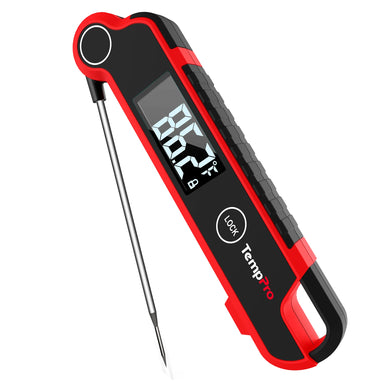
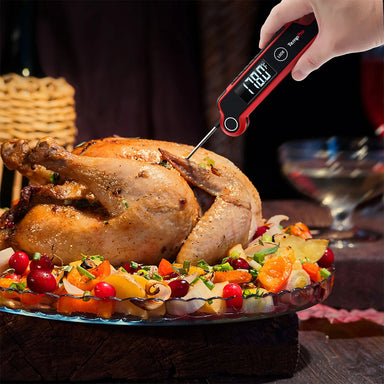
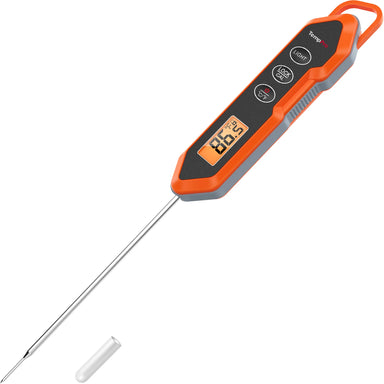
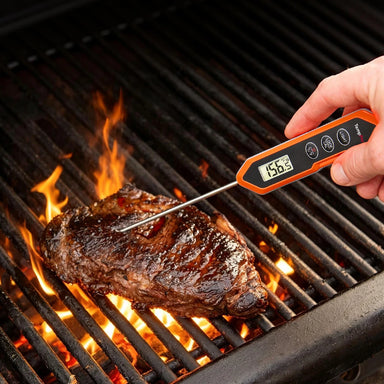
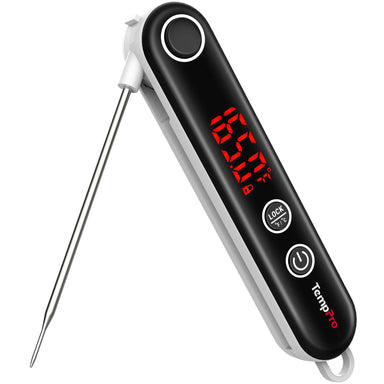
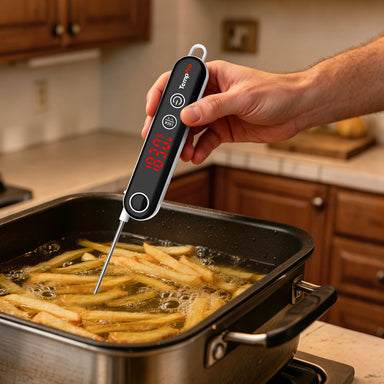
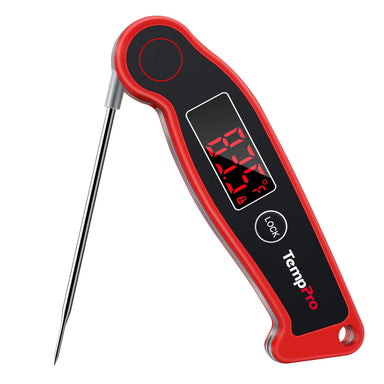
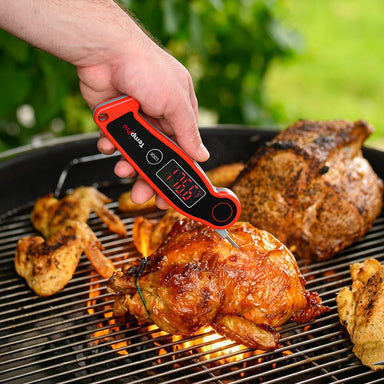
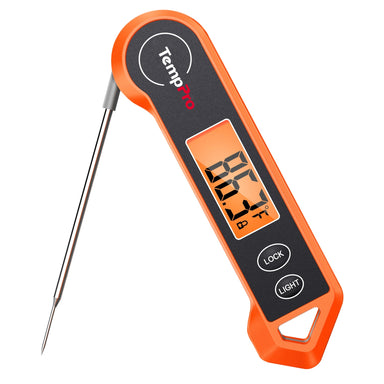
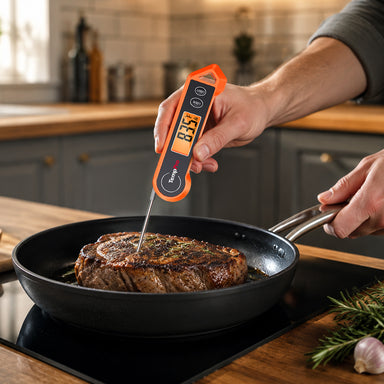
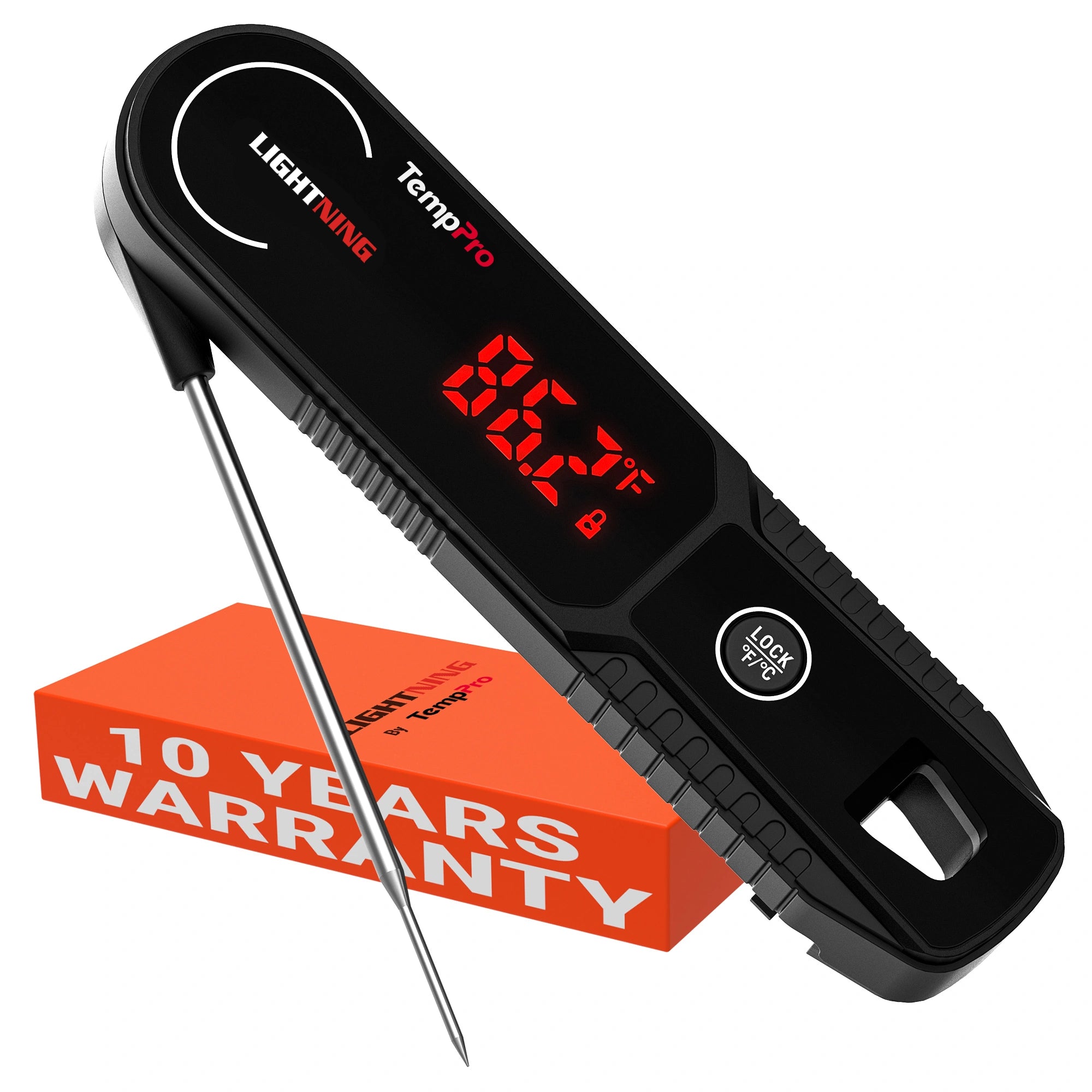
La solución: La única forma científica de saber si la carne está cocida es medir su temperatura interna. Los maestros parrilleros profesionales utilizan un termómetro digital de carne de alta calidad, como el termómetro de carne de lectura instantánea Lightning TP622, para obtener una lectura exacta. Al apuntar a números específicos —como 57°C para un bistec medio-crudo o 74°C para el pollo—, eliminas toda la ansiedad del proceso. Esto asegura que tu comida sea segura para comer y que esté en su punto máximo de jugosidad en todo momento.

Error #5: Abrir la tapa constantemente para "revisar"
Es natural querer ver cómo se cocina la comida, pero cada vez que levantas la tapa de la parrilla, estás saboteando tu cena. Las parrillas funcionan como hornos de convección; dependen del aire caliente atrapado para cocinar los alimentos por todos lados. Cuando abres la tapa, ese calor desaparece instantáneamente, lo que reduce la temperatura interna en cientos de grados y agrega un tiempo significativo a tu cocción, lo que a menudo lleva a que la carne se seque.
La solución: Confía en el proceso y "mantén la tapa abajo". Si usas una parrilla de gas, la tapa debe permanecer cerrada tanto como sea posible para mantener un ambiente constante. Para el carbón, la tapa también controla el flujo de oxígeno al fuego. Solo abre la tapa cuando sea el momento de voltear la carne o cuando la alarma remota de tu termómetro te indique que la comida está casi lista. Como dice el dicho: "¡Si estás mirando, no estás cocinando!"
Error #6: Abarrotar la superficie de la parrilla
En un esfuerzo por alimentar rápidamente a todos, los principiantes a menudo cubren cada centímetro cuadrado de la rejilla de la parrilla con carne y verduras. Esto evita que el aire circule entre los alimentos, lo que lleva a "cocción al vapor" en lugar de "sellado". Además, si ocurre una llamarada de grasa, no hay espacio vacío para mover la comida a un lugar seguro, lo que a menudo resulta en una tanda completa de hamburguesas ennegrecidas y cubiertas de hollín.
La solución: Deja siempre al menos entre el 25% y el 30% de la superficie de la parrilla vacía. Esta "zona de seguridad" permite que el calor se mueva libremente alrededor de la comida para lograr una mejor costra. Más importante aún, te da un lugar para reubicar la carne si las llamas se descontrolan. Cocinar en tandas más pequeñas puede llevar unos minutos extra, pero la calidad del sellado y la seguridad de la comida bien valen la espera.
Error #7: Olvidar el método de cocción "de dos zonas"
Muchos novatos extienden sus brasas calientes uniformemente por el fondo de la parrilla o encienden todos los quemadores de gas al "Máximo". Esto crea una pared de calor que no te da control. Si estás asando pechugas de pollo gruesas o un asado grande, el exterior se quemará hasta quedar crujiente mientras el interior permanece peligrosamente poco cocido porque no hay un lugar "suave" para que la carne termine de cocinarse.
La solución: Domina la configuración de "Dos Zonas" colocando todo el carbón en un lado de la parrilla o encendiendo solo los quemadores de una mitad. Esto crea un lado de "Calor Directo" para sellar y un lado de "Calor Indirecto" que actúa como un horno. Primero sella la carne sobre las llamas para obtener esa costra, luego muévela al lado frío y cierra la tapa para que termine de cocinarse lenta y uniformemente.
Error #8: Estrujar y presionar la carne
Todos lo hemos visto en las películas: alguien toma una espátula y presiona con fuerza una hamburguesa, lo que resulta en un fuerte siseo y una explosión de llamas. Aunque parece dramático, ese siseo es en realidad el sonido de la humedad interna de la carne siendo exprimida y desperdiciada. Presionar la carne fuerza las grasas y los jugos fuera de las fibras musculares, dejándote con una hamburguesa seca, desmenuzable y sin sabor.
La solución: Trata la carne con respeto y déjala en paz. Una vez que coloques tu proteína en la parrilla, la única herramienta que debes usar es un par de pinzas o una espátula para voltearla una o dos veces. Si anhelas ese estilo de "hamburguesa aplastada", hazlo en una plancha de hierro fundido durante los primeros 30 segundos de cocción cuando la grasa aún está sólida; una vez que la carne comienza a cocinarse, cualquier presión solo restará al resultado final.
Error #9: Aplicar la salsa barbacoa demasiado pronto
La mayoría de las salsas barbacoa americanas están cargadas de azúcar o melaza. El azúcar tiene un punto de quemado muy bajo, aproximadamente 129°C. Si untas el pollo con salsa al principio de una sesión de parrilla de 30 minutos, el azúcar se caramelizará, luego se carbonizará y finalmente se convertirá en una masa negra, amarga y quemada mucho antes de que el pollo esté realmente cocido. Esta es la causa más común de la barbacoa "ennegrecida" que sabe a ceniza.
La solución: La paciencia es clave cuando se trata de echar salsa. Solo debes untar tus glaseados azucarados o salsas BBQ durante los últimos 5 a 10 minutos de la parrilla. Esto permite que la salsa se caliente y se "adhiera" a la carne (creando esa capa pegajosa y deliciosa) sin tener tiempo suficiente para quemarse. Durante la mayor parte del tiempo de cocción, confía en adobos secos o marinadas a base de aceite para el sabor.
Error #10: No precalentar lo suficiente
Echar la comida en una parrilla "tibia" es una de las principales razones por las que se pega. Cuando la proteína fría golpea una rejilla que no ha alcanzado su temperatura máxima, las proteínas se unen al metal a nivel molecular. Sabrás que has cometido este error cuando intentes voltear una hamburguesa y la mitad de la carne se quede pegada a la parrilla.
La solución: Dale a tu parrilla el tiempo que necesita para alcanzar la masa térmica. Para las parrillas de gas, esto suele tardar entre 10 y 15 minutos con todos los quemadores encendidos a tope. Para el carbón, debes esperar hasta que los carbones estén cubiertos por una fina capa de ceniza gris y estén al rojo vivo. Una parrilla correctamente precalentada crea un "sellado" instantáneo que en realidad ayuda a que la carne se separe del metal de forma natural.
Error #11: Perforar la carne con un tenedor
Muchos principiantes recurren a un tenedor de cocina grande para voltear sus filetes o pollo. Cada vez que apuñalas la carne, estás creando una herida punzante a través de la cual escapan los jugos internos. Si volteas un filete cinco veces con un tenedor, esencialmente estás drenando la misma humedad que hace que el filete sea delicioso.
La solución: Las pinzas de mango largo de calidad profesional son la única herramienta que debes usar para voltear filetes, chuletas y salchichas. Para artículos delicados como pescado o hamburguesas, usa una espátula de metal ancha y delgada. Estas herramientas te permiten mover y voltear la comida sin romper la "piel" ni la superficie sellada, manteniendo cada gota de sabor atrapada exactamente donde debe estar dentro de la carne.
Error #12: Cortar la carne para comprobar el color
Cuando un principiante está nervioso por el pollo poco cocido, su primer instinto es tomar un cuchillo y cortar la parte más gruesa mientras aún está en la parrilla. Esto se conoce como la "fuga de jugo". Tan pronto como cortas la carne caliente, la presión interna empuja los jugos a través del corte, dejando la carne seca y poco atractiva para servir.
La solución: Detén el método de "mirar y gritar". En lugar de usar un cuchillo, utiliza tu termómetro digital de carne de lectura instantánea para verificar la temperatura. Solo necesitas hacer un pequeño orificio microscópico con la sonda del termómetro, lo que no causa una pérdida significativa de jugo. Te da una respuesta mucho más precisa de lo que el "color" podría darte, ya que algunas carnes pueden permanecer rosadas incluso cuando están completamente cocidas y seguras.
Error #13: Servir la carne sin dejarla reposar
Tienes hambre, los invitados esperan y el bistec tiene una pinta increíble, así que lo retiras de la parrilla y lo cortas inmediatamente. Esto es un gran error. Durante la cocción, el calor hace que las fibras musculares se tensen y empujen los jugos hacia el centro. Si lo cortas inmediatamente, esos jugos se derramarán sobre la tabla de cortar, dejando la carne dura.
La solución: Dale a tu carne un "tiempo de descanso". Transfiere los alimentos a la parrilla a un plato caliente y cúbrelos holgadamente con papel de aluminio. Para bistecs pequeños o hamburguesas, espera 5 minutos. Para asados grandes o brisket, espera de 15 a 20 minutos. Durante este tiempo, las fibras musculares se relajan y reabsorben los jugos. Cuando finalmente lo cortes, la humedad se mantiene dentro de la carne, haciendo que cada bocado sea tierno y suculento.
Error #14: Marinar en exceso con ácido
Si una marinada de 2 horas es buena, ¿una marinada de 24 horas debe ser mejor, verdad? No necesariamente. Muchas marinadas al estilo americano usan vinagre, jugo de limón o vino. Con el tiempo, estos ácidos no solo le dan sabor a la carne; comienzan a "cocinar" químicamente y a descomponer las proteínas. Dejar el pollo o los camarones en una marinada ácida durante demasiado tiempo da como resultado una textura blanda y harinosa que es muy poco apetecible.
La solución: Sigue un horario estricto para marinar. Los mariscos generalmente no deben permanecer más de 30 minutos. El pollo y el cerdo rinden mejor con 2 a 4 horas. Las carnes más resistentes como el bistec de falda pueden soportar de 6 a 8 horas. Si quieres un sabor profundo sin problemas de textura, usa un "aderezo seco" de sal y especias durante la noche, y guarda el "mop" o salsa ácida para el final del proceso de asado.
Error #15: Ignorar el viento y la temperatura ambiente
El error: Los principiantes a menudo asumen que si el dial de la parrilla está en "Medio", la temperatura interior siempre es la misma. Sin embargo, una parrilla de jardín es muy susceptible a los elementos. Un día frío y ventoso de abril en el Medio Oeste retirará el calor de una parrilla mucho más rápido que una tarde húmeda de julio en Florida, lo que llevará a tiempos de cocción inesperadamente largos y a invitados frustrados.
La solución: Presta atención a tu entorno y ajusta tu combustible. En días ventosos, coloca la parrilla de manera que el viento no sople directamente en las rejillas de ventilación (pero nunca hagas la parrilla en un espacio cerrado como un garaje). Prepárate para usar más carbón o una configuración de gas más alta de lo habitual. Lo más importante, confía en tu termómetro de carne interno en lugar de en un reloj de cocina, ya que los "minutos por libra" cambiarán según el clima.
Error #16: Usar carbón "Match-Light"
Parece conveniente comprar bolsas de carbón que vienen previamente empapadas en líquido encendedor (variedades "Match-Light"). El problema es que estas briquetas comienzan a perder su recubrimiento químico desde el momento en que abres la bolsa, lo que lleva a una combustión irregular. Además, tienen ese mismo sabor químico mencionado en el error #1, que puede persistir durante todo el proceso de cocción.
La solución: Elige siempre carbón en trozos de alta calidad y sin aditivos o briquetas de madera dura estándar. El carbón en trozos se elabora a partir de piezas reales de madera carbonizada; quema más caliente, huele mejor y produce menos ceniza. Cuando se combina con un arrancador de chimenea, obtienes un fuego limpio y de alta temperatura que proporciona un sabor ahumado natural que los productos "Match-Light" simplemente no pueden replicar.
Error #17: Mala planificación de los acompañamientos
Es fácil caer en la "visión de la parrilla", donde te concentras al 100% en la carne y te olvidas del maíz, los espárragos o las patatas. Los principiantes a menudo se encuentran con filetes perfectamente cocinados que se enfrían mientras esperan otros 15 minutos a que se terminen las verduras a la parrilla, o viceversa.
La solución: Trabaja hacia atrás desde el "tiempo de reposo". Dado que tu carne necesita reposar de 5 a 10 minutos de todos modos, usa esa ventana para asar tus verduras de cocción rápida como espárragos, calabacín en rodajas o pimientos. Comienza tus elementos de "larga cocción" como patatas asadas o maíz grueso en la mazorca mucho antes que la carne. Esto asegura que todo llegue a la mesa a la temperatura perfecta.
Error #18: Entrar en pánico durante un brote de fuego
Cuando la grasa gotea sobre las brasas y crea un brote de fuego, muchos principiantes entran en pánico y buscan una botella de spray de agua. Rociar agua en un incendio de grasa es peligroso; puede hacer que la grasa caliente salpique sobre ti y levantará una nube de ceniza que se pegará a tu comida. También provoca grandes oscilaciones de temperatura que interfieren con el proceso de cocción.
La solución: Mantén la calma y utiliza tu configuración de "dos zonas". Si se produce un brote de fuego, simplemente usa tus pinzas para deslizar la carne hacia el "lado frío" de la parrilla y cierra la tapa. Cerrar la tapa corta el suministro de oxígeno a las llamas, lo que hace que se apaguen de forma natural. Una vez que el fuego esté apagado, puedes volver a colocar la carne al calor y continuar cocinando.
Error #19: Cocinar demasiado "por si acaso"
El miedo a las enfermedades transmitidas por los alimentos a menudo lleva a los principiantes a cocinar el pollo hasta que tenga la textura de un zapato o las hamburguesas hasta que sean discos secos. Si bien la seguridad es primordial, "bien hecho" no tiene por qué significar "arruinado". La cocción excesiva suele ser el resultado de no saber exactamente cuándo la carne ha alcanzado el umbral de seguridad, por lo que el cocinero la mantiene al fuego "solo unos minutos más".
La solución: Aprende los números de seguridad del USDA y confía en ellos. El pollo es seguro y jugoso a 74°C. El cerdo es excelente a 63°C. Una vez que alcances estos números específicos en un termómetro digital, retira la carne del fuego inmediatamente. Continuará subiendo unos pocos grados mientras reposa (cocción residual), asegurando que sea 100% segura sin sacrificar la humedad y el sabor.
Error #20: Cocinar a ciegas (sin termómetro para alimentos)
El mayor error que puede cometer un principiante es pensar que no necesita un termómetro. Intentar calcular el tiempo de una sesión de parrilla utilizando solo un reloj o la "intuición" es la forma en que se produce una mala barbacoa. Sin una forma de ver el interior de la carne, básicamente estás cocinando a ciegas, lo que lleva a resultados inconsistentes que pueden desanimarte a cocinar a la parrilla por completo.
La solución: Haz de un termómetro de carne de lectura instantánea de alta calidad tu primera y más importante inversión para la barbacoa. Es la herramienta más efectiva para mejorar la calidad de tu comida. Convierte la parrilla de un juego de azar en una ciencia repetible, dándote la confianza para abordar cortes de carne caros sin miedo.
La herramienta definitiva para el éxito en la parrilla: Lightning TP622
Para corregir casi todos los errores mencionados anteriormente, necesitas un termómetro para alimentos que sea rápido, preciso y resistente. El Termómetro de carne de lectura instantánea Lightning TP622 está diseñado específicamente para dar a los principiantes la ventaja que necesitan.
Por qué es la mejor opción para principiantes:
- Lecturas en 1 segundo: Los principiantes a menudo encuentran el calor de una parrilla intimidante. El Lightning proporciona una temperatura estable en un segundo o menos, lo que significa que puedes alejar tu mano de las llamas casi al instante.
- Precisión increíble: Con una precisión de ±0,3 °C, ya no tendrá que preocuparse si su pollo está "realmente" cocido. Lo sabrá con certeza científica.
- Pantalla giratoria automática de 180°: No importa cómo lo coja (con la mano izquierda, con la mano derecha o boca abajo), las lecturas son siempre nítidas.
- Diseñado para exteriores: Es resistente al agua con certificación IP65, así que si le pilla un chaparrón primaveral o se le derrama accidentalmente el adobo, solo necesita un rápido enjuague.
- Inteligencia integrada: Cuenta con un modo de reposo y activación con detección de movimiento. Permanece encendido mientras lo usa y se apaga para ahorrar batería cuando lo deja, por lo que siempre está listo para su próxima barbacoa.

Resumen
Asar a la parrilla es una de las formas más gratificantes de cocinar, y evitar estos 20 errores le pondrá muy por delante del cocinero casero promedio. Al centrarse en parrillas limpias, la cocción de dos zonas y el uso de una herramienta profesional como el termómetro para carne de lectura instantánea Lightning TP622, servirá comidas jugosas y perfectamente cocinadas durante toda la temporada.

Comentarios
También te puede interesar


Productos recomendados