¿Realmente Necesitas un Termómetro de Piscina?


 288 Comments


El sol aprieta, la barbacoa chisporrotea y estás listo para combatir el calor del verano sumergiéndote en tu oasis en el patio trasero. Sales a la terraza, listo para ese refrescante chapuzón y, ¡bam! Saltas, solo para darte cuenta de que el agua está helada o se siente como un baño tibio.
Mantener una piscina en el patio trasero es una parte clásica del estilo de vida veraniego, pero mantener el agua a la temperatura "justa" puede ser un juego de adivinanzas constante. Esto lleva a muchos propietarios de piscinas a hacerse una pregunta fundamental: ¿Realmente necesitas un termómetro de piscina? ¿Es solo un accesorio opcional, o es una herramienta vital para tu kit de cuidado de la piscina?
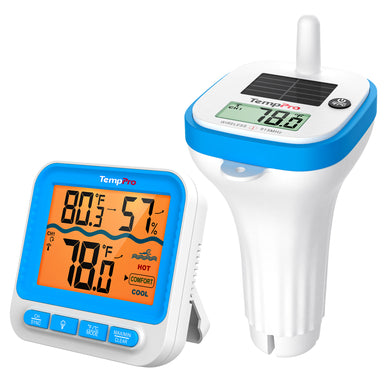
La respuesta corta es sí, es absolutamente esencial. Pero no todos los termómetros de piscina son iguales. Vamos a ver por qué controlar la temperatura de tu piscina importa más de lo que crees, qué hace que un medidor sea excelente y cómo el termómetro inalámbrico digital para piscinas TempPro TP211B de 500 pies está cambiando el juego para los propietarios de piscinas en todo Estados Unidos este verano.
Por qué un termómetro para piscina es esencial
Un termómetro para piscina hace mucho más que indicarle si el agua es cómoda para nadar. Afecta su bolsillo, su salud y el equilibrio químico de su piscina.
Ahorre dinero en productos químicos para piscinas
Julio suele ser el mes más caluroso del año, y las altas temperaturas del agua son una invitación abierta a la proliferación de algas. Cuando el agua de la piscina supera los 29°C (85°F), el cloro se evapora y se degrada mucho más rápido. Si no utiliza un termómetro de agua flotante fiable para controlar estos picos, podría terminar gastando cientos de dólares en cloro y alguicida adicionales para rescatar una piscina verde.
Comodidad y disfrute
La temperatura ideal para nadar para la mayoría de las personas oscila entre 25.5°C y 27.7°C. Sin un termómetro para piscina, es casi imposible mantener este rango de forma constante. El agua demasiado fría puede resultar impactante, mientras que el agua demasiado caliente puede resultar incómoda e incluso agotadora.
Eficiencia energética
Ya sea que utilice un calentador de gas, una cubierta solar o una bomba de calor, operar su sistema de calefacción o refrigeración a ciegas es un desperdicio masivo de energía. Un termómetro digital para piscinas le permite ver exactamente cuándo apagar el calentador o cuándo desplegar su manta solar, reduciendo significativamente sus facturas de servicios públicos mensuales.
Seguridad para niños, personas mayores y mascotas
El agua demasiado fría puede causar calambres musculares y shock por frío, mientras que el agua demasiado caliente puede provocar sobrecalentamiento, deshidratación y agotamiento, especialmente en niños y familiares mayores. Conocer la temperatura exacta garantiza que su piscina siga siendo un entorno seguro para todos.
Qué buscar en un termómetro para piscina
Comprar el mejor termómetro para piscina puede resultar abrumador con tantas opciones disponibles en línea. Para asegurarse de no malgastar dinero en un dispositivo que se empaña, gotea o deja de funcionar después de una sola semana bajo el sol abrasador de julio, debe saber qué características son realmente importantes.
Al evaluar sus opciones, tenga en cuenta estos factores críticos de compra:
Rango de transmisión y tipo de conectividad
Si elige un termómetro inalámbrico para piscinas, tendrá la libertad de comprobar la temperatura de la piscina desde el sofá de su sala de estar, la oficina de su casa o la silla de su patio sin tener que salir. Un termómetro para piscinas de primera categoría debe ofrecer un alcance fiable de al menos 400 a 500 pies, lo que garantiza que pueda controlar su piscina desde prácticamente cualquier lugar de su casa. Esto convierte un simple gadget en un auténtico termómetro inteligente para piscinas que se adapta perfectamente a su ajetreado estilo de vida multitarea.
Precisión y fiabilidad
La función más importante de cualquier termómetro de piscina es proporcionar lecturas precisas. Los datos de temperatura inexactos pueden provocar incomodidad, un equilibrio químico inadecuado y un consumo de energía innecesario.
- Busque un termómetro digital para piscinas para lecturas más precisas.
- Elija modelos con un rendimiento constante tanto en condiciones cálidas como frías.
- Evite las opciones analógicas de baja calidad que pueden desviarse con el tiempo.
Un termómetro digital fiable para piscinas garantiza que siempre conozca la verdadera temperatura del agua.
Impermeabilidad e integridad del sellado
La resistencia al agua es el factor más importante para un termómetro de agua flotante. Debido a que estos dispositivos se hornean bajo la luz solar directa y se asientan en agua tratada químicamente las 24 horas del día, los 7 días de la semana, los sellos de goma baratos se secarán, agrietarán y permitirán la entrada de humedad. Busque un termómetro digital para piscinas con una clasificación de impermeabilidad IPX8 explícita y un mecanismo de tapa de rosca seguro y resistente con juntas tóricas de silicona para garantizar que la electrónica interna permanezca completamente seca.
Legibilidad de la pantalla
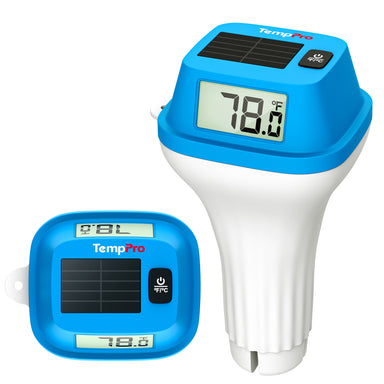
Un termómetro flotante ideal para piscinas debe tener una pantalla extra grande y de alto contraste con dígitos grandes y fáciles de leer. Esto le permite verificar rápidamente la temperatura del agua desde el borde de la piscina sin agacharse ni entrecerrar los ojos. La retroiluminación incorporada es otra característica imprescindible, que garantiza una visibilidad clara tanto si está verificando el agua temprano por la mañana como si disfruta de un baño al anochecer.
Algunos modelos avanzados llevan la comodidad aún más lejos al incluir una estación base interior portátil. Esto le permite controlar la temperatura de su piscina en tiempo real sin tener que salir. Por lo tanto, puede verificar las condiciones en cualquier momento y tomar decisiones más inteligentes sobre cuándo encender su calentador de piscina, lo que le ayuda a mantener la comodidad al tiempo que mejora la eficiencia energética.
Eficiencia energética y duración de la batería
Lo último que cualquier propietario de piscina quiere es salir a comprobar la temperatura, solo para encontrarse con una pantalla en blanco y las baterías agotadas justo en medio de una fiesta en la piscina. Por eso, siempre debe examinar los requisitos de energía antes de comprar un termómetro de piscina. Busque modelos que funcionen con baterías estándar AAA o AA ampliamente disponibles, en lugar de pilas de botón oscuras que son difíciles de encontrar y caras de reemplazar.
Además, una unidad bien diseñada debería ofrecer meses, si no una temporada de natación completa, de funcionamiento continuo con un solo juego de baterías. Un indicador de batería baja incorporado es otra característica útil que le avisa con suficiente antelación, para que pueda cambiar las baterías nuevas a su conveniencia en lugar de en un pánico. Cuando un termómetro flotante para piscinas es fácil de usar,
Fácil de configurar y usar
No todo el mundo quiere lidiar con una instalación complicada. Un termómetro flotante simple para piscinas no requiere configuración. Los modelos inalámbricos deben tener un emparejamiento rápido y una sincronización sencilla. Evite los sistemas excesivamente complejos si desea una experiencia sin complicaciones. El termómetro de piscina debe ser fácil de usar para cualquier persona en el hogar.
Por qué el TempPro TP211B es un termómetro ideal para piscinas
Tanto si eres un padre ocupado, un anfitrión de fin de semana o simplemente quieres disfrutar de tu piscina sin constantes conjeturas, el Termómetro inalámbrico digital para piscina TempPro TP211B de 500 pies está diseñado para hacerte la vida más fácil.
Características clave del TempPro TP211B
- Alcance inalámbrico masivo de 500 pies: el TempPro TP211B utiliza tecnología avanzada de radiofrecuencia (RF). Transmite datos sin problemas hasta 500 pies a través de paredes y obstáculos directamente a la encimera de su cocina o a la mesa de su sala de estar.
- Clasificación de impermeabilidad IPX8 mejorada: La fuga de agua es la principal causa de falla de cualquier termómetro digital para piscinas. El TempPro TP211B tiene una clasificación de impermeabilidad IPX8. Está construido para resistir el sol abrasador de julio y sobrevivir a las fuertes tormentas de verano sin empañarse ni tener fugas.
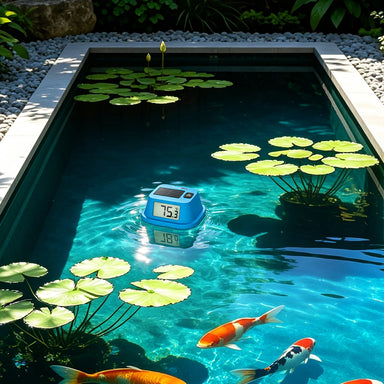
- Altamente preciso: Este termómetro digital para piscinas cuenta con un sensor de alta precisión exacto a ±0.9°F (±0.5°C) dentro del rango de -20°F a 158°F (-40.0℃ a 70.0℃), lo que lo hace adecuado para baños de hielo, jacuzzis, inmersiones en frío, baños de bebés, aguas termales, estanques y acuarios. Ya sea que esté monitoreando una piscina climatizada, un refrescante baño de verano o incluso una inmersión en frío, obtendrá lecturas precisas y confiables en todo momento.
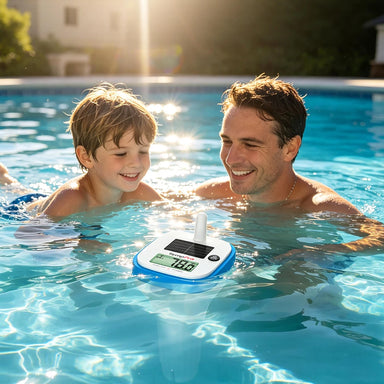
- Pantalla de alta visibilidad: El sensor flotante del termómetro de piscina cuenta con una pantalla LCD clara. Incluso si estás flotando en la piscina junto a él, puedes leer la temperatura del agua al instante sin tener que girar el dispositivo.

Cómo obtener la mayor precisión de su termómetro de piscina
Para asegurarse de que su nuevo termómetro digital para piscinas le brinde los datos más precisos posibles, tenga en cuenta estos consejos rápidos:
Evite la esquina poco profunda
El agua en las esquinas poco profundas puede calentarse de manera desproporcionada debido a la falta de circulación. Deje que su termómetro flotante para piscinas se desplace a aguas más profundas o átelo cerca del centro de la piscina.
Manténgalo cerca del chorro de retorno
Colocar el termómetro en un área con buen movimiento de agua asegura que esté leyendo la temperatura promedio de toda la piscina, en lugar de un bolsillo superficial estancado.
Limpie el sensor ocasionalmente
Con el tiempo, los productos químicos de la piscina y el protector solar pueden dejar una película en el sensor. Limpie la sección inferior de la sonda con un paño suave una vez al mes para mantener una respuesta prístina del sensor.
Consideraciones finales
Entonces, ¿realmente necesitas un termómetro de piscina?
La respuesta es un claro sí.
Desde mejorar la comodidad y la seguridad hasta ahorrar energía y mantener la calidad del agua, un termómetro confiable es una de las inversiones más inteligentes que puede hacer para su piscina.
Y si desea la mejor combinación de comodidad, precisión y características modernas, el Termómetro inalámbrico digital para piscina TempPro TP211B de 500 pies es una opción de primera categoría. Va más allá de lo que puede ofrecer un termómetro de agua flotante básico, brindándole un control total del ambiente de su piscina directamente desde su hogar.
Este verano, no deje la temperatura de su piscina a la adivinanza. Actualice a una solución más inteligente y disfrute de cada baño con confianza.


Comentarios
También te puede interesar


Productos recomendados