The Temperature Sweet Spot for Perfect Baked Potatoes


 288 Comments


Why Baked Potatoes Go Wrong
A baked potato sounds foolproof. Put it in the oven, wait a while, eat. Yet most of the time it comes out slightly off: the skin is soft instead of crisp, the inside is dense instead of fluffy, or it looks done on the outside while the center is still firm and raw.
It’s almost never the potato. It’s the lack of temperature control. Most people bake by the clock alone, sliding the potatoes in at 400°F and hoping an hour does the job. But potatoes vary in size, density, and moisture, and ovens are often off by 25°F or more, so the same timing that nailed it last week leaves you with a raw center the next. That’s the whole reason baked potatoes feel so hit or miss, and it’s exactly what cooking to temperature fixes.
You’re After Two Textures at Once
A great baked potato isn’t just one that’s cooked through. It’s two textures in the same potato: a crisp, lightly salted skin on the outside and a soft, fluffy interior within. The tricky part is that those two things want opposite conditions, so you’re really creating two environments in one oven.
The surface needs dry heat to crisp the skin, while the inside needs to get hot enough to fully break down its starches, the process that makes a potato light and airy rather than dense. Fall short of that internal temperature and the center stays firm and a little chewy. Go past it, or leave the potato in too long, and moisture cooks out and the inside turns dry.
The Number That Changes Everything
Here’s the piece most people never measure, and it’s what turns an average baked potato into a great one.
Aim for 205 to 210°F (96 to 99°C) in the center. This is the point where the starches fully break down, the texture turns light and airy, and the density disappears. Below it, the potato is undercooked and dense; above it, you start drying it out. That range is the line between a potato that’s merely “done” and one that tastes like it came from a good steakhouse, and it’s something you can hit every time once you stop guessing at it.
This is also why time-based recipes are so unreliable. Instructions like “bake 45 to 60 minutes” or “bake until fork-tender” can’t account for a large Russet versus a small one, an oven running hot or cold, or how tightly the potatoes are packed on the rack. Two people following the same recipe can get opposite results. Temperature is the one thing that stays true across all of it.
Let Temperature Do the Guesswork
Cooking to internal temperature removes all of that uncertainty. Instead of wondering whether the potato is ready, you take a quick reading near the end of the bake and know exactly when it’s hit the sweet spot, no cutting one open and hoping the rest match.
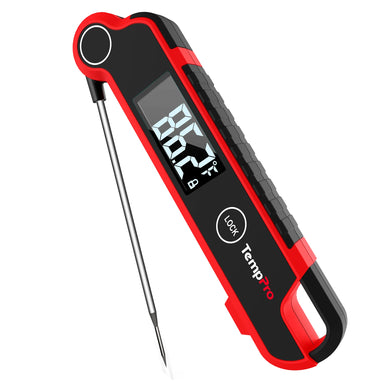
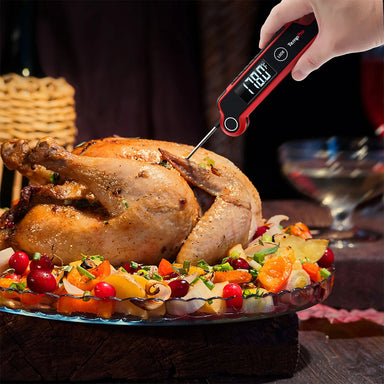
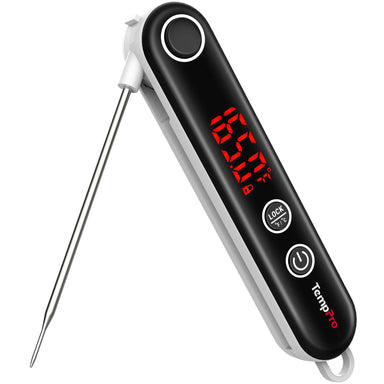
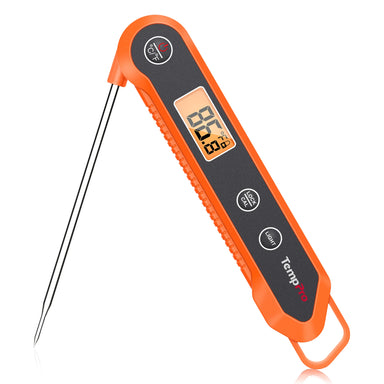
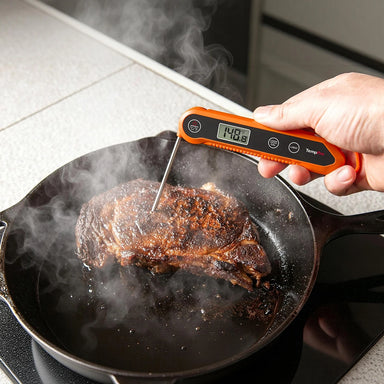
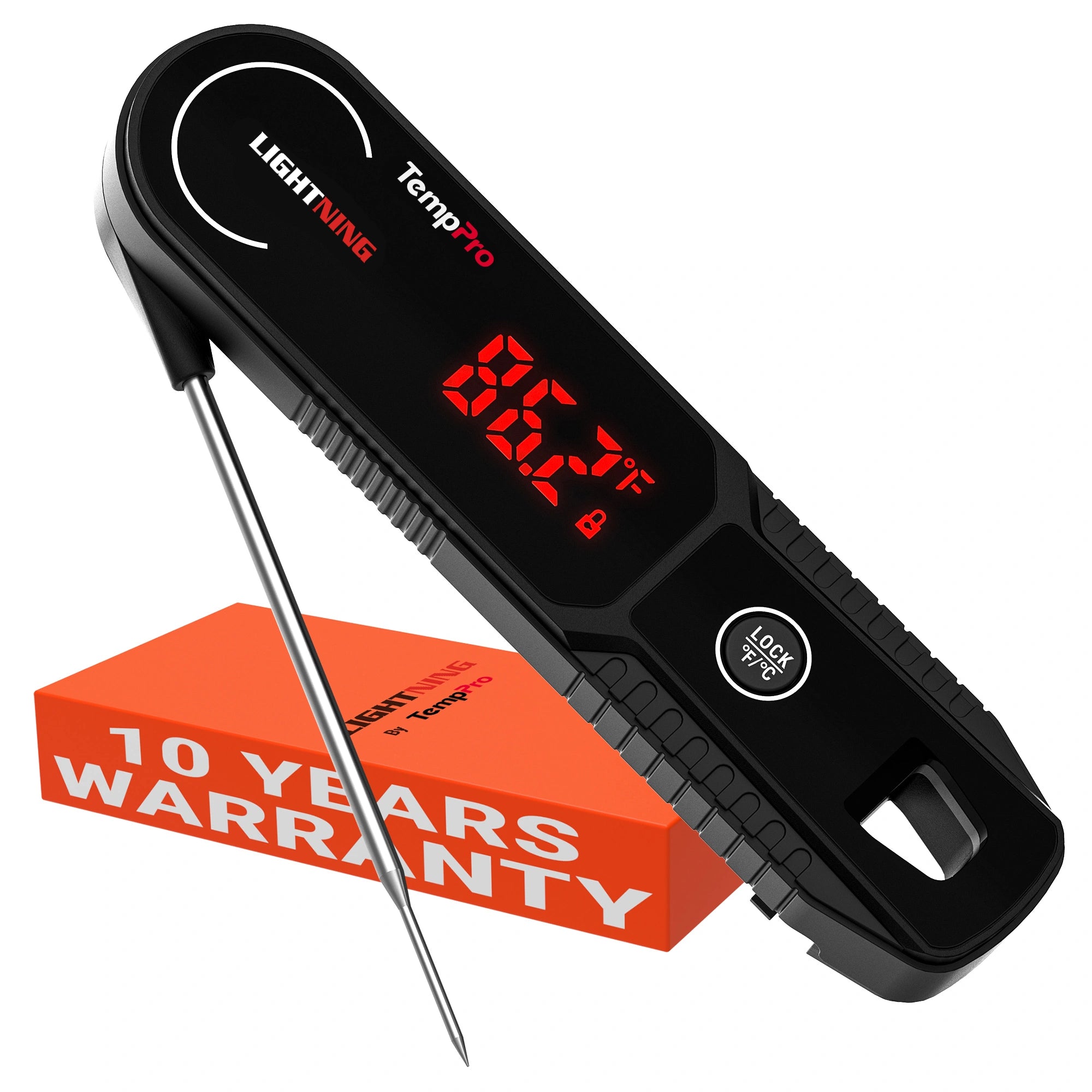
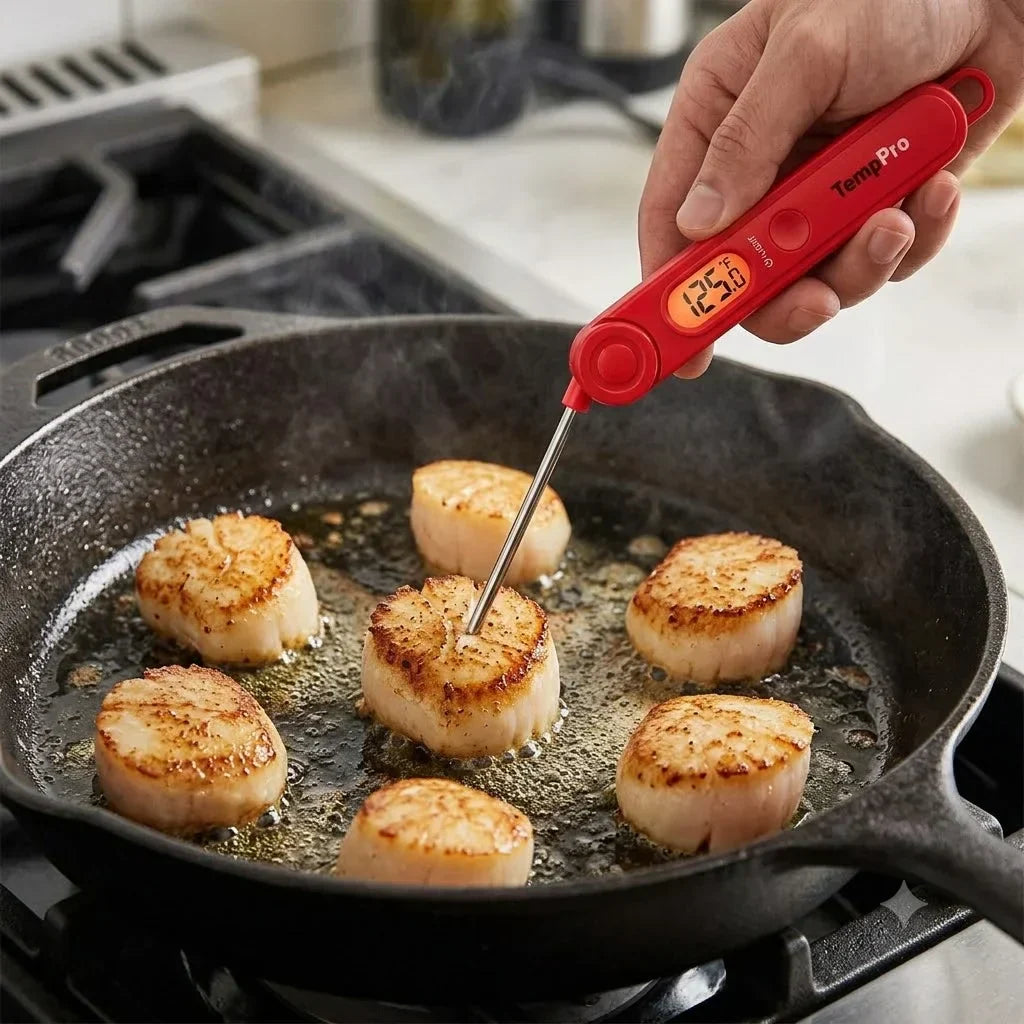
A fast instant-read thermometer like the TempPro TP622 Lightning is the easy way to do that. Near the end of the bake, press the thin tip into the center of each potato through the skin, and you have a reading in about a second, accurate to ±0.5°F. If a potato is short of 205°F, it goes back in; once it’s in the 205 to 210°F window, it’s done. Checking each one takes only a few seconds and tells you far more than the clock ever could, since even potatoes on the same tray finish at slightly different times. The 180-degree rotating backlit display and IP65 waterproof body make it just as handy for everything else you cook.

How to Get Crisp Skin
Crisp skin is the easier half of the equation, and when it comes out soft the reason is almost always the same: too much moisture, or not enough air moving around the potato.
Start by drying the washed potatoes completely, since any surface moisture works against browning. Rub the skin with a little oil and a sprinkle of salt, which helps it crisp and adds flavor. Skip the foil entirely, because it traps the steam you’re trying to drive off. And set the potatoes directly on the oven rack rather than in a dish, so air can circulate all the way around and brown the skin evenly on every side.
Bring It All Together
Preheat the oven to 425°F and scrub and dry your potatoes thoroughly. Rub each one with a little oil and salt, then set them directly on the rack. Bake by temperature rather than the clock: near the end, check each potato with an Temppro TP622 Instant-read Thermometer through the center and keep going until they reach 205 to 210°F. Pull them at that point and let them rest for a couple of minutes so the interior can set before you cut in. Split them open, fluff the inside with a fork, and serve right away.

A baked potato is usually treated as an afterthought of a side dish, but the gap between an ordinary one and a great one is almost entirely about texture, and texture comes down to temperature. Pull them at 205 to 210°F, keep the skin dry, and let the internal reading guide you instead of the clock, and crisp skin over a light, fluffy interior stops being luck and becomes something you get right every time. If you want to see the full range of fast instant-read thermometers for baking, roasting, and grilling, you can browse the Instant-Read Meat Thermometer collection.
FAQ
Q1: What temperature should a baked potato be cooked to?
It’s fully cooked when the center reaches 205 to 210°F (96 to 99°C).
Q2: Why is my baked potato still hard inside?
It probably didn’t reach a high enough internal temperature for the starches to fully break down.
Q3: Should I wrap potatoes in foil?
No. Foil traps steam and keeps the skin from crisping.
Q4: How long should I bake potatoes?
It depends on size and oven, which is why internal temperature is more reliable than a set time.
Q5: How do I know a potato is done without cutting it?
A thermometer is the most accurate way to check doneness without cutting in.
Q6: What thermometer works best for baked potatoes?
A fast instant-read like the TempPro TP622 Lightning lets you check each potato in about a second and pull them right at 205 to 210°F, so you catch the sweet spot without cutting one open to guess.
Q7: Why is my baked potato dry?
It was likely left in the oven too long after reaching the ideal temperature.
Q8: Can I use this method for sweet potatoes?
Yes. Sweet potatoes also cook best by internal temperature, though the ideal texture can vary slightly.

Comments
Recommended Products