5 Coq au Vin Tips for Deep, Rich Flavor


 288 Comments


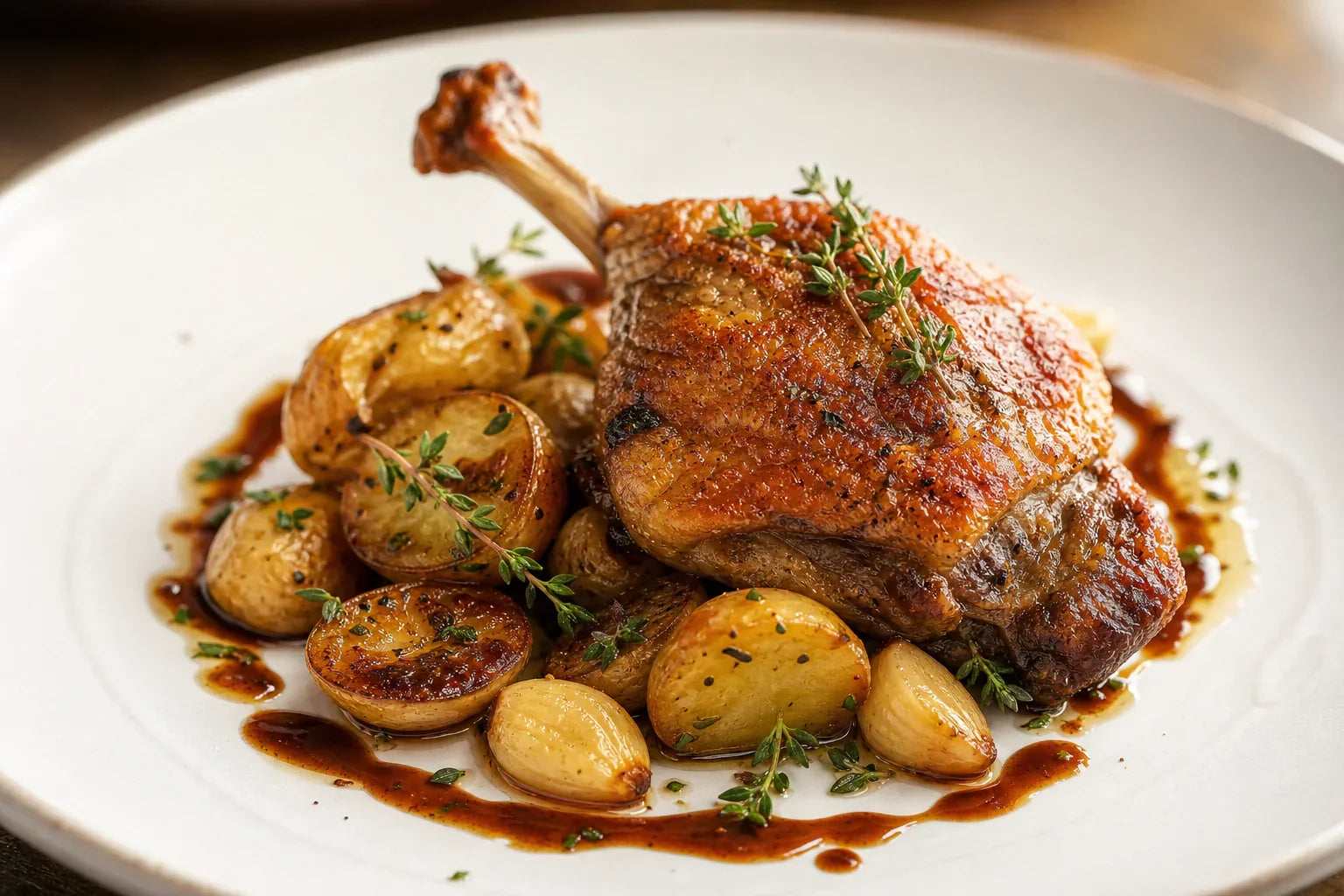
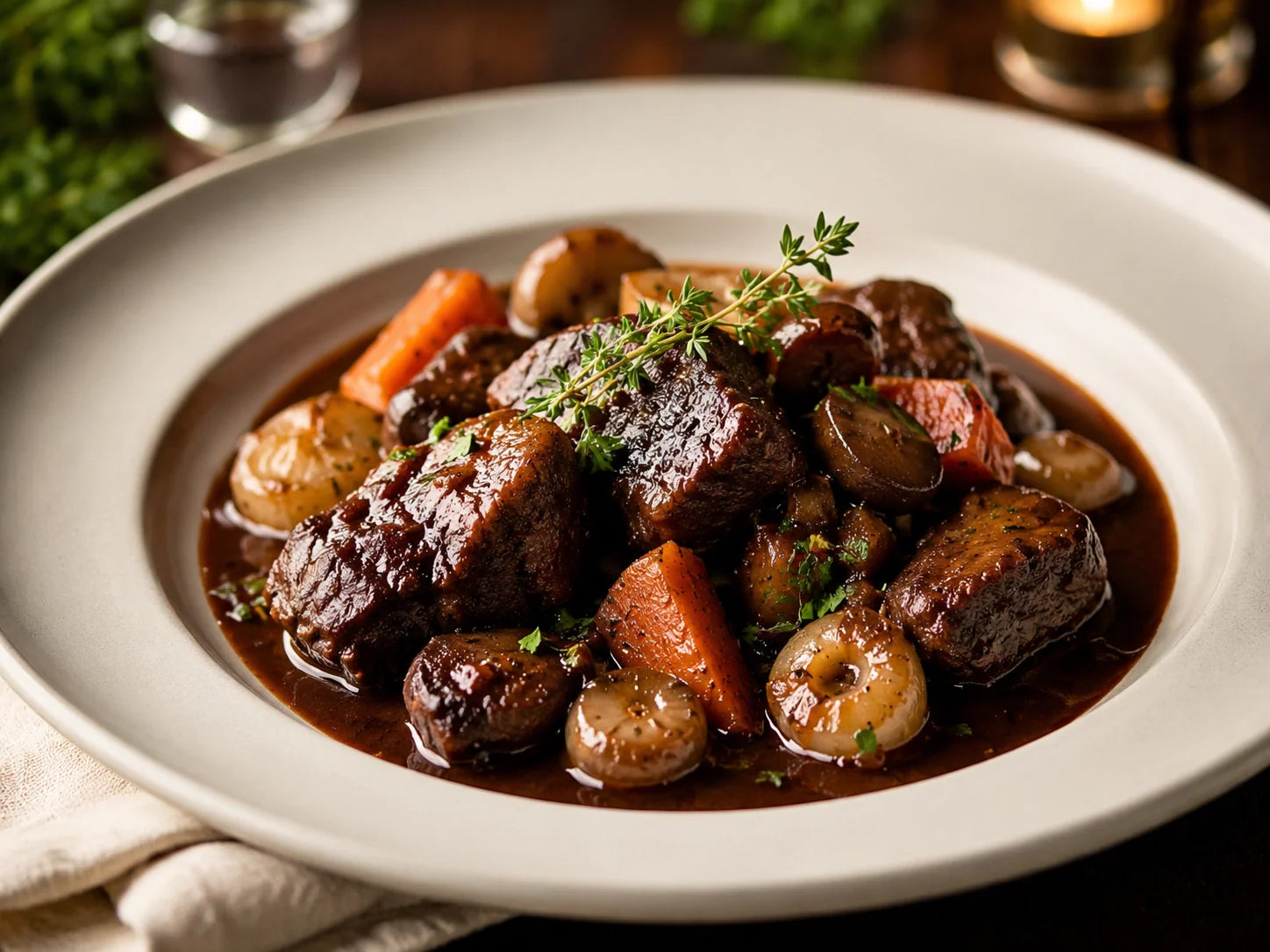
Coq au vin is a classic French rustic stew originating from the French countryside. Chicken is slowly simmered in red wine with lardons, mushrooms and pearl onions, yielding tender meat and rich wine‑infused sauce. It sounds quite difficult, but it isn’t. As long as you follow a few tips, you can make it really delicious.

Tip 1: Brown the Chicken in Batches
Flavor starts here, and it’s worth slowing down for. Browning isn’t just cooking the chicken, it’s building the foundation the whole dish stands on, and if the chicken never develops a deep golden crust, the finished coq au vin will always taste a little flat no matter what you do later.

The mistake almost everyone makes is crowding the pan. Pack it too full and the chicken releases moisture faster than it can evaporate, so it steams in its own liquid and never browns at all. Work in batches, give each piece room, and wait for a real crust before you move anything. It costs you a few extra minutes and pays for itself in depth of flavor.
Tip 2: Build the Flavor in Layers
Once the chicken is browned and set aside, don’t clean the pan. Everything stuck to the bottom is concentrated flavor, and the next few ingredients are what pull it all together.

Cook the bacon, mushrooms, and onions in that same pan, letting each one add its own layer as it goes. This is the step that gives coq au vin its complexity, and skipping it is the difference between a dish with real depth and one that tastes thin.
Tip 3: Deglaze and Reduce the Wine
Those browned bits on the bottom of the pan are pure flavor waiting to be reclaimed, and wine is what lifts them. Pour it in and scrape the pan clean while it bubbles, working every last bit of that residue up off the bottom and into the liquid.
Then give the wine a few minutes to reduce before you add any broth or other liquid. That short reduction concentrates the flavor and cooks off the sharp, raw edge of the alcohol, so the sauce tastes round and deep rather than boozy.
Tip 4: Braise Low and Go by Temperature
This is where most coq au vin is won or lost, and it comes down to one habit: control the heat and judge by temperature instead of the clock. Too much heat is the classic mistake. Let the pot boil and the chicken tightens, squeezes out moisture, and turns dry and stringy even after a long, slow cook. Keep it at a gentle simmer instead and the meat stays moist while it soaks up all that flavor.
There are really two temperatures to watch, and they’re easy to confuse. The braising environment wants to sit around a gentle 300 to 325°F (150 to 160°C), whether that’s a low simmer on the stove or a controlled oven. The chicken itself is done when the dark meat reaches roughly 175°F (79°C), which is higher than a lean chicken breast because thighs and legs need that extra heat to break down and turn tender. Push much past it, especially over a long braise, and the meat starts drying out. Time can’t tell you where either of those temperatures actually is, and lifting the lid to check drops them both.
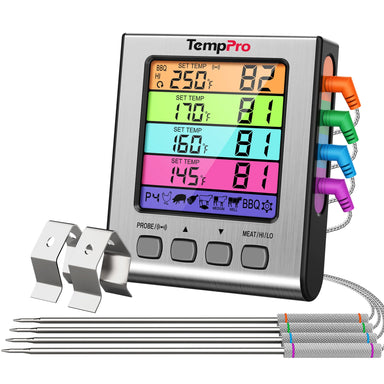
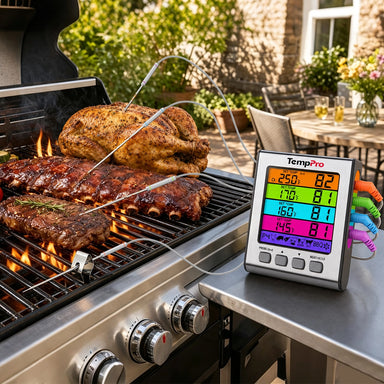
This is exactly the job the TempPro TP17 Dual-Probe Digital Thermometer is built for. With two probes, you can track the chicken’s internal temperature and the braising or oven temperature at the same time, which is precisely what this dish needs: a stable environment and an accurate read on doneness, together. Its high and low temperature alarm warns you the moment the braise drifts out of range, so you hold a steady simmer without hovering over the pot, and the backlit LCD shows both temperatures at once for an instant read on where things stand. With ±1.8°F accuracy and a fast response, you’re adjusting before a problem sets in rather than after, so instead of estimating when the chicken is ready, you simply know.

Why This Method Works
Coq au vin is really an exercise in balance. You’re juggling heat, time, moisture, and flavor all at once, and the dish comes together only when those stay in proportion. The browning and the layered vegetables build the flavor, the wine and the deglaze give it depth, and the slow braise turns tough meat tender. What holds all of it together is temperature.
That’s also why watching two temperatures beats watching the clock. Coq au vin asks you to control two things at the same time, the cooking environment and the doneness of the chicken, and a dual-probe thermometer like the Temppro TP17 lets you see both without lifting the lid or guessing at either. Long cooking on its own guarantees nothing, and plenty of braises simmer for hours and still come out dry because the heat was never truly under control. Hold the pot in the right range, pull the chicken at the right temperature, and coq au vin stops being a dish you hope turns out and becomes one you can repeat.

FAQ
Q1: What is the ideal temperature for coq au vin?
A gentle simmer or an oven around 300 to 325°F (150 to 160°C) cooks it evenly, with the dark meat finishing at about 175°F (79°C).
Q2: Why is my coq au vin chicken dry?
It was likely overcooked, or held at heat that was too high for too long.
Q3: Can I cook coq au vin on the stovetop only?
Yes, though holding a steady, gentle temperature takes more attention on the stovetop than in the oven.
Q4: Why do I need to brown the chicken first?
Browning builds the base layer of flavor, and the browned bits it leaves behind become the foundation of the sauce.
Q5: What does deglazing do?
It lifts the flavorful browned bits off the bottom of the pan and works them into the sauce.
Q6: What makes the TempPro TP17 useful for this dish?
Its two probes let you monitor the braising temperature and the chicken’s internal temperature at the same time, with an alarm if the heat drifts out of range.
Q7: Can I overcook coq au vin even though it’s a braise?
Yes. The chicken can still dry out if it’s left in the heat too long, no matter how much sauce surrounds it.
Q8: How do I thicken the sauce without overcooking the chicken?
Remove the chicken once it’s tender and reduce the sauce on its own until it reaches the consistency you want.


Comments
Recommended Products