Pourquoi vos travers de porc au barbecue sont durs et comment y remédier rapidement


 288 Comments


Le problème avec les travers de porc au barbecue est qu'ils semblent faciles à préparer. Il suffit d'assaisonner les travers de porc et de les placer sur le fumoir ou le gril, de les laisser cuire pendant quelques heures. Qu'est-ce qui pourrait mal tourner ?
Cependant, les travers de porc au barbecue peuvent être l'une des choses les plus faciles à rater au barbecue. Parfois, ils seront tendres et juteux. D'autres fois, ils seront complètement secs et tout simplement frustrants... même si vous avez suivi la même recette à chaque fois.
L'assaisonnement est rarement la raison pour laquelle les travers de porc ne sont pas bons. La méthode non plus. Il s'agit simplement du manque de compréhension d'un élément de la cuisine que de nombreux cuisiniers ignorent. Il s'agit de la constance de la température sur une période de plusieurs heures.
Le problème invisible : les températures fluctuant tout au long de la cuisson
De nombreux cuisiniers pensent que les côtes de porc au barbecue sont ratées parce qu'elles n'ont pas été assez cuites, ou parce qu'elles ont été trop cuites. Bien que ces problèmes puissent certainement contribuer à des côtes de porc de mauvaise qualité, aucun d'entre eux n'est généralement la cause principale.
Ce qui rend vraiment les côtes de porc dures, c'est la façon dont la température se maintient, ou non, pendant la majeure partie du temps passé sur le gril ou le fumoir. Alors que la plupart des recettes préconisent une cuisson lente et à basse température, en utilisant des températures allant de 107°C à 135°C, pendant de longues périodes, la dégradation réelle des tissus conjonctifs à l'intérieur de la viande des côtes prend son temps. Lorsque la température reste constante pendant cette période prolongée, le processus fonctionne comme prévu.
Cependant, lorsque les températures fluctuent, que ce soit en raison d'un chauffage trop rapide, trop lent ou parfois trop intense, tout ce processus est perturbé. C'est à ce moment-là que les côtes de porc commencent à devenir très dures.
Que se passe-t-il réellement à l'intérieur des côtes ?
Collage des tissus conjonctifs
Tous les types de bœuf contiennent du collagène, un type de protéine présente dans les os, la peau et les tissus conjonctifs. Pour convertir le collagène en gélatine, l'ingrédient clé responsable de la texture moelleuse et juteuse des côtes, il faut une chaleur contrôlée et suffisamment de temps.
Sous l'effet d'une chaleur constante, le collagène se transforme en gélatine. La gélatine confère aux côtes une texture tendre et juteuse. Cependant, lorsque la chaleur augmente rapidement :
- L'humidité disparaît rapidement
- Les protéines se contractent
- La viande devient ferme et sèche
Et lorsque la chaleur diminue rapidement :
- Le collagène n'est pas complètement dégradé
- La viande reste ferme et dure
Cela n'a rien à voir avec le fait de cuire les côtes plus longtemps. La question est de savoir combien de temps vous devez maintenir votre température dans la « zone » de votre choix.
Pourquoi nous ne pouvons pas faire la différence entre ces problèmes
Un problème majeur auquel nous sommes confrontés est que les changements de température sont difficiles à détecter. Vous vérifiez occasionnellement votre fumoir. Cela semble correct. Cependant, entre chacune de ces occasions, la température pourrait potentiellement augmenter ou baisser de façon spectaculaire.
Chaque fois que vous vérifiez manuellement la température intérieure de vos côtes, vous relâchez de la chaleur et gâchez l'environnement du barbecue. De petites variations s'accumulent sur une longue période. Par conséquent, lorsque vous remarquez enfin le résultat final, il est déjà trop tard.
La vraie solution : le contrôle de la température avec un thermomètre à viande sans fil
Pour réussir la cuisson des travers de porc au barbecue, vous devez connaître en permanence deux choses :
- La température du fumoir/gril
- La température interne de la viande
Une surveillance continue de ces éléments est nécessaire. Pas périodique. La différence entre des résultats toujours excellents et l'imprévisibilité repose uniquement sur cette distinction.
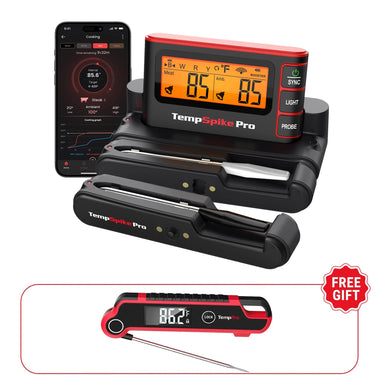
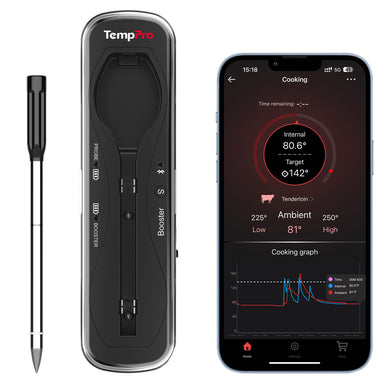
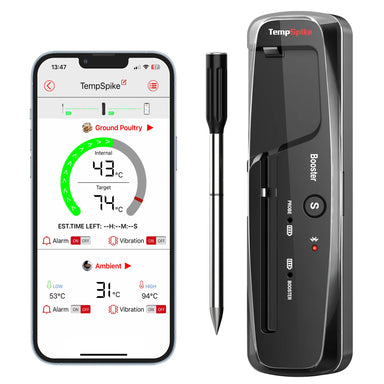
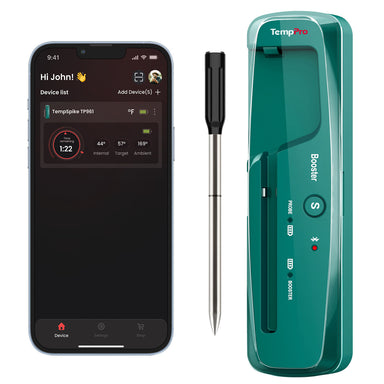
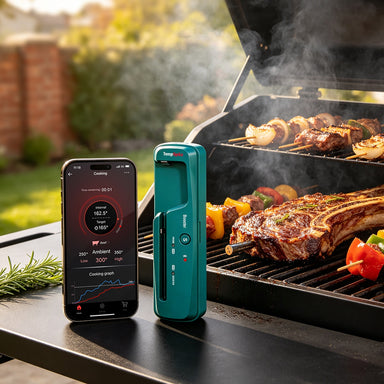
Le Thermomètre à viande véritablement sans fil TempPro TempSpike TP970 Bluetooth est conçu pour une utilisation continue pendant le fumage/gril. Plutôt que de vérifier constamment la température de votre fumoir/gril toutes les quelques minutes, il vous permet de surveiller continuellement votre température en temps réel, sans avoir à ouvrir votre couvercle.
Utilisant la technologie Bluetooth, offrant une distance de connectivité allant jusqu'à 180 mètres, il vous permettra de vous éloigner de votre barbecue tout en continuant à surveiller votre cuisson. Cet outil de cuisine fonctionne immédiatement après le déballage. Il offre également une solution simple pour les sessions de barbecue qui durent des heures.
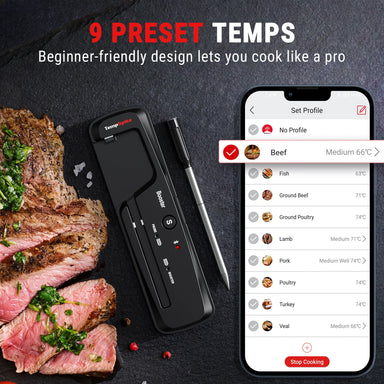
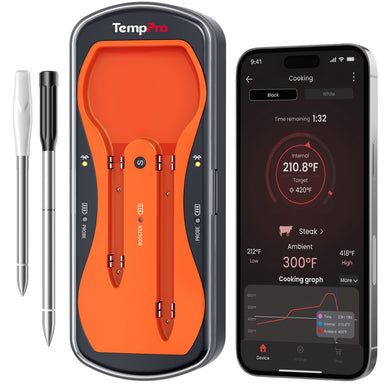
La sonde sans fil vous permet de surveiller simultanément les températures de la viande et de l'environnement, ce qui vous aide à maîtriser le processus de cuisson pendant des heures de barbecue. L'application affiche les graphiques de température, ainsi que les températures internes et ambiantes. Des préréglages de température intelligents et des alertes vous aident à maintenir les températures choisies en envoyant des messages de notification lorsque les températures approchent de vos limites établies, vous permettant ainsi de faire des ajustements avant que des problèmes ne surviennent.
Approuvé par la NSF, le TempSpike TP970 garantit des pratiques de manipulation des aliments sûres et des performances fiables. Cet appareil offre une solution pratique pour les cuisiniers sérieux. Avec lui, vous garderez un contrôle total sur votre barbecue.

Instructions étape par étape pour des côtes parfaitement grillées
Étape 1 : Préchauffez votre fumoir ou gril à une température constante, de préférence entre 107°C et 121°C.
Étape 2 : Placez vos côtes sur le gril/la zone de fumage et insérez la sonde sans fil du TempSpike TP970 pour surveiller la température interne et externe.
Étape 3 : N'ouvrez pas excessivement votre couvercle. Dès que vous le soulevez, toute la chaleur s'échappe et gâche votre environnement de barbecue.
Étape 4 : Laissez vos côtes continuer à griller/fumer à un rythme constant tout en contrôlant les fluctuations de température.
Étape 5 : Vérifiez continuellement la température interne des côtes pendant la cuisson jusqu'à ce qu'elle atteigne votre lecture de température optimale.
Étape 6 : Une fois la cuisson parfaite atteinte, retirez les côtes du gril/fumoir et laissez-les reposer un court instant avant de servir.
FAQ sur la cuisson des côtes au gril
Q1. Pourquoi mes côtes sont-elles dures au lieu d'être tendres ?
Parce que le collagène ne s'est pas complètement décomposé en raison d'une température incohérente ou incorrecte au fil du temps.
Q2. À quelle température les côtes doivent-elles être cuites ?
Généralement entre 107°C et 135°C pour une cuisson lente et à basse température.
Q3. Dois-je surveiller la température pendant tout le temps ?
Oui. De petites fluctuations sur plusieurs heures peuvent affecter le résultat final.
Q4. Pourquoi ne devrais-je pas ouvrir souvent le fumoir ?
Ouvrir le couvercle entraîne une perte de chaleur et perturbe l'environnement de cuisson.
Q5. Qu'est-ce qui rend le TempSpike TP970 utile pour les côtes ?
Il permet une surveillance continue de la température de la viande et du fumoir sans ouvrir le couvercle.
Q6. Puis-je faire cuire des côtes sans thermomètre alimentaire ?
Vous le pouvez, mais les résultats sont moins cohérents en raison du manque de contrôle de la température. Il est préférable d'utiliser un thermomètre alimentaire.
Q7. Combien de temps les côtes doivent-elles reposer après la cuisson ?
Un court repos d'environ 10 à 15 minutes aide à retenir l'humidité et à améliorer la texture.


Commentaires
Vous aimerez peut-être aussi


Produits recommandés