Comment savoir quand la viande est cuite sans la couper


 288 Comments


Vous vous demandez si votre viande est cuite ? Découvrez comment vérifier la cuisson de la viande sans la trancher. Maîtrisez des méthodes simples pour garder vos plats tendres et juteux.
L'un des moments que la plupart des gens connaissent en cuisinant se passe juste au-dessus de la cuisinière ou du gril. Vous n'êtes pas sûr que votre viande soit prête. Vous hésitez un instant, vous prenez un couteau et vous coupez dedans. Vous jetez un œil à l'intérieur, observez la couleur, pressez éventuellement un peu, et décidez finalement si elle a besoin de temps supplémentaire.
Bien que cela puisse sembler familier. Bien que cela puisse sembler rassurant. C'est aussi l'un des meilleurs moyens de détruire une viande parfaitement bonne. Chaque fois que vous coupez la viande, vous libérez les fluides qui la gardent humide et délicieuse. Ces jus ne reviendront jamais. Ce qu'il vous restera sera peut-être mangeable. Mais ce ne sera pas aussi satisfaisant. Le plus frustrant est que la plupart des gens ne coupent pas leur viande par manque de confiance. Ils ne croient tout simplement à aucune autre méthode.
La vraie raison pour laquelle les gens coupent encore leur viande
Les cuisiniers amateurs se fient généralement à trois indicateurs pour s'assurer qu'ils ont cuit leur viande à la perfection :
- La couleur
- La texture
- Le temps
Au début, ces indicateurs semblent logiques. Un morceau de poulet bien cuit paraît doré ; un morceau de porc qui semble bien cuit est ferme au toucher. Et, une recette demande 10 minutes par côté... donc vous le faites.
Cependant, chacun de ces indicateurs n'est pas fiable.
La couleur peut être trompeuse. Le poulet peut paraître légèrement rose mais être parfaitement sain à manger. Le porc pourrait sembler bien cuit mais ne pas avoir atteint la température interne appropriée. L'éclairage utilisé pour voir le plat, la marinade appliquée avant la cuisson et le type de méthode de cuisson utilisé affecteront l'apparence visuelle de la viande.
La texture est tout aussi peu fiable. À mesure que la viande cuit, les fibres se resserrent, ce qui donne une texture plus ferme. Cependant, le resserrement de la fibre variera en fonction du type de viande, de l'épaisseur de la coupe et de la durée du repos.
Le temps est l'indicateur le moins fiable. Deux morceaux de viande qui semblent identiques peuvent cuire à des vitesses complètement différentes selon la chaleur, l'épaisseur et la température initiale. Par conséquent, lorsque les gens ne croient pas aux méthodes ci-dessus, ils ont recours à la coupe de leur viande. Et c'est là que les choses se gâtent.

Pourquoi couper votre viande aggrave vraiment les choses ?
Lorsque vous coupez votre viande, vous ne faites pas simplement déterminer la cuisson ; vous déchirez l'intégrité structurelle qui maintient les liquides à l'intérieur.
Les liquides contenus dans les viandes se trouvent à l'intérieur des fibres musculaires. Une fois que vous les percez avec un couteau, ils commencent à s'écouler vers l'extérieur. Si vous ne l'avez pas remarqué auparavant, vous l'avez certainement déjà vu arriver : le liquide commence à s'accumuler sur la planche à découper ou dans l'assiette. Ce liquide représente la saveur. Ce liquide représente l'humidité. Et une fois ce liquide perdu, il ne pourra jamais être remplacé.
Une autre préoccupation que la plupart des gens ne prennent pas en compte est qu'en coupant votre viande, vous n'en voyez qu'une petite partie. Peut-être visualisez-vous la partie centrale. Qu'en est-il de l'extrémité la plus épaisse ? Ou qu'en est-il d'un chauffage inégal ? Par conséquent, vous risquez de détruire tout votre morceau de viande pour des informations partiellement utiles.
Pourquoi les signaux visuels et le temps vous jouent des tours ?
La principale cause qui conduit la plupart des gens à avoir du mal à cuire leur viande de manière constante tient en un mot : les signaux indirects. Les gens utilisent des signes indirects pour estimer des résultats directs.
Les changements visuels se produisent de manière irrégulière. Les estimations basées sur le temps sont affectées par de nombreux facteurs. Même des chefs expérimentés peuvent mal juger si leur viande est cuite en se fiant uniquement aux signaux visuels.
C'est pourquoi les cuisines professionnelles ne jouent pas avec des signaux incertains. Les cuisines professionnelles ne coupent pas leur viande. Les cuisines professionnelles ne dépendent pas exclusivement du temps. Elles mesurent.
Le seul indicateur fiable : la température interne
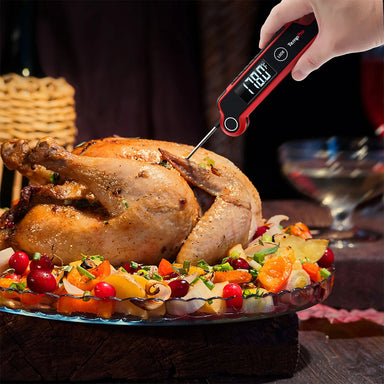
Le seul indicateur fiable qui permet aux cuisiniers de confirmer si leur viande est cuite correctement consiste à mesurer sa température interne. La température interne révèle précisément ce qui se passe à l'intérieur de la viande, et non ce à quoi elle ressemble à l'extérieur.
La température élimine l'incertitude.
Voici quelques directives de base pour établir les objectifs de température interne pour les coupes populaires :
Poulet : 74°C
Porc : 63°C
Steak :
- Saignant : 54-57°C
- À point : 60-63°C
Ces chiffres représentent plus que tout autre chose, plus que la couleur, plus que le temps, plus que la texture. Une fois que vous maîtrisez le contrôle de la température, la cuisine deviendra prévisible.
Pourquoi la plupart des cuisiniers amateurs se trompent encore
De nombreux cuisiniers amateurs qui utilisent initialement un thermomètre n'obtiennent toujours pas de meilleurs résultats. C'est parce qu'ils commettent une série d'erreurs :
- Mesurer la température interne trop tard
- Prendre des mesures dans des zones incorrectes
- Retirer la viande de la source de chaleur à la température interne cible précise
- Ignorer la chaleur résiduelle (cuisson résiduelle).
Parmi ces quatre erreurs énumérées, la dernière erreur, la "cuisson résiduelle", est peut-être la plus importante.
Effet de la cuisson résiduelle
Les viandes continuent de cuire après avoir été retirées de la source de chaleur. La chaleur résiduelle continue de se déplacer vers l'intérieur de la viande jusqu'à ce que la cuisson s'arrête. C'est ce qu'on appelle la cuisson résiduelle.
Si vous retirez votre viande de la source de chaleur précisément à la température interne souhaitée avant qu'elle n'atteigne ce point, vous avez trop cuit votre viande.
Pour obtenir des résultats optimaux, essayez ceci :
- Retirez votre viande de la source de chaleur 3 à 5 degrés en dessous de votre température interne cible.
- Laissez la viande reposer.
- Laissez l'augmentation naturelle de la température se produire.
Un ajustement comme celui-ci peut grandement améliorer vos résultats.
Quel outil peut mesurer la température interne sans couper la viande ?
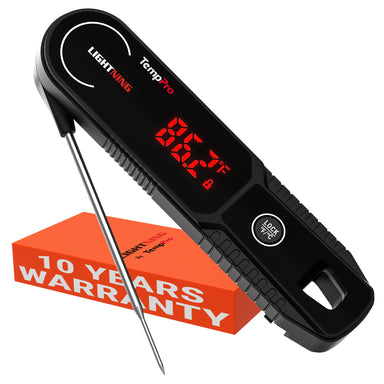
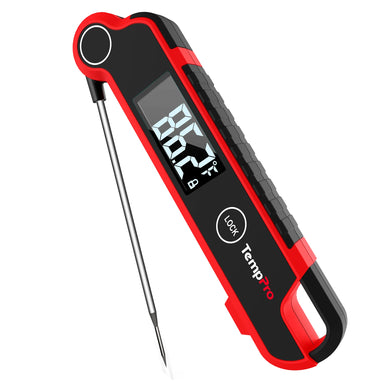
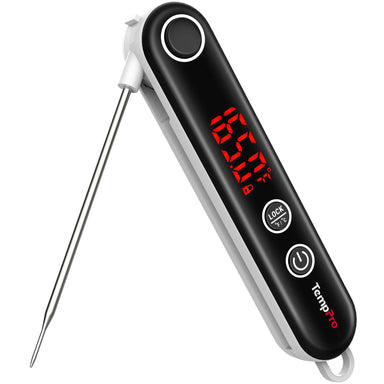
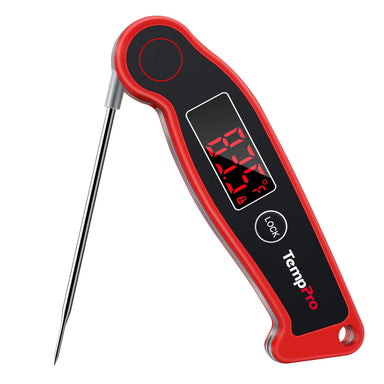
Le problème n'est plus d'identifier la température interne. Le problème réside dans l'accès à des lectures rapides et précises sans perturber votre processus de cuisson. Le thermomètre à viande à lecture instantanée TempPro TP03H offre tout ce potentiel.
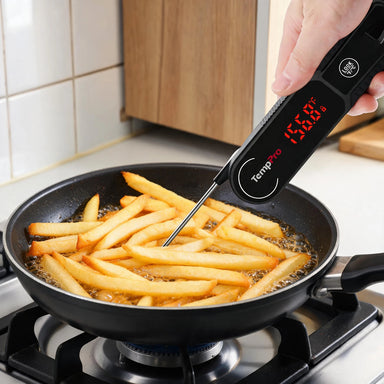
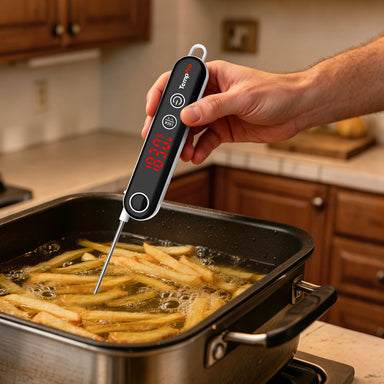
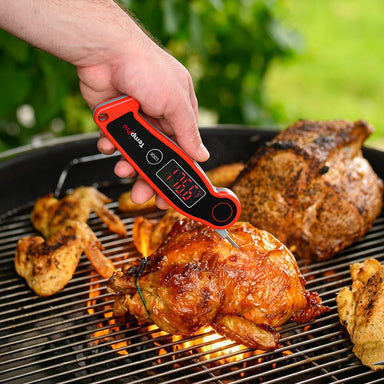
Au lieu de couper dans votre repas, insérez la sonde et obtenez instantanément une lecture précise de la température interne en 1 seconde. Pas d'attente. Pas de devinettes. Pas de perte de liquide. La vitesse est ici essentielle car la cuisson à des températures extrêmement élevées ajoute de simples secondes pour potentiellement dépasser la cuisson idéale.
L'utilisation d'une précision de ±0,5°C donne une indication claire de la proximité de votre température cible. Vous ne faites pas d'estimation ; vous ne vous fiez pas à la couleur ; vous prenez des décisions basées sur des données réelles.

Pourquoi la vitesse compte plus que vous ne le pensez
Un thermomètre lent ne remplit pas son rôle.
Si vous devez insérer un thermomètre alimentaire dans votre viande et attendre une lecture, votre viande continue de cuire pendant cet intervalle. Le délai supplémentaire entre l'insertion et la lecture peut faire la différence entre un repas juteux et un repas sec. Le TempPro TP03H élimine complètement ce délai. Vérifiez ; lisez ; agissez immédiatement. C'est pourquoi nous appelons le TempPro TP03H un véritable substitut à la coupe de votre viande, et pas seulement une option.
Conçu pour des situations de cuisine réalistes
La cuisine implique souvent des dégâts et des conditions incontrôlées, notamment des températures extrêmes, des éclaboussures de graisse, de la fumée et un mauvais éclairage. En raison de cette réalité, l'aspect pratique devient de plus en plus important.
Le TempPro TP03H comprend un écran rétroéclairé qui s'affiche clairement, que vous soyez en train de faire griller à l'extérieur par faible luminosité ou que vous cuisiniez à l'intérieur. L'appareil est conçu pour être résistant à l'eau et supportera un nettoyage sous l'eau courante sans être endommagé.
La conception pliable vous permet de ranger de manière compacte le TempPro TP03H tandis que son aimant puissant le fixe solidement aux surfaces métalliques, offrant une accessibilité lorsque le temps presse.
Des fonctionnalités telles que celles-ci offrent la confiance nécessaire pour que vous utilisiez réellement un thermomètre à chaque fois que vous cuisinez.
Ce qui se passe quand vous arrêtez de couper votre viande
À partir du moment où vous passez à l'insertion de sondes dans votre viande pour vérifier la température plutôt que de la couper pour vérifier la cuisson, les différences sont immédiatement apparentes. Vous éliminez le doute. Vous éliminez la dépendance à des signaux inexacts. Vous éliminez la perte de liquide.
Et les résultats parlent d'eux-mêmes :
- Le poulet reste humide au lieu de sécher.
- Les steaks conservent leurs jus au lieu de se répandre sur les assiettes.
- Le porc conserve sa tendreté au lieu de devenir raide et ferme.
Malgré l'utilisation d'ingrédients similaires et l'utilisation de techniques de cuisson identiques, les résultats diffèrent radicalement.
FAQ sur la mesure de la température de la viande
Q1. Comment savoir si la viande est cuite sans la couper ?
En mesurant la température interne à l'aide d'un thermomètre alimentaire à lecture instantanée rapide et précis.
Q2. La couleur est-elle un moyen fiable de vérifier la cuisson ?
Non. La couleur varie en fonction de la méthode de cuisson, de l'éclairage et du type de viande, et peut être trompeuse.
Q3. Pourquoi la viande s'assèche-t-elle quand je la coupe ?
Parce que couper la viande libère les jus internes qui gardent la viande humide et savoureuse.
Q4. Où dois-je insérer un thermomètre alimentaire ?
Vous devez insérer le thermomètre alimentaire dans la partie la plus épaisse de la viande, en évitant les os et le gras pour une lecture plus précise.
Q5. Ai-je besoin d'un thermomètre alimentaire pour la cuisine de tous les jours ?
Si vous voulez des résultats constants, oui. Cela élimine les devinettes et évite une cuisson excessive.
Q6. Qu'est-ce qui rend le TempPro TP03H efficace ?
Son temps de réponse de 1 seconde et sa haute précision vous permettent de vérifier la température instantanément sans trop cuire ni couper la viande.
Réflexions finales
Couper vos viandes semble sans danger, mais c'est un contributeur majeur aux repas secs et aux résultats variables. En fin de compte, il n'y a pas de solution en ajoutant du temps, en effectuant des vérifications supplémentaires ou en se fiant à davantage de suppositions.
Il n'existe qu'une seule solution : la précision.
La précision ne peut être atteinte qu'en remplaçant les signaux visuels par des mesures de température interne. En utilisant un outil efficace tel que le thermomètre à viande à lecture instantanée TempPro TP03H, qui fournit des lectures rapides et précises sans interférer avec le processus de cuisson. Vous éliminez complètement le besoin de couper vos aliments. Vous vérifiez une fois, vous retirez la viande au moment approprié, puis vous la laissez reposer. Pour la première fois, vos résultats seront constants.


Commentaires
Vous aimerez peut-être aussi


Produits recommandés