18 Symptoms of High Humidity in Your Home & How to Lower It


 288 Comments


Common symptoms of high humidity in your home include a sticky or muggy feeling, window condensation, musty odors, mold or mildew, damp clothes and towels, rooms that feel warmer than the thermostat setting, and more. For most homes, the EPA recommends keeping indoor relative humidity below 60%, ideally between 30%-50%. If humidity stays high, use exhaust fans, improve ventilation, run your AC properly, or use a dehumidifier. An indoor hygrometer can help you monitor humidity and identify when levels are too high.
Have you noticed that your home feels sticky even when the thermostat says the temperature is comfortable? Maybe your windows develop condensation, towels take forever to dry, or you keep noticing a musty smell in certain rooms.
These can all be symptoms of high humidity in your home. Humidity is a normal part of indoor air, but too much moisture can make your home feel uncomfortable and create conditions that encourage mold and other biological growth. The good news is that high indoor humidity is usually easy to identify once you know what to look for and an indoor hygrometer can help you confirm whether humidity is actually the problem.
For most homes, the U.S. Environmental Protection Agency (EPA) recommends keeping indoor relative humidity around 30% to 50%, and below 60% whenever possible. In this guide, we'll cover 18 common high humidity symptoms in the home, explain why indoor humidity gets too high, and share practical ways to lower it and keep your indoor environment more comfortable.
Table of Contents
What Is Considered High Indoor Humidity?
Before looking at the symptoms, it's important to understand what the humidity reading on a digital hygrometer actually means.
Relative humidity (RH) describes how much moisture is in the air compared with the maximum amount of moisture the air can hold at a particular temperature. For example, if your indoor relative humidity is 50%, the air contains about half of the moisture it could hold at that temperature.
A useful general guide is:
| Indoor Relative Humidity | What It Means |
|---|---|
| Below 30% | Often too dry |
| 30%–50% | Generally a comfortable target for most homes |
| 50%–60% | Increasingly humid; monitor conditions |
| Above 60% | High humidity; moisture problems become more likely |
| Above 70% | Very humid and worth addressing promptly |
The U.S. Environmental Protection Agency (EPA) recommends keeping indoor humidity between 30% and 50%, while keeping it below 60% can help reduce the conditions that support mold growth.
Keep in mind that humidity can vary significantly from room to room. A bathroom after a hot shower may temporarily have much higher humidity than a living room. A basement can also be substantially more humid than an upstairs bedroom. That's why measuring humidity is more reliable than simply guessing how humid your home feels.
18 Symptoms of High Humidity in Your Home
High humidity doesn't always announce itself with a single obvious sign. Instead, you may notice several small changes around the house. Here are 10 common signs of high humidity in a house.
Your Home Feels Sticky or Muggy
One of the first symptoms of high humidity is a sticky, muggy feeling indoors. You may feel sweaty even though the room temperature doesn't seem particularly high. Your skin may feel damp, and clothing may feel less comfortable than usual.
That's because humid air slows the evaporation of sweat from your skin. Your body normally relies on evaporation to help cool itself, but when the surrounding air already contains a lot of moisture, evaporation becomes less effective. This is especially noticeable during late summer and early fall in warm, humid parts of the United States.
If your home feels uncomfortable despite a reasonable thermostat setting, check the humidity level before simply turning the air conditioning lower.
What to check: If indoor RH is consistently above 60%, humidity may be contributing to the uncomfortable feeling.

Condensation Appears on Windows
Condensation on windows is one of the easiest signs of high indoor humidity to spot.
You may see:
- Water droplets on the inside of windows
- Foggy glass
- Damp window frames
- Moisture collecting around window edges
- Water on nearby walls or sills
Condensation happens when warm, moisture-filled indoor air meets a cooler surface. The air can no longer hold the same amount of water vapor, so some of that moisture turns into liquid water.
The EPA specifically identifies condensation on windows, walls, and pipes as a sign that moisture levels may be too high. Occasional condensation after cooking or showering isn't necessarily a major problem. However, persistent condensation deserves attention, especially if it appears throughout the home.
You Notice a Musty or Damp Smell
A persistent musty smell can be another clue that your home has a moisture problem. You might notice it in basements, bathrooms, closets, laundry rooms, under sinks, around windows, near HVAC equipment, and rooms with limited airflow.
A musty smell doesn't automatically prove that you have a mold problem. However, it can be a reason to inspect the area for excess moisture, leaks, damp materials, or visible mold.
Mold can grow in many parts of a home when moisture is present, including drywall, wood, carpet, insulation, fabrics, and other materials. If you smell something musty repeatedly, don't simply cover the odor with air freshener. Look for the underlying source of moisture.
Mold or Mildew Starts Appearing
Visible mold or mildew is one of the clearest signs that excess moisture needs attention. You may see spots or discoloration on bathroom grout, shower curtains, ceiling corners, window frames, walls, around air-conditioning vents, basement surfaces, and furniture or fabrics
High humidity does not mean mold will automatically grow, but moisture creates conditions that can support mold growth.
The EPA recommends keeping indoor humidity below 60%, ideally between 30% and 50%, to help control moisture and reduce the likelihood of mold growth. If you already see mold, lowering humidity is only part of the solution. You also need to address the moisture source and properly clean or remediate the affected area.
Peeling Wallpaper and Blistered Paint
Moisture trapped behind walls weakens the adhesive backing on wallpaper, causing it to curl at the seams or bubble. Similarly, high humidity prevents wall paint from bonding correctly, resulting in flaking, cracking, or raised paint blisters.
Sagging Drywall or Water Stains
Excessive indoor moisture slowly softens drywall over time. You might notice subtle water staining, yellowish discoloration, or water spots on your ceilings and upper walls, even without an active plumbing leak.

Pesky Pests
Insects like cockroaches and silverfish need water to survive. Condensation and damp environments provide exactly what they need. If you’re seeing more bugs than usual, high humidity could be inviting them in.
Your AC Runs Constantly But Doesn’t Cool
This is a classic sign. When humidity is high, your AC has to work harder to cool the air. The system might run nonstop but never quite reach the thermostat setting, driving up your energy bills. In September, this can happen because the AC isn’t running long enough to remove moisture, so the air feels cold and clammy at the same time.
Clothes, Towels, and Laundry Take Longer to Dry
Another easy-to-miss symptom of too much humidity is slow drying. Towels may remain damp for hours. Clothes may take longer to dry indoors. Bedding can feel slightly damp even after you've washed and dried it.
Why?
Drying depends partly on evaporation. When the surrounding air already contains a lot of moisture, water doesn't evaporate as efficiently. This can become particularly noticeable when laundry is dried indoors without adequate ventilation.
If your clothes dryer vents outdoors, make sure the vent is working properly. EPA guidance recommends venting moisture-generating appliances such as clothes dryers to the outdoors.
Your Home Feels Warmer Than the Thermostat Says
High humidity can make a room feel warmer and more uncomfortable than the actual temperature suggests. For example, you might have your thermostat set to 74°F, but the room still feels heavy and warm. Humidity affects how your body loses heat. When there is more moisture in the air, sweat evaporates less efficiently, making it harder for your body to cool itself. This can create the familiar hot-and-sticky feeling many people experience during humid weather.
Instead of lowering your thermostat repeatedly, check both temperature and relative humidity. Your air conditioner may be cooling the air without removing enough moisture, particularly if the system is oversized or doesn't run long enough to dehumidify effectively.
Electronics or Metal Objects Feel Damp
When indoor humidity is high, metal surfaces may feel cool, damp, or slightly clammy to the touch. You may notice moisture collecting on items such as tools, metal shelves, bathroom fixtures, or other objects in humid areas. Over time, excess moisture can also contribute to rust and corrosion. Electronics should be kept in a dry environment, especially in areas such as basements, bathrooms, and laundry rooms where humidity can fluctuate.
Pet Bedding or Soft Furnishings Develop a Musty Smell
Soft materials such as pet beds, rugs, curtains, and upholstered furniture can absorb moisture from the air. When humidity stays high, these materials may develop a musty or damp smell, particularly in rooms with poor ventilation. A persistent musty odor can also be a sign that moisture is accumulating somewhere in the room, even if you don't see visible mold.

Books and Paper Feel Damp
Books, magazines, cardboard boxes, and other paper products can absorb moisture when indoor humidity is consistently high. You may notice that pages feel slightly soft or wavy, books become harder to open, or cardboard loses its usual stiffness. If paper items are stored in a basement, closet, or other poorly ventilated area, prolonged exposure to moisture can increase the risk of mold and mildew.
Bedding Feels Damp or Clammy
If your sheets, blankets, or pillows feel damp or clammy even when you haven't been sweating, high indoor humidity could be part of the problem. Moist air slows evaporation, so sweat and body moisture may not dry as quickly while you sleep. This can make bedding feel less fresh and comfortable, especially during warm, humid weather.
Dust and Allergens May Become More Difficult to Manage
High humidity can contribute to indoor environmental conditions that support biological pollutants and allergens. For example, moisture can encourage mold growth, while certain indoor pests such as dust mites are also associated with humid environments.
The EPA notes that controlling indoor humidity can help minimize some biological pollutants, and recommends a relative humidity range of 30%-50% for homes.
Some people may experience symptoms when exposed to damp or moldy environments, including sneezing, stuffy or runny nose, coughing, wheezing, red or itchy eyes, and skin irritation. The CDC notes that damp and moldy environments can be associated with respiratory symptoms and allergic reactions, particularly among people who are sensitive to mold.
However, high humidity itself isn't necessarily the direct cause of these symptoms. Moisture can instead create conditions that encourage mold and other biological contaminants.
Wood Floors, Furniture, or Doors Start Changing
Your home's materials can also reveal a humidity problem.
Wood naturally responds to changes in moisture in the surrounding environment. When indoor humidity stays unusually high, you may notice wood floors swelling, doors becoming harder to close, cabinets sticking, furniture changing shape, wood surfaces showing signs of moisture damage.
A few days of humid weather usually won't destroy your furniture. The bigger concern is persistent moisture over time. This is particularly important for rooms containing expensive wooden furniture, musical instruments, books, artwork, or other moisture-sensitive items. A hygrometer can help you spot long-term humidity patterns before you notice physical changes in these materials.
Your Basement or Closets Feel Damp
Some areas of a home naturally have less airflow than others.
Basements, closets, bathrooms, laundry rooms, and rooms with poor ventilation can develop higher humidity than the rest of the house.
You may notice a damp feeling when you enter the room, musty odors, damp fabrics, condensation, mold spots, cooler surfaces that feel wet, and persistent moisture around pipes.
Don't assume that the whole house has the same humidity level. For example, your living room might be at 48% RH while your basement is at 68%. This is one reason room-by-room humidity monitoring can be useful.

The Humidity Reading Stays Above 60%
Sometimes the biggest symptom of high humidity is simply the number on your hygrometer. If your indoor humidity repeatedly stays above 60%, you have a measurable reason to investigate.
The EPA recommends keeping indoor relative humidity between 30% and 50% and below 60% whenever possible. A single reading above 60% doesn't necessarily mean you have a serious problem. Humidity can temporarily rise after taking a shower, cooking, boiling water, running a dishwasher, drying clothes, mopping floors, opening windows during humid weather.
The important question is whether humidity returns to a reasonable level afterward. If your home stays above 60% for extended periods, it's time to look for the source and consider ways to remove excess moisture.
Why Is My House So Humid?
If you have noticed several of these symptoms, the next question is: Why is the humidity so high?
There are several common causes.
Hot, Humid Outdoor Weather
Your home constantly exchanges air with the outdoors. When outdoor air is warm and humid, opening windows or doors can bring significant moisture inside.
This is especially relevant in humid regions of the United States and during late summer and early fall.
Opening windows is not always the best way to reduce indoor humidity. EPA recommends ventilation when outdoor conditions allow it; if the outdoor air is already humid, mechanical dehumidification may be more appropriate.
Showers and Baths
Hot showers release a surprising amount of water vapor into the air. If your bathroom doesn't have an effective exhaust fan or if the fan isn't vented outdoors, moisture can spread throughout the house. Run the bathroom exhaust fan while showering and for a while afterward.
Cooking
Boiling water, simmering food, using a steamer, and cooking without ventilation all add moisture to indoor air. Use a range hood that vents outdoors when possible, especially when boiling large amounts of water.
Drying Clothes Indoors
Wet laundry releases moisture as it dries. If you regularly hang clothes indoors, that moisture can accumulate unless the room has sufficient ventilation or dehumidification.
Air Conditioning Problems
Your air conditioner does more than cool your home, and it also removes moisture as air passes over the cold evaporator coil. If your HVAC system isn't operating correctly, is oversized for the space, or has other problems, it may not remove enough moisture. A room can therefore feel cool while still having relatively high humidity.
Plumbing or Roof Leaks
A hidden leak can continuously add moisture to your home. Check for leaking pipes, roof leaks, plumbing problems, damp basement areas, leaking appliances, water around HVAC equipment, and moisture near windows.
The EPA recommends fixing water leaks promptly and drying wet materials within 24-48 hours when possible.
What Should You Do If Your Home Humidity Is Too High?
Once you've identified the problem, the goal isn't simply to make the air as dry as possible. Instead, aim for a balanced indoor environment.
Measure Humidity Before Making Changes
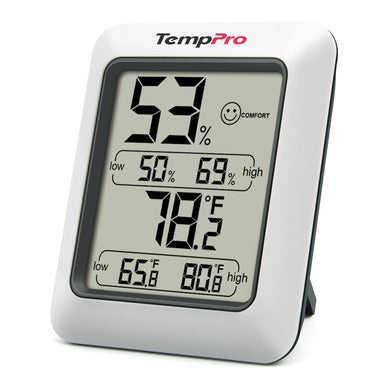
Start with an indoor hygrometer. Without measuring, you may be reacting to how the room feels rather than what the actual humidity is.
A hygrometer can tell you whether the room is at 45%, 55%, 65%, or 75% RH. That makes it much easier to decide whether you need better ventilation, air conditioning, or a dehumidifier.
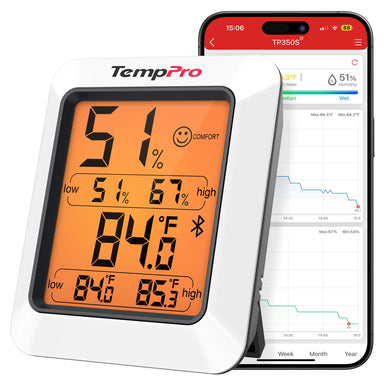
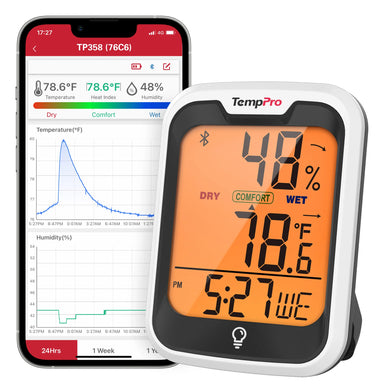
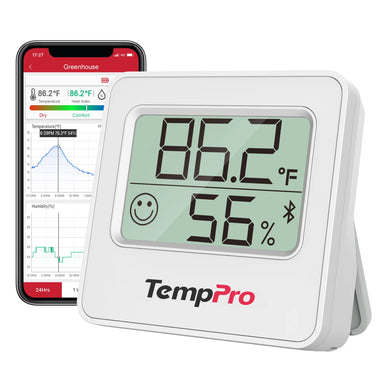
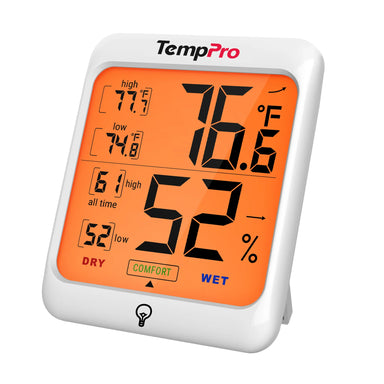
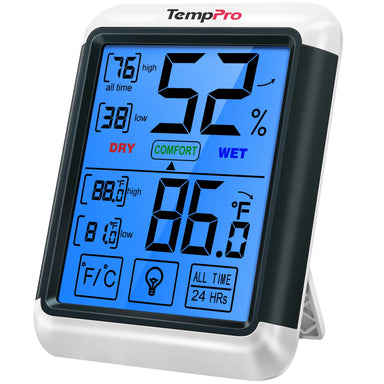
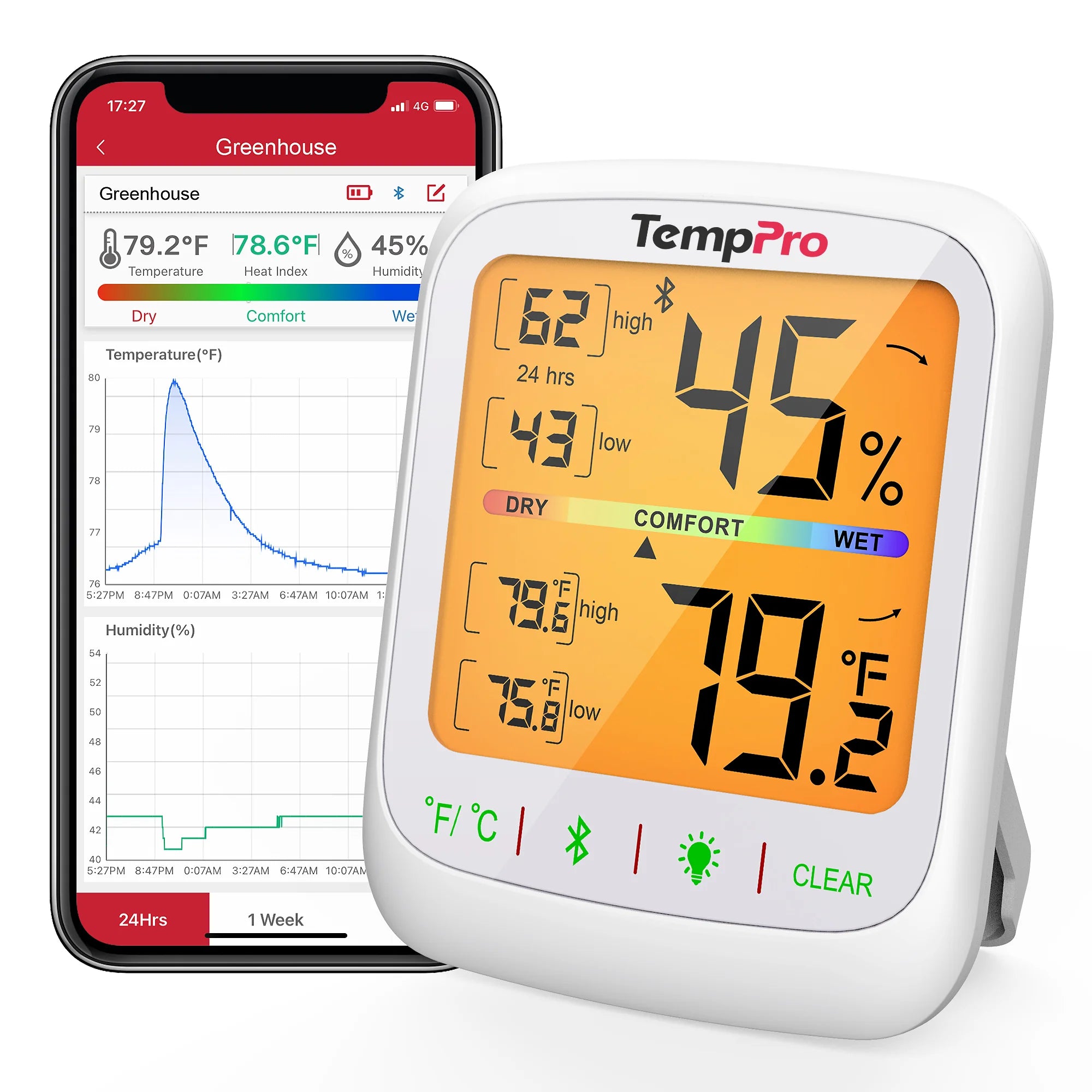
If you're looking for an easy way to monitor temperature and humidity around your home, the TempPro TempAir ELITE TP359 Bluetooth Indoor Hygrometer Thermometer combines an easy-to-read display with smartphone monitoring.
The TempAir ELITE TP359 is designed for homeowners who want more than a single humidity reading. It can help you understand how temperature and humidity change over time so you can make better decisions about ventilation, air conditioning, and dehumidification.
Why use the TempAir ELITE TP359 for indoor humidity monitoring?
- Accurate temperature and humidity readings: Uses a Swiss-made Sensirion sensor with temperature accuracy up to ±0.9°F and humidity accuracy up to ±2% RH.
- Bluetooth monitoring: Connects to your smartphone through Bluetooth 5.0 with a range of up to 260 feet in open conditions.
- Track changes over time: The TempPro app lets you view temperature and humidity trends, helping you identify when and why humidity rises.
- Custom alerts: Set your preferred temperature and humidity limits and receive alerts when readings move outside your target range.
- Large backlit display: The 3.5-inch LCD screen makes readings easy to check without opening the app, while high and low records help you monitor changes.
If your digital hygrometer shows high humidity, don't panic. Work through the problem step by step.

If RH is occasionally above 50%:
Monitor it and look for patterns. Temporary increases after showers or cooking are normal.
If RH frequently reaches 60% or higher:
Look for moisture sources, improve ventilation, check your AC, and consider using a dehumidifier.
If RH remains very high:
Look for leaks, basement moisture, HVAC problems, or inadequate ventilation. A professional inspection may be appropriate.
If you see or smell mold:
Address both the mold and the moisture source. Lowering humidity without fixing a leak won't solve the underlying problem. The CDC recommends removing mold and correcting the moisture problem that allowed it to grow.
Use Bathroom and Kitchen Exhaust Fans
Run exhaust fans when showering, bathing, cooking, or washing dishes.
Ideally, these fans should vent moisture outdoors rather than simply moving humid air to another part of the house. EPA specifically recommends using kitchen and bathroom exhaust fans that vent outdoors to reduce indoor moisture.
Use Your Air Conditioner Correctly
Your AC system can remove both heat and moisture.
Make sure:
- Filters are maintained according to the manufacturer's instructions.
- The condensate drain is clear.
- The system is properly sized.
- The HVAC system receives regular maintenance.
If your home remains humid even when the AC is running, have an HVAC professional inspect the system.
Use a Dehumidifier
A dehumidifier can be especially useful when humidity remains high despite normal air conditioning. It can be helpful in basements, laundry rooms, bedrooms, bathrooms, garages, other damp areas.
Set the dehumidifier based on your desired RH rather than simply running it continuously. For many homes, keeping indoor humidity around 30%-50% is a reasonable target.
Fix Leaks and Moisture Sources
A dehumidifier can remove moisture from the air, but it cannot fix a leaking pipe or roof. If humidity suddenly increases, look for the source.
Check under sinks, around toilets, near appliances, around windows, in the basement, and around HVAC equipment. Fixing the source is often more important than simply treating the symptoms.
Don't Bring Extra Moisture Inside
Small daily habits can make a difference.
Try to:
- Cover pots when cooking.
- Use exhaust fans.
- Vent your dryer outdoors.
- Avoid drying large amounts of laundry in poorly ventilated rooms.
- Keep wet towels from piling up.
- Dry spills quickly.
- Repair plumbing leaks promptly.
EPA recommends drying wet or damp materials within 24-48 hours when possible because prolonged moisture can encourage mold growth.
Final Thoughts
High humidity doesn't always look like a major problem at first. It may start with a room that feels sticky, a bathroom mirror that stays foggy, or a towel that never seems to dry. However, those small signs can tell you something important about your indoor environment. The most useful first step is simple: measure the humidity.
Keeping indoor relative humidity around 30%-50% is a practical target for many homes, while avoiding prolonged levels above 60% can help reduce moisture-related problems.
With an indoor hygrometer such as the TempPro TempAir ELITE TP359, you can monitor both temperature and humidity, identify daily patterns, receive alerts when conditions change, and make informed adjustments to your home's ventilation, air conditioning, or dehumidification.
Instead of guessing whether your home is too humid, let the numbers show you what is actually happening and use that information to create a more comfortable indoor environment.

Comments


Recommended Products