5 Pot Roast Tips for Fall-Apart Tender Beef


 288 Comments


You’ve done everything the recipe said. The roast has been in the oven since early afternoon, the house smells incredible, and you finally pull it out expecting beef that shreds with a fork. Instead you get a piece that’s dry on the edges, chewy in the middle, and oddly stringy, after all those hours. It’s one of the most deflating things that can happen in a kitchen.

The frustrating part is that time alone doesn’t fix it. Two people can use the same cut, the same recipe, and the same number of hours and still end up with completely different results. What separates fall-apart pot roast from a tough one isn’t effort or luck, it’s temperature, held steady long enough for the beef to actually transform. Here are the five things that matter most.
Tip 1: Start With a Tough Cut
This is the one dish where the cheap, tough cuts win. Pot roast needs a cut with plenty of connective tissue, like a chuck roast, because that tissue is exactly what turns into tenderness over a long cook. It’s full of collagen, and given enough time at the right temperature, collagen melts into gelatin, which is what gives pot roast its rich, silky, fall-apart texture.
Lean cuts do the opposite. With little connective tissue and not much fat, they dry out long before they ever turn tender, no matter how long you leave them in the pot. Enough fat and collagen in the cut is what makes the fall-apart texture possible in the first place, so everything else depends on starting here.
Tip 2: Hold a Steady Low Temperature
Every recipe says low and slow, but almost no one actually holds it there. Most people put the beef in the oven or crockpot and let it ride until dinner, and in between, the temperature drifts more than they realize. Ovens swing, crockpot lids get lifted, and the environment around the pot changes, and each of those nudges the temperature off course.
That matters because uneven heat means uneven results. When the temperature swings around, the connective tissue breaks down in some parts of the roast and not others, so you end up with tender spots and tough spots in the same piece of beef. A steady, low temperature held for hours is the whole point of low and slow, and holding it steady is far harder than it sounds when you’re cooking by feel.
Tip 3: Cook to Temperature, Not Time
Your beef isn’t done when it looks done, and it isn’t done at a set number of hours. It’s done when the internal temperature reaches the point where the connective tissue fully breaks down, which for pot roast is roughly 195 to 205°F (90 to 96°C). A roast can cook for hours and still be tough if it never gets there.
This is where a lot of people quit too early. It’s tempting to assume that once the beef hits 160 to 170°F it’s finished, but at that point only about a third to half of the connective tissue has broken down. Pull it there and you get beef that’s cooked but still tough and chewy. Keep going to that 195 to 205°F window and the collagen finishes melting into gelatin, which is the actual difference between a piece of cooked beef and true, fall-apart pot roast. Time can’t tell you where you are on that curve. Only temperature can.
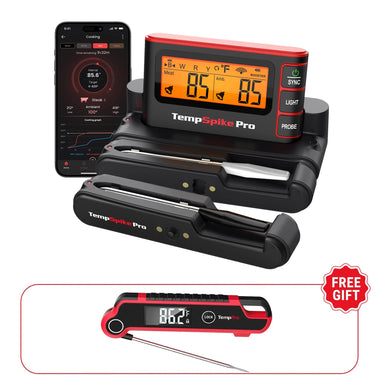
A wireless leave-in thermometer like the TempPro TempSpike Plus TP972 is what makes cooking to that number practical over a long roast. It stays in the beef the entire time and reads the internal temperature continuously, so you can watch it climb toward 205°F without ever opening the oven and dropping the heat, and its stable 600-foot Bluetooth range lets you track the roast from anywhere in the house. Each probe reads the meat and the surrounding temperature at the same time, so a single probe already tells you both how the beef is doing and whether your oven is actually holding its heat. That ambient reading is more useful than it sounds. If the roast is cooking slower than expected, you can tell whether the oven is running cool or it’s just a big, dense cut, so you adjust for the right reason instead of overreacting.

Because it’s a twin-probe set, you can also run a second roast or another dish at the same time and track both from your phone, each with its own target and alert. One tip worth following: push the probe in at least to the depth ring near the handle, since that’s what the probe is designed for and what keeps it accurate and protected through a long cook. Set an alert at your target and it tells you the moment the beef arrives, so you can get on with the sides instead of hovering over the oven.
Tip 4: Don’t Rush the Breakdown
Patience is the hardest ingredient in pot roast. The long stretch between “looks cooked” and “actually tender” is where most people give up, pulling the roast while the collagen is only partway through melting. There’s no shortcut through it; the connective tissue needs those hours at temperature to fully break down.
The good news is that this waiting doesn’t require watching. Because the thermometer is tracking the roast for you and will alert you at your target, you’re free to leave it alone and let the breakdown finish on its own schedule. Rushing this stage is what makes pot roast tough, and letting it run its course is what makes it fall apart.
Tip 5: Rest Before You Slice
After hours of waiting, the temptation to slice straight into the roast is strong. Resist it. Right off the heat, the juices are still moving through the beef, and cutting in immediately lets them spill out onto the board, leaving the meat drier than it needs to be.
Give the roast a rest before you slice or shred it. That short pause lets the juices settle back through the meat, so it stays moist and tender all the way through. It’s a small step that protects all the work the first four put in.
Why Temperature Beats Guesswork
Most people cook pot roast on instinct, setting the oven to low, following a recipe, and hoping it works out. Some days it does and some days it doesn’t, and that unreliability is the whole reason pot roast feels so hit or miss. The moment you switch from guessing to cooking by temperature, it becomes predictable: you know when the beef will be done, how much longer it needs, and exactly when to take it out.
None of it takes special skill. It takes the right cut, a steady low temperature, the patience to let the connective tissue fully break down, and a rest at the end. A thermometer like the TempSpike Plus TP972 removes the guesswork from the part that trips up most people, tracking the roast in real time so you’re working from actual numbers instead of hoping. Stop guessing at the heat and start measuring it, and fall-apart pot roast stops being something you luck into and becomes something you can count on. If you’d like to see the full range of truly wireless probes for roasting, braising, and grilling, you can browse the Smart Meat Thermometer collection.

FAQ
Why is my pot roast tough even after hours of cooking?
Because it hasn’t reached a high enough internal temperature for the connective tissue to break down, usually 195 to 205°F.
What temperature should pot roast be cooked to?
Around 195 to 205°F (90 to 96°C) for a tender, fall-apart texture.
Do I need a thermometer for pot roast?
It’s not required, but it’s the most reliable way to get consistent results.
What thermometer works best for pot roast?
A wireless leave-in probe like the TempPro TempSpike Plus TP972 tracks the internal temperature continuously and alerts you at 195 to 205°F, and because each probe reads the ambient temperature too, you can also see whether your oven is holding steady. Its two probes let you monitor a second roast or dish at the same time.
Can I overcook pot roast?
Yes, especially if it loses too much moisture or the temperature isn’t well controlled.
Why does my beef stall at 160 to 170°F?
That’s only partway through the breakdown. The beef needs to keep climbing to 195 to 205°F for the connective tissue to fully melt.
What’s the biggest mistake when cooking pot roast?
Stopping too early, or going by time instead of internal temperature.


Comments

Recommended Products