7 consejos para obtener cerdo deshebrado tierno siempre


 288 Comments


La mayoría de las personas no tienen control sobre el entorno en el que se cocina el cerdo desmenuzado (pulled pork). Se supone que el cerdo desmenuzado se cocina a fuego lento y durante mucho tiempo, así que eso no es un problema. Pero cuando la gente no presta atención a lo que ocurre mientras el cerdo desmenuzado se cocina, las cosas salen terriblemente mal. El cerdo desmenuzado termina quedando duro y seco, o blando y sin nada de textura.
El tiempo no es el problema. Ni tampoco la cantidad de condimento. El problema es el control. A la gente le dicen que el cerdo desmenuzado es algo de "programar y olvidar". Y debería serlo. Sin embargo, aquí es donde la mayoría de las personas se equivocan. Mientras el cerdo desmenuzado se cocina, es muy posible que incluso un ligero cambio de temperatura, o abrir la tapa unas cuantas veces, tenga un gran impacto. Por lo tanto, la mayoría de las personas no se dan cuenta de que han cometido un error hasta que es demasiado tarde.
Por lo tanto, tiene sentido que la diferencia entre un cerdo desmenuzado promedio y uno excelente sea una cuestión de precisión a lo largo del tiempo, más que del esfuerzo dedicado a prepararlo.
Consejos prácticos para cocinar cerdo desmenuzado
Elija el trozo de carne adecuado
No hay otro trozo de carne que funcione mejor para el cerdo desmenuzado que la paleta de cerdo. La paleta de cerdo tiene suficiente grasa para proteger la carne mientras se cocina, y la grasa ayuda a crear esa textura suave que se deshebra fácilmente. Los trozos de carne más magros no funcionan bien para el cerdo desmenuzado. Se secan antes de estar tiernos.
Cocinar a fuego lento es eficaz solo si la temperatura se mantiene constante
Todos hablan de lo importante que es cocinar el cerdo desmenuzado "a fuego lento", sin embargo, la mayoría de las personas no controlan la temperatura. En cambio, la mayoría simplemente mete la carne en el ahumador o la parrilla y luego se aleja. Puede que le echen un vistazo de vez en cuando, pero rara vez continúan controlando la temperatura. Sin embargo, la temperatura cambia constantemente. Esto es causado por cambios en el combustible, el flujo de aire, el clima y cuando la persona abre la tapa. Incluso pequeñas variaciones de temperatura a lo largo de las horas causarán un gran cambio en el producto final. Por lo tanto, el monitoreo es mucho más importante que simplemente ajustar la temperatura.
Controle la temperatura del cerdo desmenuzado de forma continua
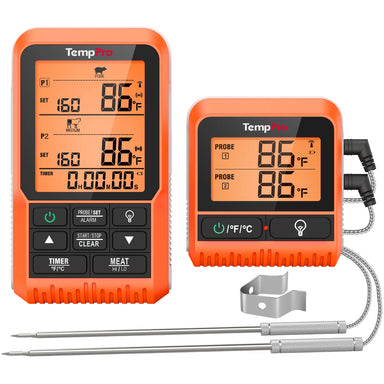
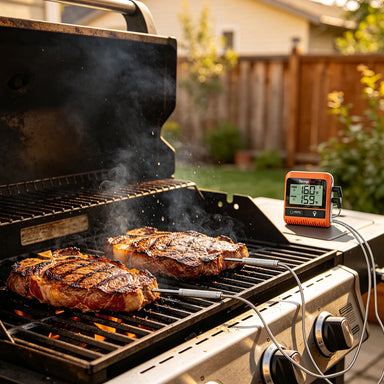
El seguimiento de la temperatura de los alimentos no se trata de comprobarla periódicamente. Se trata de entender lo que está ocurriendo con su carne y con la parrilla/horno durante todo el tiempo. Una herramienta como el termómetro inalámbrico para carne con doble sonda TempPro TP20B de 500 pies es esencial para el cerdo desmenuzado. Con este termómetro de alimentos, en lugar de tener que salir continuamente de casa para revisar su ahumador, puede monitorear ambas cosas: la temperatura de su carne y la temperatura de su parrilla/horno desde una distancia de hasta 500 pies.
Con este termómetro para carne, no hay necesidad de descargar una aplicación. Simplemente utilice la pantalla retroiluminada integrada del receptor. El termómetro inalámbrico para carne con doble sonda TempPro TP20B de 500 pies también incluye temperaturas preestablecidas por el USDA y alertas personalizables. Además, se incluye un temporizador para cocciones más largas.

Todas estas funciones le permiten mantener el control de su cocción sin tener que estar frente a su parrilla durante ocho a doce horas.
Entienda el "estancamiento" (stall)
El momento más común en el que la gente entra en pánico es cuando su cerdo desmenuzado alcanza cierta temperatura y se detiene. A aproximadamente 150-170 grados Fahrenheit, el cerdo desmenuzado normalmente deja de subir de temperatura. Esto se conoce como "el estancamiento".
¿Qué está pasando? La humedad de la superficie del cerdo se está evaporando y enfriando la carne mientras se cocina. Es similar al efecto refrescante del sudor en el cuerpo humano.
La mayoría de los cocineros novatos entran en pánico, suben el fuego y retiran la carne demasiado pronto. Ambas acciones arruinan el cerdo desmenuzado. En su lugar, mantenga la calma y espere pacientemente. Permita que pase por esta etapa normalmente o cubra la carne si es necesario.
Use sondas dobles para un control total.
Otro gran error es controlar solo la temperatura interna de la carne. La temperatura interna le dice lo que está ocurriendo con su carne, pero no le dice por qué.
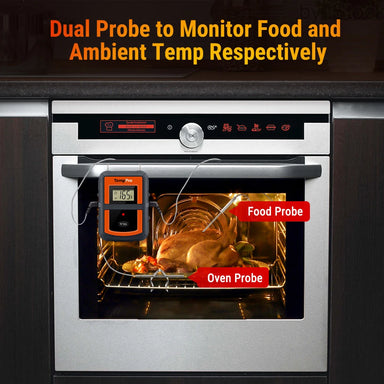
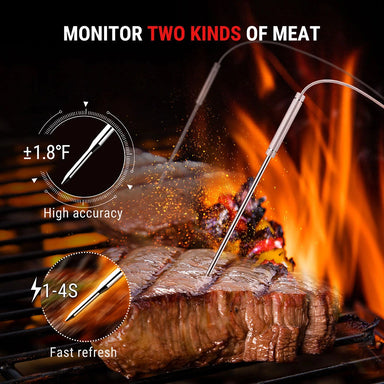
El sistema de doble sonda proporcionado por el termómetro inalámbrico para carne con doble sonda TempPro TP20B de 500 pies le permite realizar un seguimiento tanto de la temperatura interna de la carne como de la temperatura ambiente de cocción.
Al rastrear ambos, obtiene un conocimiento completo. Si el cerdo tarda demasiado en cocinarse, sabrá si el problema fue el cerdo en sí y no el ahumador. Este tipo de visión elimina la posibilidad de una compensación excesiva y mantiene la estabilidad en su cocción.

No retire la carne demasiado pronto
El cerdo desmenuzado no está terminado cuando alcanza una temperatura interna segura. El cerdo desmenuzado está terminado cuando la carne está tierna. Esto generalmente se logra a temperaturas internas que oscilan entre:
- 195-205° F
Una vez que esto ocurre, los tejidos conectivos dentro de la carne se han descompuesto lo suficiente como para que la carne se pueda deshebrar fácilmente. Si retira la carne demasiado pronto, estará:
- Dura
- Difícil de deshebrar
- Seca a pesar de estar completamente cocida
El termómetro inalámbrico para carne con doble sonda TempPro TP20B de 500 pies tiene notificaciones de temperatura preestablecidas para ayudar con esto. Establezca la temperatura deseada y reciba una notificación exactamente cuando la carne esté lista, sin adivinanzas.
El reposo es lo que lo hace jugoso
Esta es la parte que la mayoría de la gente apresura y de la que luego se arrepiente. Después de horas de cocción, los jugos dentro del cerdo aún se están moviendo. Cuando retira el cerdo de la fuente de calor, esos jugos salen del cerdo y la carne se seca. Permita que el cerdo repose.
A medida que el cerdo reposa, los jugos se distribuirán uniformemente por toda la carne. Esto mejora la textura y el sabor del cerdo. Esta es la diferencia entre un buen cerdo desmenuzado y uno excepcional.

Preguntas frecuentes sobre cómo cocinar cerdo desmenuzado
P1. ¿Por qué mi cerdo desmenuzado está duro y no se deshebra?
Porque no ha alcanzado una temperatura interna lo suficientemente alta para que el tejido conectivo se descomponga.
P2. ¿A qué temperatura se debe cocinar el cerdo desmenuzado?
Alrededor de 195-205° F para una ternura óptima.
P3. ¿Qué es el "estancamiento" (stall) en el cerdo desmenuzado?
Un período en el que la temperatura del cerdo desmenuzado deja de subir debido a que la evaporación de la humedad enfría la carne.
P4. ¿Necesito un termómetro de cocina inalámbrico para el cerdo desmenuzado?
No es obligatorio, pero un termómetro inalámbrico para carne es la forma más fiable de garantizar resultados consistentes.
P5. ¿Cuál es el mayor error al cocinar cerdo desmenuzado?
Confiar en el tiempo en lugar de monitorear la temperatura durante toda la cocción.


Comentarios
También te puede interesar


Productos recomendados