Cómo saber cuándo las costillas están listas


 288 Comments


No hay nada como el aroma de las costillas que se extiende por el jardín en una tarde soleada o que inunda la cocina en un fin de semana acogedor. Ya sea que ahúme una costillar de baby backs, ase costillas de cerdo o cocine a fuego lento costillas estilo campestre, cocinar costillas es una tradición culinaria estadounidense.
Sin embargo, para muchos cocineros caseros, las costillas pueden ser increíblemente intimidantes. ¿La mayor ansiedad? Cómo saber cuándo están listas las costillas. Cocinarlas demasiado rápido, y quedan duras y gomosas. Dejarlas demasiado tiempo, y se convierten en una decepción blanda y seca. A diferencia de un bistec estándar, las costillas tienen mucho hueso, grasa y tejido conectivo duro (colágeno) que requieren tiempo para descomponerse. Debido a esto, mirar el reloj no es suficiente.
En esta guía completa, desglosaremos la ciencia del punto de cocción de las costillas, las temperaturas exactas que debe buscar y los métodos más confiables para asegurar que sus costillas estén perfectamente tiernas, jugosas y seguras para comer.
Por qué es importante acertar con la temperatura de las costillas
Cuando aprendes a saber si tus costillas están listas, estás equilibrando dos factores críticos: la seguridad alimentaria y la textura.
Según el USDA, la carne de cerdo es segura para consumir una vez que alcanza una temperatura interna de 145 °F. Sin embargo, si retira las costillas del fuego a 145 °F, se sentirá muy decepcionado. A esta temperatura, el colágeno y los tejidos conectivos aún no se han derretido. Sus costillas quedarán increíblemente duras y masticables.
Para obtener esa característica ternura "que se deshace en la boca" o esa textura "que se cae del hueso" que tanto gusta, las costillas deben cocinarse mucho más tiempo. La magia ocurre cuando la temperatura interna sube, permitiendo que las grasas y el colágeno se licúen, lo que hace que la carne sea increíblemente jugosa y tierna.
Pero hay dos riesgos:
- Poco cocidas: la carne dura es poco apetitosa, pero lo que es más importante, la carne de cerdo poco cocida puede albergar bacterias o parásitos dañinos. Debe alcanzar una temperatura interna segura.
- Demasiado cocidas: las costillas secas y desmenuzables son igual de decepcionantes.
Entonces, ¿cómo saber cuándo están listas las costillas? La respuesta es una combinación de lecturas de temperatura precisas y signos físicos. Comencemos con el método más preciso.

Cuáles son las temperaturas objetivo para las costillas
Entonces, ¿cuándo están listas las costillas? El punto dulce ideal depende ligeramente de su preferencia personal por la textura:
- Seguras para comer (pauta del USDA): la carne de cerdo debe alcanzar una temperatura interna de 145 °F (63 °C) para ser segura para el consumo.
- Perfectamente tiernas (el punto óptimo): para las costillas, 145 °F no es suficiente. El colágeno no se descompone hasta que la carne alcanza los 195 °F a 203 °F (90 °C a 95 °C).
Sí, ha leído bien. Necesita "cocinar demasiado" la carne más allá de la zona de seguridad para que quede tierna. Cuando la temperatura interna de las costillas alcanza los 198 °F a 203 °F, los tejidos conectivos se disuelven. Así es como se sabe cuándo las costillas de cerdo están listas para esa textura clásica de barbacoa.
Cómo saber cuándo están listas las costillas: 5 métodos infalibles
Dependiendo de su electrodoméstico de cocina, es posible que se pregunte cómo saber cuándo las costillas de cerdo están listas sin adivinar. Aquí están los mejores métodos prácticos utilizados por los chefs de patio trasero y los cocineros caseros por igual.
Use un termómetro de carne inalámbrico
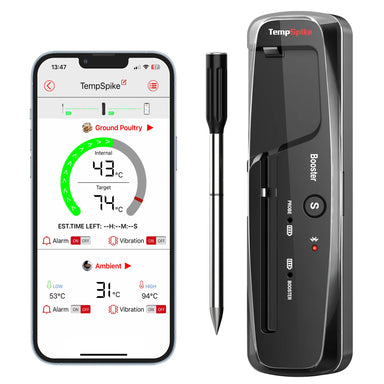
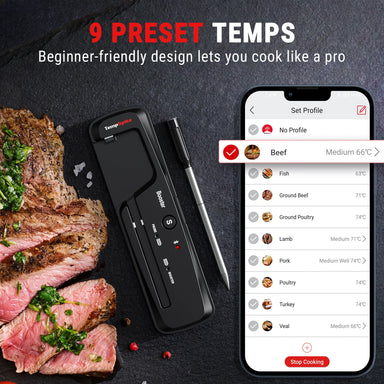
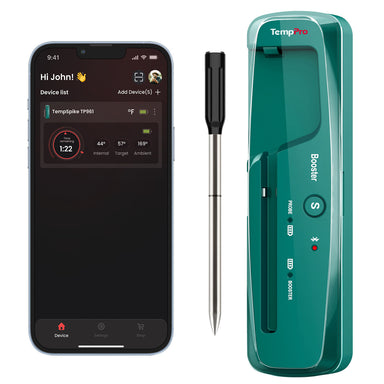
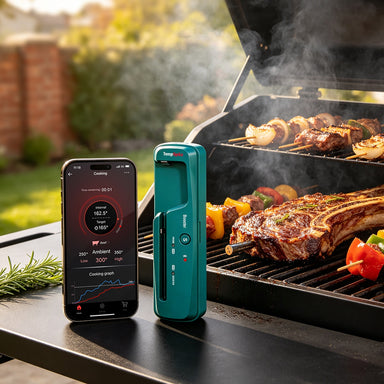
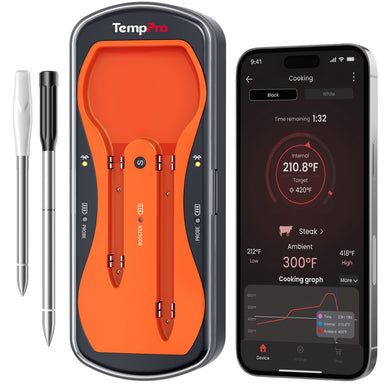
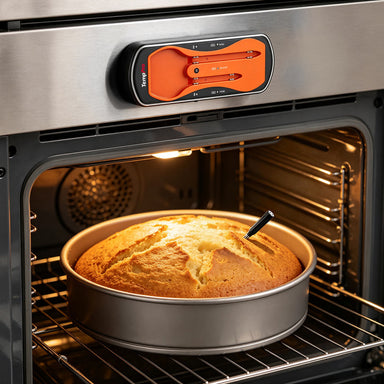
En el pasado, verificar la temperatura de las costillas significaba abrir el horno o levantar la tapa de la parrilla, lo que permite que el calor se escape y prolonga el tiempo de cocción. Hoy en día, la tecnología lo hace sin esfuerzo. Para responder perfectamente a "¿cómo sé cuándo las costillas de cerdo están listas sin adivinar?", recomendamos encarecidamente el Termómetro de carne Bluetooth inalámbrico TempPro TempSpike Plus TP970.
Por qué el TempSpike Plus TP970 cambia las reglas del juego
El TempSpike Plus TP970 es un termómetro de carne verdaderamente inalámbrico que se inserta en la parte más gruesa de la carne de la costilla, teniendo cuidado de no tocar el hueso. He aquí por qué todo cocinero casero necesita esta herramienta:
- Alcance de 600 pies: Puede ver el partido de fútbol en la sala de estar, trabajar en el jardín o dormir la siesta en el sofá. Siempre que esté dentro de los 600 pies de su parrilla u horno, permanecerá conectado.
- Monitoreo en tiempo real: El termómetro envía datos continuos a su teléfono inteligente a través de Bluetooth. Puede observar cómo la temperatura interna de la costilla sube de 50 °F a 200 °F en tiempo real.
- Sonda inalámbrica: La sonda es verdaderamente inalámbrica y puede medir tanto la temperatura interna como la temperatura ambiente.
- Alertas de smartphone: Abre la aplicación, establece la temperatura objetivo (digamos 200°F) y sigue con su día. En el momento en que sus costillas alcanzan ese número mágico, la aplicación envía una alerta a su teléfono. No más estar pendiente del calor.

Cómo usar TempSpike Plus TP970 para medir la temperatura de las costillas
Simplemente inserte la sonda inalámbrica en la costilla, asegurándose de evitar golpear el hueso, lo que puede falsear la lectura. El TempSpike Plus TP970 ofrece monitoreo remoto y en tiempo real de la temperatura de la costilla directamente en su teléfono inteligente. Lo mejor de todo es que, cuando las costillas alcanzan la temperatura objetivo personalizada, la aplicación le avisará de inmediato. Esto elimina toda la ansiedad del proceso, asegurando que su carne esté perfectamente tierna y saludable para comer.
La prueba de la flexión
Si alguna vez ha observado a pitmasters experimentados, es posible que los haya visto levantar un costillar con pinzas. Esto se conoce como la prueba de la flexión. Si aún no tiene un termómetro de carne, la prueba de la flexión es el estándar de la industria. Esto es especialmente útil para saber cuándo las costillas están listas en la parrilla.
Cómo realizar la prueba de la flexión:
- Levante el costillar aproximadamente a un tercio de su longitud con unas pinzas.
- Levante las costillas y déjelas doblarse.
- Observe la superficie: si la carne de la parte superior de las costillas comienza a agrietarse y a separarse del hueso, están listas.
- Observe el ángulo: un costillar completo debe doblarse hacia abajo en un ángulo de aproximadamente 45 a 60 grados antes de que la carne comience a desgarrarse.
- Si el costillar está rígido como una tabla y no se dobla, vuelva a ponerlo al fuego. Si se agrieta fácilmente y las costillas se caen mucho, están listas. Este es un método clásico para saber cuándo las costillas están listas en la parrilla sin aparatos sofisticados.
Retracción de la carne de los huesos
Otra pista visual de que las costillas se están acercando al punto de cocción es el efecto de "retracción". A medida que la carne se cocina y se contrae, se encoge gradualmente de los extremos de los huesos, exponiendo una pequeña porción de hueso.
Normalmente, cuando se ve de ¼ a ½ pulgada de hueso, las costillas están a punto de terminar. Sin embargo, esto no debe usarse como el único indicador, porque la retracción a veces puede ocurrir antes de que las costillas estén completamente tiernas.

Verifique la ternura con un palillo o una sonda
Este método a menudo se describe como la "prueba de la mantequilla" y es una de las formas más precisas de juzgar la cocción basándose en la textura.
Simplemente inserte un palillo, un pincho o una sonda de un termómetro de alimentos en la carne entre los huesos. Si las costillas no están listas, sentirá resistencia a medida que la herramienta atraviese la carne. Cuando las costillas están perfectamente cocinadas, la sonda debe deslizarse hacia adentro y hacia afuera con muy poca resistencia, similar a insertarla en mantequilla ablandada.
Esta técnica es ampliamente utilizada por cocineros profesionales de barbacoa y es particularmente útil cuando no está seguro de cómo saber cuándo las costillas de cerdo están listas sin depender solo de los números.
Observe con qué facilidad se separa la carne
Otra forma práctica de saber si las costillas están listas es torcer o tirar suavemente de uno de los huesos. Cuando las costillas están poco cocidas, la carne se adhiere firmemente al hueso. A medida que se cocinan por completo, la carne se afloja y comienza a separarse más fácilmente.
No querrá que la carne se caiga por completo del hueso (a menos que esa sea su preferencia), pero debe desprenderse limpiamente con un tirón suave. Esta es una señal fuerte de que las costillas han alcanzado el equilibrio adecuado de ternura y estructura.
Este método funciona bien con diferentes tipos de costillas, ya sea que se pregunte cómo saber cuándo las costillas de cerdo están listas o cómo saber cuándo las costillas estilo campestre están listas.
Preguntas frecuentes sobre la cocción de costillas
P1. ¿Por qué mis costillas están duras aunque las he cocinado durante horas?
¡Este es el problema más común para los cocineros caseros! Si sus costillas están duras, en realidad están poco cocidas, no demasiado cocidas. El colágeno no ha tenido suficiente tiempo o calor para derretirse. Vuelva a ponerlas al fuego y deje que alcancen esa zona dorada de 195°F-203°F.
P2. ¿Por qué hay un anillo rosado dentro de mis costillas? ¿Es seguro?
Si está aprendiendo a saber cuándo están listas las costillas ahumadas, es probable que vea un anillo rosado justo debajo de la superficie de la carne. Esto se llama anillo de humo. Es una reacción química inofensiva entre el humo de la madera y la mioglobina de la carne. Siempre que su temperatura interna sea correcta, ¡es completamente seguro y muy deseado!
P3. ¿Debo envolver mis costillas en papel de aluminio?
Muchos cocineros estadounidenses usan el método 3-2-1 (3 horas ahumadas abiertas, 2 horas envueltas en papel de aluminio con un poco de líquido, 1 hora sin envolver con salsa). Envolver atrapa el vapor, lo que acelera el proceso de ablandamiento y le ayuda a lograr esa textura que se deshace del hueso mucho más rápido.
P4. ¿Cuánto tiempo debo dejar reposar mis costillas después de cocinarlas?
Siempre deje reposar sus costillas de 10 a 15 minutos bajo una capa suelta de papel de aluminio antes de cortarlas. Esto permite que los deliciosos jugos se redistribuyan por toda la carne en lugar de derramarse sobre su tabla de cortar.
P5. ¿Cómo saber cuándo están listas las costillas sin hueso?
Esto es más difícil porque no hay hueso para medir la retracción. Debe confiar en un termómetro de carne. Inserte la sonda del termómetro de carne en el centro de la pieza más gruesa. Cuando marque 200°F (93°C), estarán listas. Además, use un tenedor para ver si la carne se desmenuza fácilmente.
P6. ¿Cuánto tiempo tardan en cocinarse las costillas?
El tiempo de cocción depende del método y la temperatura de cocción, pero las costillas rara vez se tratan solo del reloj. En el horno a 275°F, la mayoría de las costillas tardan entre 2,5 y 3,5 horas. En una parrilla o ahumador a fuego lento (225–250°F), pueden tardar de 4 a 6 horas o más. En lugar de centrarse estrictamente en el tiempo, es más confiable observar la ternura y la temperatura. Muchos cocineros caseros retiran las costillas demasiado pronto simplemente porque "se acabó el tiempo", aunque el tejido conectivo no se haya descompuesto por completo.
P7. ¿Las costillas están listas cuando se caen del hueso?
No necesariamente. Las costillas que "se caen del hueso" están ligeramente sobrecocidas según los estándares tradicionales de barbacoa. Las costillas bien cocidas deben ser tiernas pero aún tener un ligero bocado, lo que significa que la carne se desprende limpiamente del hueso sin deshacerse por completo.
P8. ¿Pueden las costillas estar poco cocidas aunque parezcan hechas?
Sí. Las costillas pueden parecer bellamente doradas por fuera mientras que por dentro aún están duras. La apariencia por sí sola no es un indicador fiable, por eso la textura y la temperatura importan más.
P9. ¿Qué ocurre si las costillas se cocinan demasiado?
Las costillas demasiado cocidas se vuelven secas, blandas o fibrosas. La carne puede perder su estructura y desmenuzarse con demasiada facilidad, lo que reduce la calidad general de la comida.
P10. ¿Necesito dejar reposar las costillas después de cocinarlas?
Sí. Deje reposar las costillas durante 10-15 minutos después de cocinarlas. Esto ayuda a redistribuir los jugos y mejora el sabor y la humedad.
P11. ¿Debo envolver las costillas mientras se cocinan?
Envolver ayuda a retener la humedad y acelera el ablandamiento. Es especialmente útil al ahumar, pero las costillas sin envolver desarrollan una corteza más firme.
P12. ¿Por qué mis costillas siguen duras después de horas de cocción?
Probablemente aún no han alcanzado una temperatura interna lo suficientemente alta. Las costillas duras suelen estar poco cocidas, no demasiado cocidas. Continúe cocinando hasta que alcancen aproximadamente 195-203°F.
P13. ¿Es mejor cocinar las costillas a fuego lento?
Sí. La cocción a fuego lento permite que el tejido conectivo se descomponga adecuadamente, lo que da como resultado costillas tiernas y jugosas.
Consideraciones finales
Aprender a saber cuándo están listas las costillas se trata de combinar la temperatura, la textura y las señales visuales. Ya sea que esté asando, a la parrilla o ahumando costillas, usar un termómetro de carne confiable, el Termómetro de carne Bluetooth verdaderamente inalámbrico TempPro TempSpike Plus TP970, hará que su cocción sea mucho más fácil y consistente.


Comentarios
También te puede interesar


Productos recomendados