What Temperature and Humidity Do Houseplants Need in Summer?


 288 Comments


Summer can be a great time for houseplants. Longer days, more natural light, and warmer temperatures can encourage new leaves and active growth. But summer also brings challenges that indoor gardeners may not notice right away.
A sunny window can become much hotter than the rest of the room. Air conditioning can create cool drafts and reduce humidity. A room that feels comfortable to you may not provide the same conditions your plants need.
So, what temperature and humidity do houseplants need in summer?
In this guide, we'll explain the ideal summer temperature and humidity for houseplants, how heat and dry air affect plants, how to improve your indoor growing environment, and how to help you keep track of changing conditions.
What Temperature Do Houseplants Need in Summer?
Most common houseplants are comfortable at temperatures that also feel comfortable to people. As a general guideline, many foliage houseplants grow well at around 70-80°F during the day and 60-68°F at night. Other university Extension guidance places many houseplants in a somewhat broader range of roughly 65-75°F. The exact preference depends on the species.
This means you usually don't need to turn your home into a greenhouse during summer. The bigger concern is avoiding extreme heat, sudden temperature changes, and hot or cold drafts.
A Simple Summer Temperature Guide for Plants
These are general guidelines rather than strict requirements. Always check the care requirements for your specific plant.
Why Is Temperature Important?
Temperature affects how quickly a plant loses water, grows, and responds to its environment. When the temperature rises, plants can lose water more quickly through transpiration, the natural process through which plants release water vapor from their leaves. High temperatures combined with low humidity can increase water loss and make plants more likely to experience stress. That's why a plant sitting next to a hot, sunny window may need different care from the same plant sitting several feet away in a cooler part of the room.
What Humidity Do Houseplants Need in Summer?
Humidity refers to the amount of water vapor in the air. For indoor gardeners, relative humidity (RH) is the number you'll usually see on a hygrometer.
For many common houseplants, 40-60% RH is a useful general target. Tropical plants may benefit from higher humidity, while cacti and succulents generally prefer drier conditions.
There isn't one humidity level that is perfect for every plant. For example, tropical foliage plants are adapted to humid environments and may appreciate humidity above the typical household range. NC State Extension notes that tropical rainforest foliage plants can be accustomed to relative humidity levels of 60-90%, while many houseplants can grow well around 40-60%.

General Humidity Guide for Houseplants
These ranges are starting points, not universal rules. Always consider the individual plant species.
Does Summer Heat Affect Indoor Plant Humidity?
Yes. Temperature and humidity work together.
A room can be warm without being particularly humid. In fact, high temperature combined with low relative humidity can increase water loss from plant leaves. This can increase a plant's need for water and make it more vulnerable to heat stress.
For example, imagine your living room is 82°F with 30% relative humidity. That may feel warm and dry to both you and your plants.
Now imagine another room at 74°F with 55% RH. A tropical houseplant may be much more comfortable in the second environment.
This is why simply checking your home's thermostat isn't enough. If you're serious about indoor plant care, it's useful to monitor both temperature and humidity.
How Summer Air Conditioning Can Affect Houseplants
Air conditioning is one of the biggest reasons summer indoor conditions can be confusing for plant owners. You turn on the AC because the room is too hot. The room becomes cooler, but plants near the vent may experience a steady stream of cool, dry air. University of Maryland Extension recommends keeping indoor plants away from air-conditioning sources and other drafts because sudden temperature changes can stress plants.
Signs Your Plant May Not Like Its Location
Watch for:
- Brown or crispy leaf edges
- Drooping leaves
- Curling leaves
- Slower growth
- Sudden leaf drop
- Soil drying unusually quickly
These symptoms don't automatically mean humidity is the problem. Watering, light, pests, root problems, and temperature can cause similar symptoms. That's why it's better to measure the environment before making major changes.
How to Protect Houseplants From Summer Heat
You don't necessarily need expensive equipment to create a better summer environment for your plants. Start with a few simple adjustments.
Keep Plants Away From Hot Windows
Bright light can be beneficial, but direct summer sunlight through glass can create a much hotter microclimate than the room itself. If leaves begin to scorch or the area around the plant becomes excessively hot, consider moving the plant farther from the window or using a sheer curtain.
Avoid Direct AC Vents
Don't place plants directly under or next to an air-conditioning vent. A steady stream of cold air can create temperature fluctuations and dry conditions around the leaves.
Group Plants Together
Grouping plants can increase humidity in their immediate surroundings because plants naturally release water vapor. This can be particularly helpful for plants that prefer more humid conditions.
Use a Humidifier When Necessary
If your indoor humidity consistently stays too low, a humidifier can provide a more consistent way to raise humidity. This is often more practical than repeatedly misting individual plants.
Don't Overwater Just Because It's Hot
This is an important summer mistake. A hot room does not automatically mean your plant needs water every day. Check the soil and consider the plant's species, pot size, light level, and drainage before watering. High temperature can increase water loss, but excessive watering can still lead to root problems.
Monitor the Environment
Instead of guessing whether your plant room is too hot or too dry, measure the temperature and humidity. That's where a thermometer and hygrometer can become useful tools for indoor gardeners.
Should You Mist Houseplants in Summer?
Misting is one of the most common suggestions for increasing humidity around houseplants, but it isn't always the most effective solution. University Extension guidance notes that misting may provide only a temporary increase in humidity, and it needs to be repeated frequently.
Misting can also leave leaves wet, which isn't ideal for every plant. Instead of automatically misting your plants, first find out what the humidity actually is.
- If your hygrometer shows 45% RH, you may not need to do anything.
- If it consistently shows 25-30% RH and you're growing humidity-loving tropical plants, you have a much stronger reason to consider a humidifier or another humidity-control method.
How to Create the Best Summer Environment for Indoor Plants
Think of plant care as creating a small indoor climate rather than simply following a watering schedule. A good summer setup should consider four major factors:
Temperature
Keep the room within a comfortable range for the plant species and avoid extreme heat.
Humidity
Aim for the humidity range your specific plants prefer rather than trying to maximize humidity.
Light
Give plants the amount of light they need, while protecting sensitive leaves from excessive direct summer sun.
Water
Adjust watering based on soil moisture and plant needs rather than following a fixed calendar.
These factors are connected. For example, a plant in bright light and high heat may lose water faster than the same plant in a cooler, lower-light location.
Temperature and Humidity Guide for Popular Houseplants
Different houseplants have different environmental preferences. Tropical plants such as Monstera and Calathea generally prefer warmer temperatures and higher humidity, while succulents and snake plants are more comfortable in drier conditions.
The following ranges can serve as a practical starting point for summer indoor plant care. They are general guidelines rather than strict requirements, so always check the care recommendations for your specific plant variety.
How to Use These Ranges
You don't need to maintain the exact same temperature and humidity all day. Instead, think of these numbers as target ranges that can help you identify when your plant's environment may be too hot, too cold, too dry, or too humid.
For example, if you have a Monstera and your thermometer and hygrometer consistently show 82°F and 28% RH, the temperature may be tolerable, but the humidity is considerably lower than the general range listed above.
On the other hand, if your cactus is sitting in an environment at 78°F and 70% RH, the temperature is fine, but the humidity may be unnecessarily high for a plant adapted to dry conditions.
This is why measuring both temperature and humidity is more useful than simply asking whether your home "feels comfortable."
Remember: Temperature and Humidity Work Together
The same humidity level can affect plants differently depending on the temperature.
For example, 40% RH at 70°F and 40% RH at 85°F do not necessarily create the same growing conditions. As temperatures rise, plants can lose water more quickly through transpiration.
If your home becomes significantly hotter during the afternoon, monitor the environment around your plants rather than relying only on your thermostat.
A simple thermometer and hygrometer can help you identify these daily changes and decide whether you need to move a plant, improve airflow, add humidity, or provide additional protection from summer heat.
How to Tell If Your Indoor Plants Need More Humidity
Low humidity doesn't always produce an obvious warning sign, and brown leaf tips can have many causes.
Still, if your plant prefers humid conditions and your indoor RH is consistently low, you may notice:
- Brown or crispy leaf edges
- Dry-looking foliage
- Curling leaves
- Wilting despite adequate soil moisture
- Slower growth
- Increased sensitivity to dry indoor air
Before buying a humidifier or changing your watering routine, check the humidity level around the plant. A indoor digital hygrometer gives you a number instead of a guess.
How to Tell If Humidity Is Too High
More humidity isn't always better. Excessively humid conditions combined with poor air circulation can create an environment where fungal and other plant-health problems become more likely.
If your indoor humidity is consistently very high, especially around dense foliage, consider:
- Improving air circulation
- Increasing ventilation
- Reducing unnecessary misting
- Moving plants farther apart
- Using a dehumidifier if needed
The goal is appropriate humidity for your plants, not the highest possible humidity.
Why a Hygrometer Is Useful for Indoor Plant Care
You can estimate temperature by how the room feels, but humidity is much harder to judge accurately. A hygrometer measures relative humidity, allowing you to see whether the air around your plants is dry, comfortable, or excessively humid. This can make plant care more data-driven. It can help you decide whether you need to move the plant, use a humidifier, improve ventilation, group plants together, reduce direct sunlight, and adjust your watering routine.
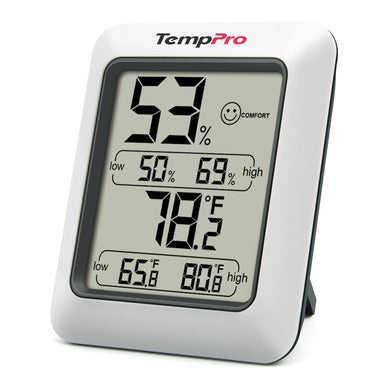
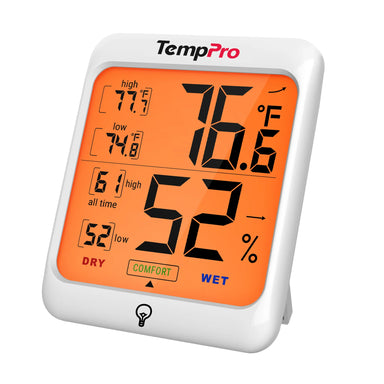
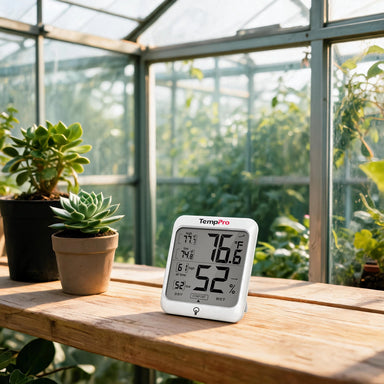
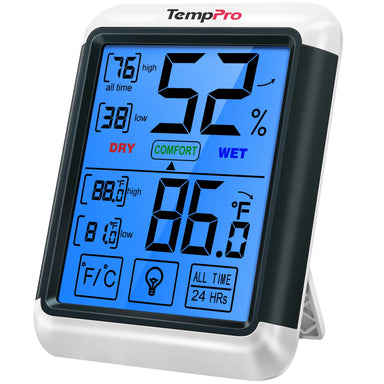
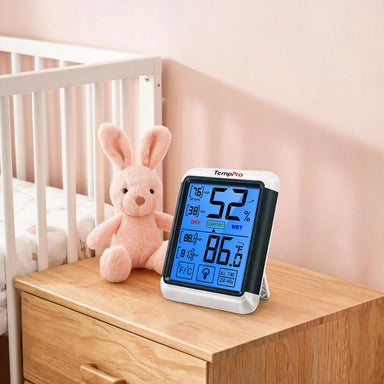
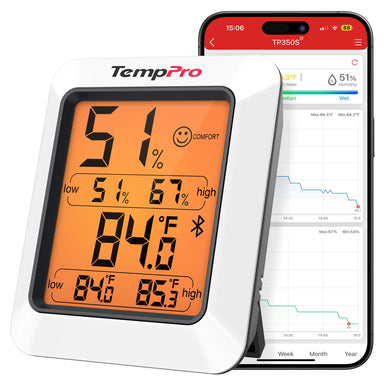
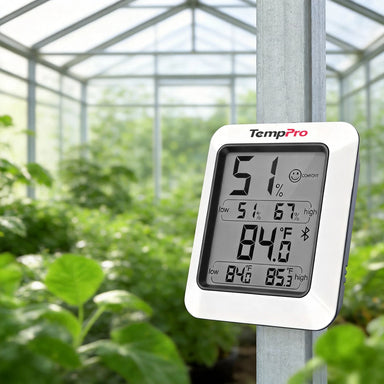
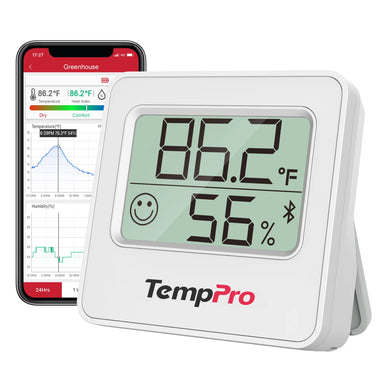
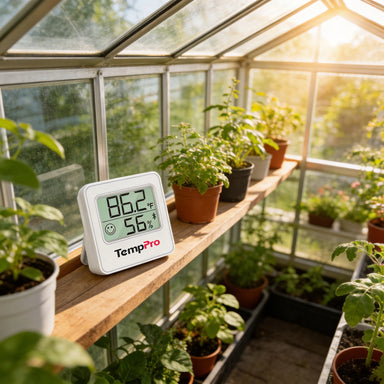
If you want an easy way to monitor the environment around your indoor plants, the TempPro TP150 Greenhouse Thermometer Hygrometer combines temperature and humidity monitoring in one compact device. It can be used for indoor plant areas, grow tents, bedrooms, offices, and other spaces where temperature and humidity matter.
Key Features of the TempPro TP150
- Accurate Temperature & Humidity: Measures temperature with ±1°F accuracy and humidity with ±2% RH accuracy for reliable indoor plant monitoring.
- 10-Second Refresh Rate: Updates temperature and humidity readings every 10 seconds, making it easy to track changing conditions.
- 24-Hour High & Low Records: Stores the highest and lowest temperature and humidity readings from the past 24 hours to help you spot environmental changes.
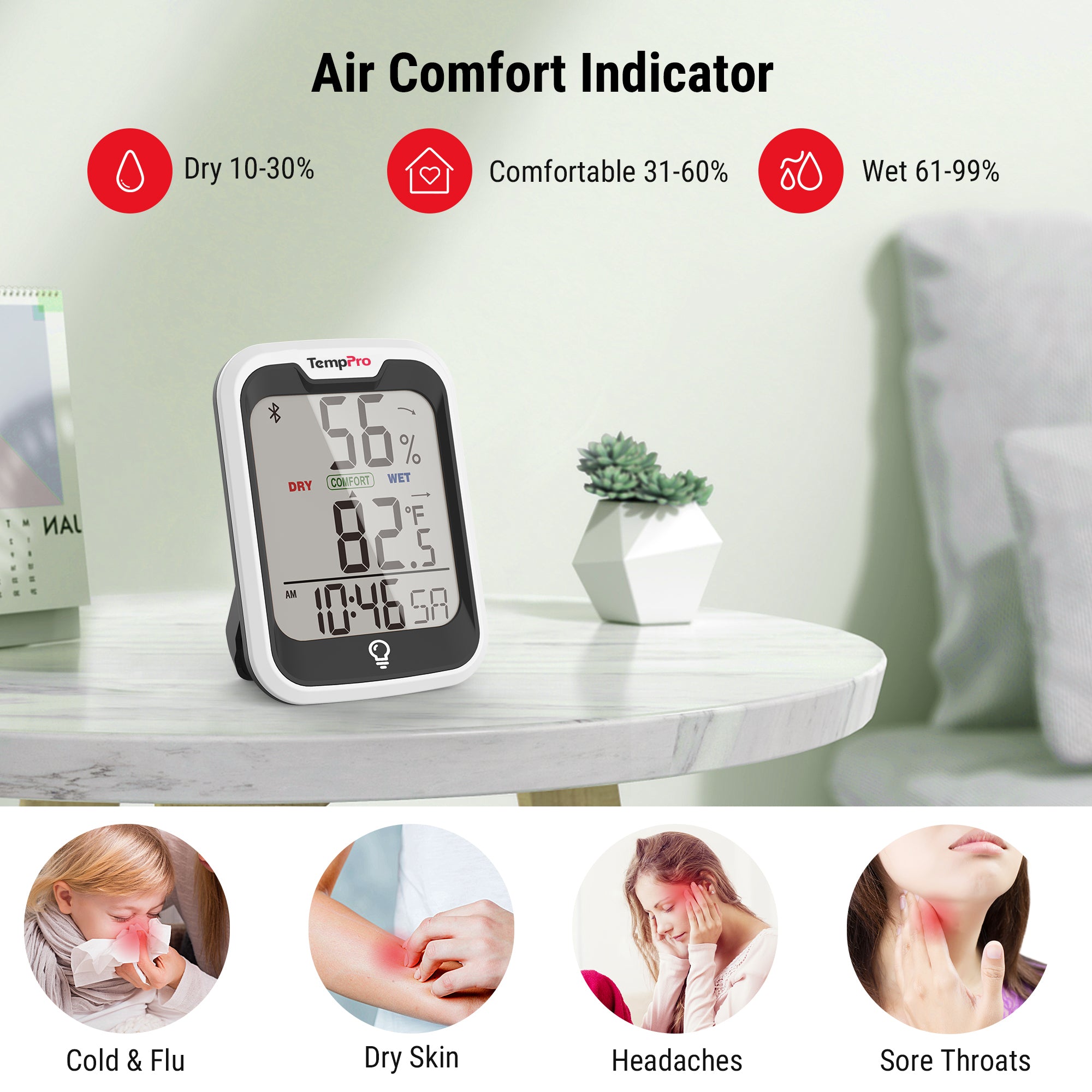
- Dry/Comfort/Wet Indicator: Provides a quick visual reference for indoor conditions, so you can easily see when the air is too dry or humid.
- IPX5 Water Resistant: Designed to handle humid environments and occasional water splashes, making it suitable for greenhouses and plant areas.
- Large, Easy-to-Read Display: Clearly displays temperature and humidity readings, making it easy to check your plants' environment at a glance.
- Flexible Placement: Use the built-in stand on a shelf or table, or attach it to a metal surface with the magnetic back.

How to Use the TempPro TP150 to Improve Your Plant Environment
The TempPro TP150 is most useful when you use its readings to make small, informed adjustments.
Step 1: Place the TempPro TP150 Near Your Plants
Put the TempPro TP150 Greenhouse Thermometer Hygrometer in the same general area as your plants. Avoid placing it directly against a window or directly in front of an AC vent.
Step 2: Monitor for Several Days
Don't make major changes based on a single reading. Watch the temperature and humidity during the morning, afternoon, evening, and overnight.
Step 3: Check the 24-Hour High and Low
Look at the maximum and minimum readings to understand how much your plant environment changes throughout the day.
Step 4: Compare the Readings With Your Plant's Needs
Research the preferred conditions for your specific plant. For example, if you're growing a tropical plant that prefers higher humidity and the TempPro TP150 consistently shows 30% RH, you may want to consider ways to increase humidity.
Step 5: Make One Change at a Time
Try moving the plant, adding a humidifier, adjusting airflow, or changing its location. Then monitor the results. This makes it easier to understand which adjustment actually helped.

Summer Houseplant Care Checklist
Use this simple checklist throughout the summer:
- Check indoor temperature regularly
- Monitor relative humidity
- Keep plants away from direct AC drafts
- Protect sensitive plants from excessive window heat
- Check soil before watering
- Give each plant the right amount of light
- Improve airflow when humidity is high
- Use a humidifier when appropriate
- Avoid unnecessary daily misting
- Check 24-hour temperature and humidity changes
- Adjust care based on the specific plant species
FAQs About Houseplant Temperature and Humidity in Summer
Q1.What temperature is best for houseplants in summer?
Many common houseplants do well with daytime temperatures around 65-80°F, with many foliage plants preferring roughly 70-80°F during the day. However, ideal temperatures vary by species. Avoid extreme heat and sudden temperature changes.
Q2.What humidity is best for indoor plants in summer?
A relative humidity of around 40-60% works well for many common houseplants. Tropical plants may prefer higher humidity, while cacti and succulents generally tolerate or prefer drier conditions.
Q3.Is 30% humidity too low for houseplants?
It depends on the plant. Many common houseplants can tolerate 30% RH for periods of time, but humidity-loving tropical plants may perform better at higher levels. If your plants show signs of stress, measure the humidity before deciding what adjustment to make.
Q4.Is 70% humidity too high for indoor plants?
Not necessarily. Some tropical plants naturally grow in environments with much higher humidity. However, consistently high humidity combined with poor airflow can create problems. The appropriate level depends on the plant species and the overall growing environment.
Q5.Does air conditioning hurt houseplants?
Air conditioning itself does not automatically hurt plants, but plants placed directly in cold or dry airflow may experience stress. Avoid positioning plants directly next to AC vents and monitor the temperature and humidity in the area.
Q6.Should I mist my plants in summer?
Misting may provide only a short-term increase in humidity and usually isn't the most reliable way to maintain a specific humidity level. A hygrometer can help you determine whether humidity is actually low before you decide to mist or use a humidifier.
Q7.How can I measure humidity around my houseplants?
The easiest method is to use a digital hygrometer. Place it near your plants and monitor relative humidity over time. A digital thermometer and hygrometer, such as the TempPro TP150, lets you monitor temperature and humidity at the same time.
Q8.Where should I place a thermometer and hygrometer for plants?
Place it close enough to your plants to reflect their growing environment, but avoid direct sunlight, AC vents, heaters, humidifier outlets, and other sources of artificial temperature or moisture. If you have plants in different rooms, consider monitoring each distinct environment.
Q9.Can a thermometer and hygrometer help me water my plants?
It can provide useful environmental information, but it should not replace checking the soil. Temperature and humidity affect how quickly plants lose water, but watering needs also depend on the plant species, pot size, soil, drainage, light, and other factors.
Final Thoughts
Summer can be one of the best seasons for growing houseplants, but warmer temperatures don't automatically mean better growing conditions. For many common houseplants, a comfortable indoor temperature and 40-60% relative humidity are a useful starting point. Tropical plants may need more humidity, while succulents and cacti generally prefer drier conditions.
By monitoring temperature and humidity, you can identify hot afternoons, unusually dry air, excessive humidity, or large changes between day and night. The TempPro TP150 Greenhouse Thermometer Hygrometer makes this easy by providing frequent temperature and humidity readings, 24-hour high/low records, and a simple visual indicator in a compact design.
Your plants can't tell you when the room is too hot or too dry, but a thermometer and hygrometer can. With the right information and a few simple adjustments, you can create a more comfortable indoor environment and help your houseplants stay healthy throughout the summer.


Comments
Recommended Products