What is a Hygrometer?


 288 Comments


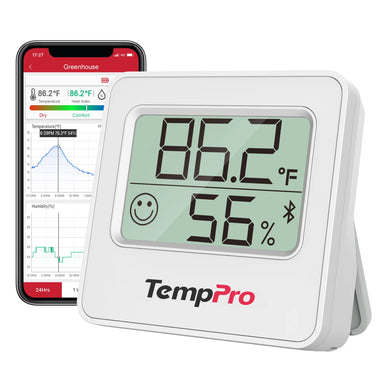
Simply put, a hygrometer is a device that measures the humidity in the air. For example, some hygrometers calculate the current humidity through a combination of the current temperature and other variables. The TempPro TempAir CORE TP50 Digital Indoor Hygrometer Thermometer uses this technique and refines it to a higher degree, allowing it to determine the optimal comfort level of your home.
The first hygrometer was invented by none other than Leonardo da Vinci in 1480. Here at TempPro, we’d like to believe that Leonardo would approve of how far we’ve developed his original concept.
What types of hygrometers are there?
There are two types of devices that can read relative humidity (RH):
Analog Hygrometers: This type of hygrometer is the cruder of the two. These devices use condensation-sensitive components to read the surrounding humidity. They display their findings using a dial-like reading mechanism. But, they also have their downsides.
Although most come already calibrated, some analog hygrometers must be periodically calibrated by hand. Further to that point, many analog hygrometers react poorly to rapid weather changes.
Analog hygrometers can be used to measure the relative humidity of both indoor and outdoor environments; however, they can only do it with an accuracy of 10% RH. Below is an image of an analog hygrometer.

Digital Hygrometers: Compared to analog hygrometers, digital hygrometers have a more accurate and modern operation. These devices use electronic monitors to read moisture levels. They can range from simple indoor humidity readers to durable outdoor systems. Additionally, they can provide additional information such as the high and low humidity levels as well as optimal comfort levels. Best of all, no self-calibration is required, and it has an accuracy of 5% RH!
In our case, TempPro hygrometers have the most accurate sensors for their price range, providing accuracy of 2-3% RH.
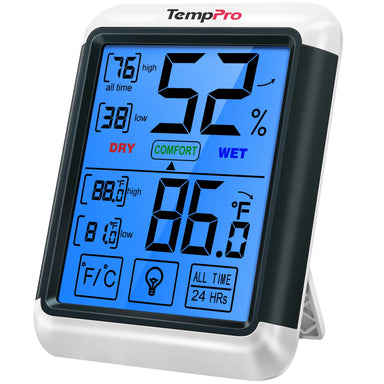
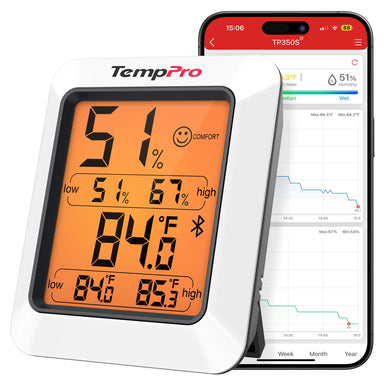
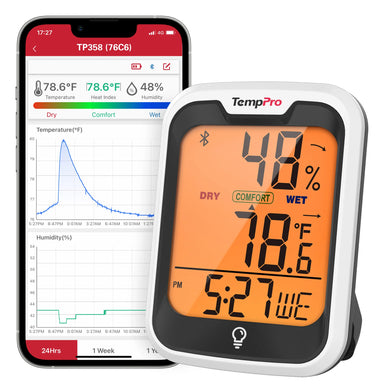
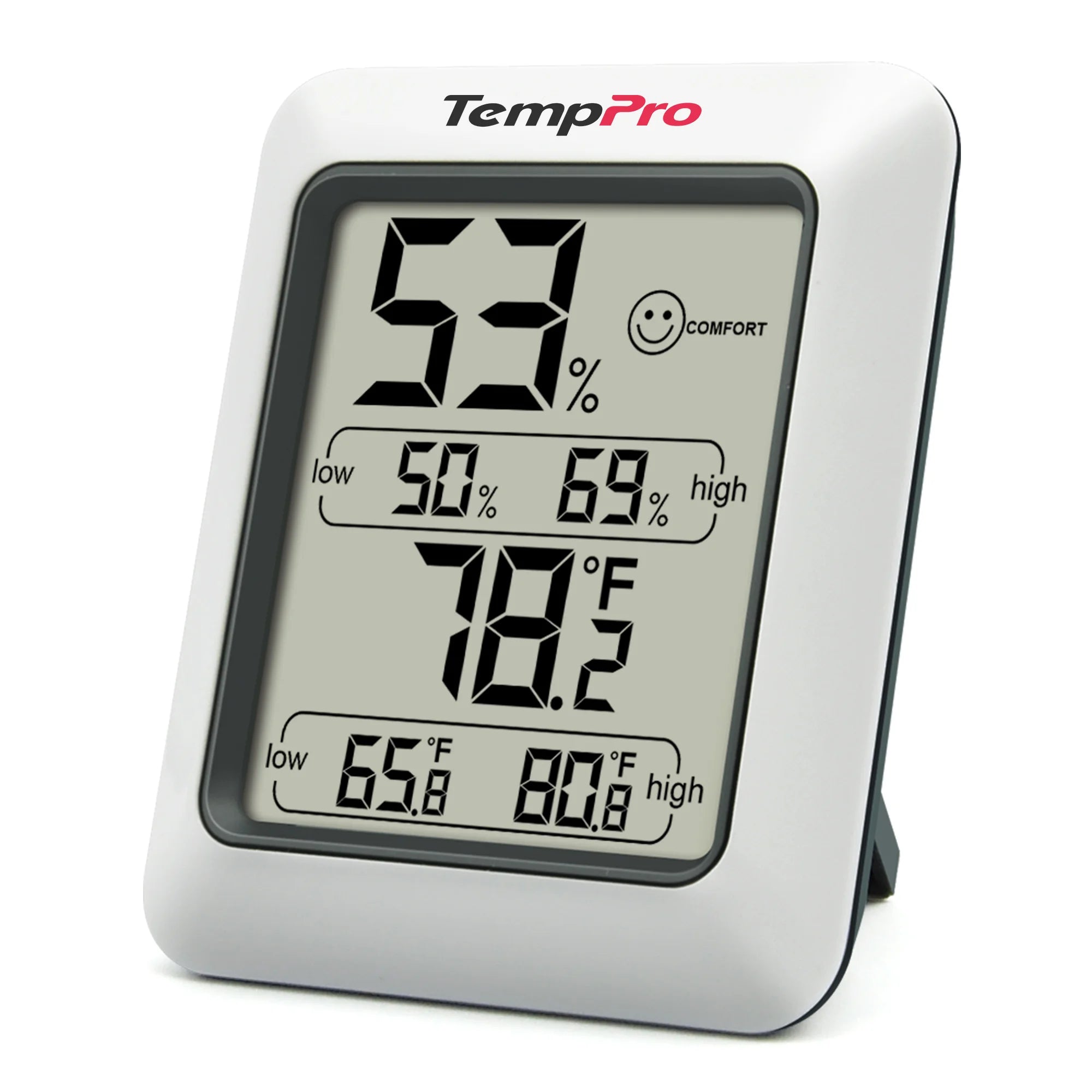
Below is the TempPro TempAir CORE TP50 Digital Indoor Hygrometer Thermometer, a best seller on many online marketplaces. It combines both measurements in one compact device. It is designed for everyday indoor use, helping you quickly understand whether the air around you is too dry, comfortable, or too humid. The TempAir CORE TP50 measures temperature with ±1°F accuracy and humidity with ±2% accuracy from 30% to 80% RH, with readings refreshed every 10 seconds.
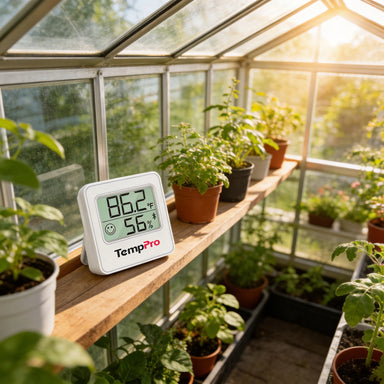
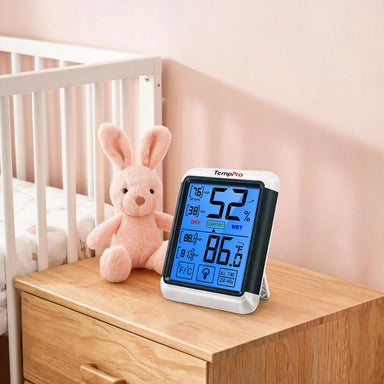
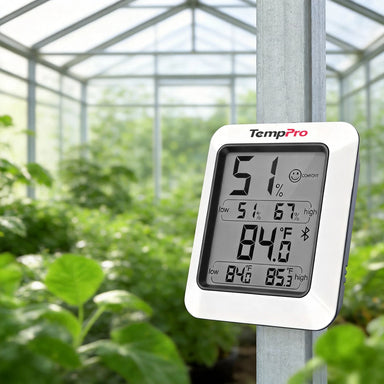
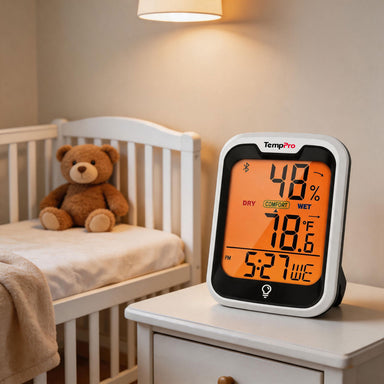
It is a practical choice for homeowners, plant lovers, greenhouse owners, parents, and anyone who wants to keep track of indoor humidity. Place it in a living room, bedroom, nursery, office, or greenhouse to monitor changing conditions throughout the day. It can also be useful for rooms where humidity-sensitive items such as musical instruments or wine are stored.
Key Features of the TempAir CORE TP50
- Accurate Temperature & Humidity Readings: Measures temperature with ±1°F accuracy and humidity with ±2% accuracy from 30% to 80% RH.
- Fast 10-Second Updates: Refreshes temperature and humidity readings every 10 seconds so you can quickly spot changes in your indoor environment.
- High & Low Records: Tracks temperature and humidity highs and lows, making it easier to identify changes over time.
- 3-Level Comfort Indicator: A simple Dry, Comfortable, or Wet indicator lets you understand indoor humidity at a glance.
- Flexible Placement: Use the built-in tabletop stand and magnetic back to place the hygrometer where you need it.
- Wide Measurement Range: Measures temperatures from -58°F to 158°F and humidity from 10% to 99% RH.
For anyone looking for a straightforward indoor thermometer and hygrometer, the TempAir CORE TP50 makes it easy to monitor the conditions in your home without complicated setup or remote monitoring.

Hygrometers: Measuring humidity in your home
Hygrometers are valuable tools for many different reasons and use. If you have a dry cough or dry skin, it may be because the air in your home or room is too dry. To remedy these types of problems, you may need to invest in a humidifier and a hygrometer. Together, this combination can inform you of potential problems and improve the comfort level of your home.
What’s more, these devices can be greatly beneficial for indoor plant care. Whether it be in a greenhouse or regular room, most plants will flourish at a specific humidity. By using the TempPro TempAir CORE TP50, you will be able to accurately monitor your indoor garden and let your plants achieve their potential.
However, too dry is not always the problem. As it were, hygrometers are also handy when determining if an area is too humid. Damp rooms can often cause water damage or the growth of harmful molds and mildew.
By using a TempPro TempAir CORE TP50, you can ensure that the humidity in your hom e is properly balanced. Be implementing this one technique, you can save yourself time and money.
FAQs About Using Hygrometers
What does a hygrometer measure?
A hygrometer measures the amount of moisture in the air, typically expressed as relative humidity (RH) as a percentage. For example, 50% RH means the air contains 50% of the moisture it could hold at that temperature.
How does a hygrometer work?
A hygrometer uses a sensor to detect moisture in the air and converts that measurement into a humidity reading. Digital hygrometers use electronic sensors, while traditional analog models use mechanical or moisture-sensitive components.
What is a good humidity level for a home?
For most homes, indoor relative humidity between 30% and 50% is generally considered comfortable. A hygrometer can help you monitor humidity and determine when you may need a humidifier, dehumidifier, or better ventilation.
Do I need a hygrometer in my home?
A hygrometer can help you identify whether indoor air is too dry or too humid. Monitoring humidity can be especially useful in bedrooms, basements, bathrooms, nurseries, and rooms with houseplants.
What is the difference between a hygrometer and a thermometer?
A thermometer measures temperature, while a hygrometer measures humidity. Many digital devices combine both functions into one thermometer hygrometer, like TempPro TempAir CORE TP50, allowing you to monitor temperature and relative humidity at the same time.
What is the difference between a hygrometer and a humidistat?
A hygrometer measures and displays the humidity level, while a humidistat is designed to control humidity by automatically turning equipment such as a humidifier or dehumidifier on or off when a set humidity level is reached.
Where should I place a hygrometer?
Place a hygrometer in an area that represents the room's typical conditions. Keep it away from direct sunlight, heating or cooling vents, windows, humidifiers, and other sources of localized heat or moisture for more consistent readings.
How accurate are digital hygrometers?
The accuracy of a digital hygrometer depends on the sensor and model. Many consumer digital hygrometers have an accuracy of around ±2% to ±5% RH. When comparing models, check the manufacturer's stated humidity accuracy rather than choosing based on display features alone.
How do I know if my house is too humid or too dry?
A hygrometer provides a more reliable way to determine indoor humidity than simply judging how the air feels. As a general guide, readings below 30% RH may indicate overly dry air, while readings above 60% RH may indicate excessive moisture.
Can a hygrometer help prevent mold?
Yes. A hygrometer can help you monitor indoor humidity and identify conditions that may encourage mold growth. Keeping humidity under control, along with proper ventilation and addressing leaks or condensation, can help reduce the risk of excess moisture and mold.
Read more: Monitoring Temperature and Humidity to Control Mold
Final Thoughts
In conclusion, we can see that having a hygrometer can help with everyday situations. The TP50 allows for accurate temperature and humidity readings. As well, it can serve as a comfort indicator that can help you achieve optimal indoor comfort.
Be smart, safe and prepared for anything! Pick up your TempPro TempAir CORE TP50 today!

Comments

Recommended Products