Trust the Meat Thermometer: Keeping U.S. Barbecues Safe This Labor Day


 288 Comments


As Labor Day weekend approaches, millions of Americans are prepping grills for one of the nation’s favorite traditions—backyard barbecues. Yet data show many home cooks still guess when meat is “done,” a habit that can lead to foodborne illness. This season, food safety experts urge everyone to trust the meat thermometer and make safe internal temperature the new standard for grilling.

Why Thermometers Matter (and Guesswork Doesn’t)
48 million
Estimated Americans who get sick from foodborne illness each year; about 128,000 are hospitalized and 3,000 die.
~23%
U.S. home cooks who report using a meat thermometer regularly—most still rely on color or “clear juices.”
Not reliable
Color, “feel,” and juices can mislead; burgers may brown before they reach a safe 160°F.
The biggest risk at the grill is undercooked ground meats and poultry. Harmful bacteria aren’t visible, and the outside of a steak or burger can char while the inside remains under the safe threshold. A simple thermometer check removes doubt and dramatically reduces risk.
USDA Safe Internal Temperatures for Grill Favorites
- Ground meats (beef, pork, lamb, veal): 160°F
- Poultry (whole, parts, ground): 165°F
- Pork chops/roasts: 145°F + 3-minute rest
- Beef/Lamb/Veal steaks/roasts/chops: 145°F + 3-minute rest
- Fish and shellfish: 145°F
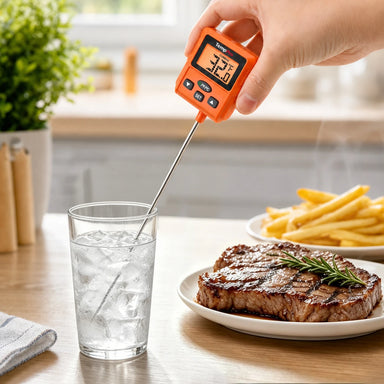
Tip: Insert the probe into the thickest part, avoiding bone and large pockets of fat. For patties, check the center of the burger.
Common Myths That Lead to Undercooking
- “Clear juices mean done.” Not always; juices can run clear before poultry hits 165°F.
- “No pink = safe.” Burgers can look brown at unsafe temperatures; color is not a safety indicator.
- “I can feel doneness with a poke.” Touch tests vary by cut, thickness, and cook; they don’t ensure safety.
- “If it’s charred, it’s cooked.” High heat can burn the exterior while leaving the interior under temperature.
The Public Health Angle
Foodborne pathogens are more than a nuisance; they’re a significant health burden in the U.S. Undercooked chicken is a common source of Salmonella. Undercooked ground beef can harbor E. coli O157:H7, which in severe cases may lead to kidney complications. Campylobacter is another frequent cause of diarrheal illness linked to raw or undercooked poultry. A reliable thermometer—often under $30—provides a powerful, low-cost prevention step for households.
What U.S. Grillers Say They Struggle With
- Knowing when meat is fully cooked without drying it out.
- Fear of serving undercooked chicken or burgers to guests.
- Overcooking “just to be safe,” sacrificing juiciness and flavor.
A thermometer resolves all three: it confirms doneness, prevents undercooking, and lets you pull meat at peak juiciness—every time.
Expert Consensus
Food safety authorities consistently advise using a thermometer at home. The guidance is straightforward: check temperature in the thickest part, verify the USDA target, and rest meats that require it. This isn’t “chef only” gear—it's for every home cook who wants great results and safer meals.
America’s BBQ Favorites (and Their Risks)
Burgers
Grinding distributes surface bacteria throughout the meat. Always cook to 160°F.
Chicken
Leading source of salmonellosis risk. Cook breasts, thighs, and wings to 165°F.
Sausages & Kebabs
Thicker items can char outside and stay cool within. Check multiple spots; confirm the center is at the target temp.
Steaks & Chops
For whole-muscle cuts, target 145°F and rest 3 minutes. If you like a lower finish temp for steakhouse-style, be mindful of risk and quality sourcing.
How to Use a Meat Thermometer Correctly
- Preheat & position. Preheat your grill; set up two zones (direct and indirect) for control.
- Insert properly. Probe the thickest part, avoiding bone/fat; for burgers, check the center. For chicken parts, test the thickest portion of the breast or thigh.
- Watch carryover. Large roasts can rise several degrees off heat; pull accordingly.
- Rest as required. Pork, beef, and lamb roasts/steaks need a 3-minute rest at 145°F.
- Clean the probe. Wash between checks if you reinsert during cooking.
Choosing the Right Thermometer
Not all thermometers are the same. Consider:
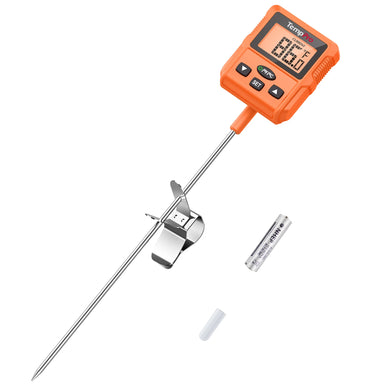
- Speed: Instant-read models provide a reading in 1–3 seconds.
- Accuracy: Look for ±0.5–1.0°F tolerance.
- Readability: Backlit displays help at dusk or at smoky grills.
- Durability: Water resistance and robust probes hold up to backyard use.
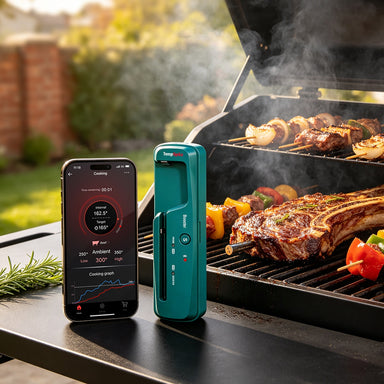
Prefer hands-free monitoring for longer cooks? Wireless probes let you track food and ambient grill temps without lifting the lid.
Smart, Hands-Free Monitoring While You Entertain
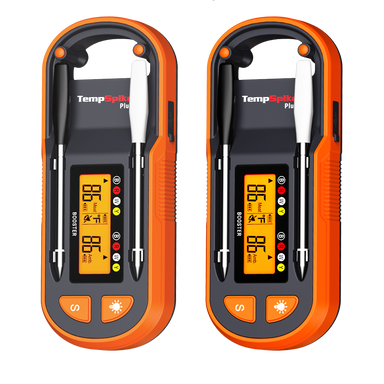
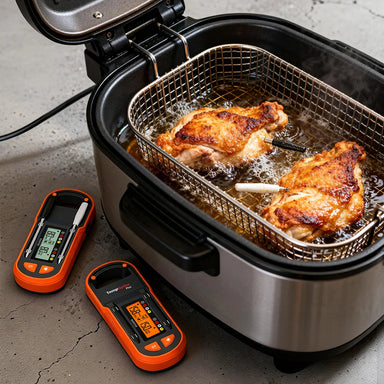
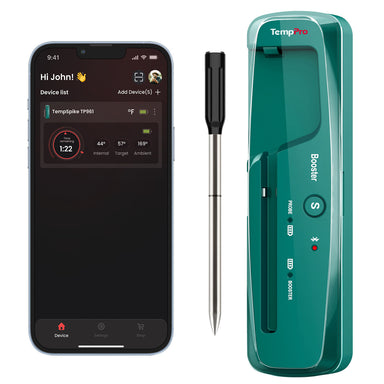
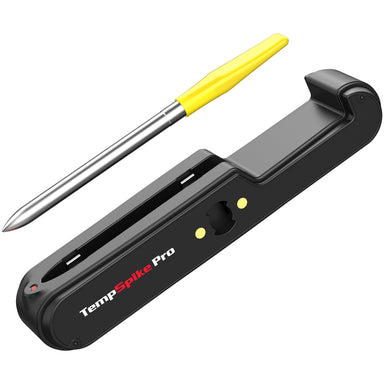
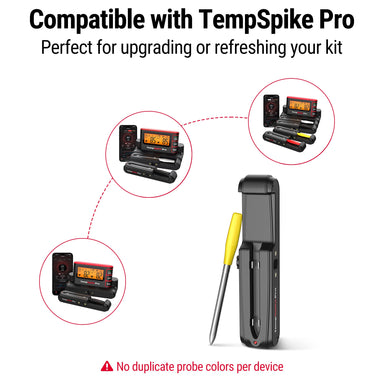
Hosting and grilling at the same time is easier with Bluetooth thermometers. The TempSpike Series gives you cable-free probes and app-based alerts when your target temperature is reached—so you can mingle while your steak coasts to perfection.
Essential Food Safety Habits for Cookouts
- Separate: Use different plates/utensils for raw and cooked foods.
- Marinate smart: Boil any marinade before reusing as a sauce.
- Thaw safely: Defrost on the bottom shelf of the fridge, not the counter.
- Avoid temperature danger zone: Refrigerate leftovers within 2 hours (1 hour if above 90°F).
- Clean: Wash hands, boards, and tools that contact raw meat.
Make the Thermometer the Star of Your Holiday Cookout
This Labor Day—and every grilling day—let the thermometer be your guide. It’s the simplest step to protect guests from foodborne illness while serving juicier, more consistent results. Whether you reach for an ultra-fast instant-read or a wireless probe like the TempSpike Series, temperature confidence turns good food into great memories.
About TempPro
Since 2014, TempPro has focused exclusively on digital thermometry—innovating high-quality, affordable tools for kitchens and grills. After years manufacturing behind the scenes, TempPro moved into direct retail to offer consumers pro-level performance at competitive prices. Guided by an in-house R&D team and continuous customer feedback, TempPro builds products with better quality and more features than competitors, backed by responsive support and multi-year warranties. The goal is simple: dependable tools that become your most trusted cooking assistant.


Comments
You May Also Like


Recommended Products