New to Smoking? Avoid These 5 Mistakes That Can Ruin Dinner


Smoking meat is fun until you start spending money on it. When you're new to smoking, a $20 piece of meat can feel like a lot to risk on your first cook. The same goes for a $30 rack of ribs or a $35 whole chicken. Suddenly, every small change feels catastrophic.
The temperature drops 10°F, so you adjust the vents. The meat stops rising in temperature, and you start wondering if your smoker is broken. Twenty minutes pass, and you decide you need to figure out what's going on, so you open the lid. Before you know it, you're working harder than your smoker.
The good news is that smoking meat isn't nearly as difficult as it looks. In fact, most of the common disasters that happen to new smokers aren't caused by some secret smoking technique you've missed. More often, people get impatient, constantly adjust the cooking environment, rely too heavily on a recipe's estimated cooking time, or simply don't know what's happening inside the meat.
Table of Contents
5 Mistakes Beginner Might Take when Smoking
Understand these common mistakes, and your first smoked dinner has a much better chance of making it to the table unscathed.
Mistake #1: Using Your New Smoker Like a Grill
You can grill hamburgers, steaks etc., in your backyard with the same tools that you would use to BBQ. There are similarities, but they reward very different behaviors. With grills, you want to have high temps for quick cooking times. When you BBQ, you want low temps for extended amounts of time. Therefore constant temperature increases because the meat is taking longer to cook than you expect will dramatically alter the nature of the cook.
Probably the biggest adjustment new BBQ owners will make is stopping their urge to rush dinner. Let your BBQ machine hit whatever temp you want, let it settle, then let it do its job. You do not have to react to every single slight temp change. A BBQ machine does not remain locked in at an exact number forever, learning what normal fluctuations are for your specific machine is part of learning to comfortably operate it.

Mistake #2: Checking Your Smoker All the Time
This is probably the hardest habit to break since smoking meat leaves you with virtually nothing to do except stare at the BBQ machine waiting for it to finish. Finally after some time curiosity gets the best of you. You check the meat, see that it is fine, shut the lid and wait another 15 min. Before you know it you are checking again. Repeatedly opening your BBQ machine alters the cooking environment that you were trying to create and who knows if you can accurately determine the state of the meat on the inside.
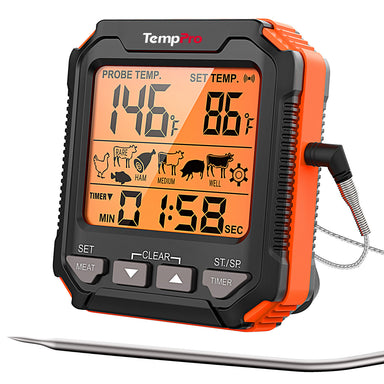
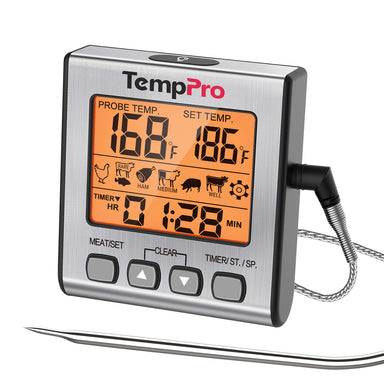
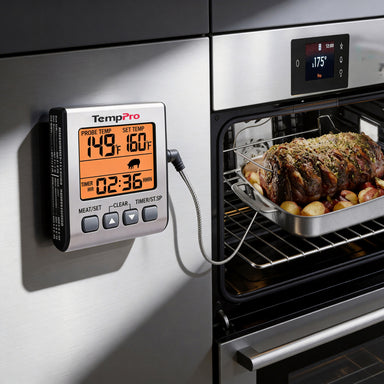
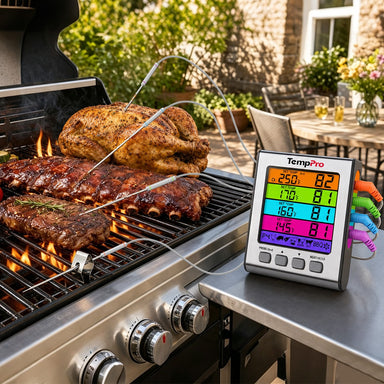
This is where the TempPro TempTrack PLUS TP17 Leave-In Meat Thermometer becomes especially helpful for anyone wanting to begin smoking meats. It enables you to leave the probes in the meat during cooking. The probes is connected to a 40″ SS mesh cable that connects to the thermometer base that sits outside the smoker giving you a visual of what is occurring internally within the meat without continually opening the lid.
Also, the TempPro TempTrack PLUS TP17 provides you multiple ways to locate the display in relation to your smoker. It has a magnet back, hanging hole and a tabletop stand. So now when curiosity hits 15 min later you can check the food thermometer instead of opening the lid. Sometimes the greatest improvement you can make to your BBQ skills is to just leave the food alone.

Mistake #3: Treating the Recipe Time as a Deadline
BBQ recipes include estimated cooking times because we know that meat doesn’t read recipes. So if a recipe states that a pork shoulder takes 8 hrs that doesn’t mean your pork shoulder will be done when 8 hrs elapses. Multiple factors can affect how a cook develops including: cut size/thickness, initial temperature of meat, smoker temperature and characteristics of equipment. Time is a great guide for planning dinner, but it should never be the only source of information for when to pull your meat.
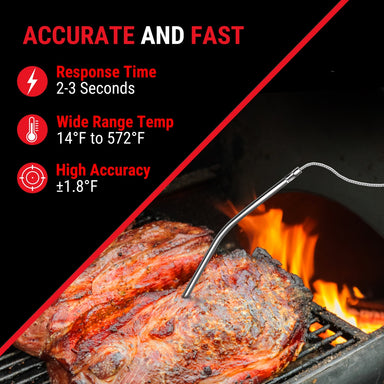
As mentioned previously, the TempPro TempTrack PLUS TP17 allows you to monitor temps from 14°F to 572°F with ±1.8°F/±1°C accuracy. Perhaps more beneficially for a novice, it includes programmable temperature alerts. Instead of placing a kitchen timer for 8 hrs and hoping that dinner will magically appear, you can program the TempPro TempTrack PLUS TP17 to alert you once your meat reaches a predetermined temperature. Additionally, the unit contains a built-in kitchen timer that will run up to 99 hours & 59 min so you can continue tracking elapsed time while relying on internal temperature as a gauge of how your meat is coming along.
Mistake #4: Panicking When Internal Temperature Stalls
One or two things may happen on your first long smoke. You may have been enjoying an otherwise smooth cook for several hours where the internal temperature continued to climb and everything seemed under control. Then, seemingly out of nowhere, the internal temperature seems to quit moving upward altogether. You wait longer, almost no temperature movement occurs. At this point many newbies assume something has gone horribly wrong and attempt to increase temp or continuously open/close lid.
Sometimes what’s happening to your large cuts, i.e., pork shoulder or brisket, is known as the stall. As large pieces of meat cook, moisture vaporizing off their surfaces creates a cooling effect which inhibits further internal temperature gains. It can seem like the meat has stopped cooking altogether although the process continues unabated.
Using a leave-in thermometer helps alleviate fears concerning what’s going on inside the meat regardless of whether or not you choose to visually inspect the outside. Rather than immediately reacting to a slower-than-expected rate of internal temperature gain, just observe what happens over time. Long BBQ cooks are filled with moments where very little seems to be happening externally. This is precisely why constantly peering through lids doesn’t help either. At times your only responsibility is maintaining a steady environment and waiting.

Mistake #5: Assuming "Done" Means Tender
There are two important aspects regarding larger cuts of BBQ meats: tenderness and food safety. While they may overlap occasionally, they are rarely synonymous terms. A piece of meat may reach an internal temperature sufficient for it to be considered safe for consumption yet lack substantial tenderness, particularly from larger cuts containing connective tissue which breaks down slowly over time, hence why it takes so long to properly BBQ these types of meats.
The TempPro TempTrack PLUS TP17 features USDA preset temperature settings, providing new smokers with additional references for comparison purposes, however, these settings may be reset depending upon what type of product(s) you are BBQing.
When cooking larger cuts whose primary purpose is achieving tenderness, understanding internal temperatures provides merely one part of a broader spectrum of knowledge needed regarding the type of meat being cooked and/or ultimate texture sought.
This represents an important transition for new smoker owners, early on you likely desire one number which explains everything. Once you develop experience, you’ll begin using internal temperature as one component of a complete picture which includes type/cut of meat, cooking methods and ultimate texture produced.
FAQs about Smoking for Beginners
What should a beginner smoke first?
Beginner-friendly choices generally include cuts that tolerate longer cooking times and give you an opportunity to become familiar with controlling your smoker. Pork shoulder is a popular starting point because the longer cook provides plenty of time to learn how your equipment behaves.
How often should you open a smoker?
Avoid unnecessarily opening the smoker simply to look at the food. Opening the lid affects the cooking environment, while a leave-in thermometer allows you to monitor internal temperature without repeatedly checking the meat manually.
Should you smoke meat based on time or internal temperature?
Cooking time is useful for planning, but internal temperature gives you more information about what's happening inside the meat. With large BBQ cuts, tenderness and the characteristics of the particular cut should also be considered rather than relying solely on elapsed cooking time.
What is the stall when smoking meat?
The stall is a period during a long cook when the meat's internal temperature may rise very slowly. Evaporative cooling caused by moisture leaving the surface can contribute to this effect, which is why beginners shouldn't automatically assume their smoker has stopped working.
Why is the TempPro TempTrack PLUS TP17 useful for smoking?
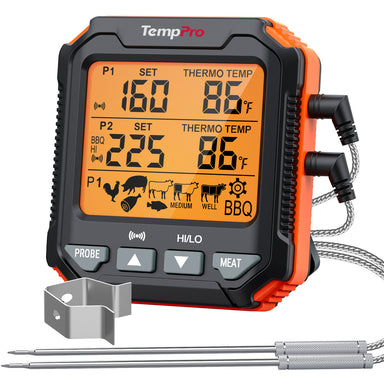
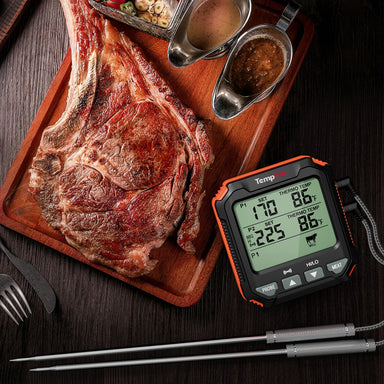
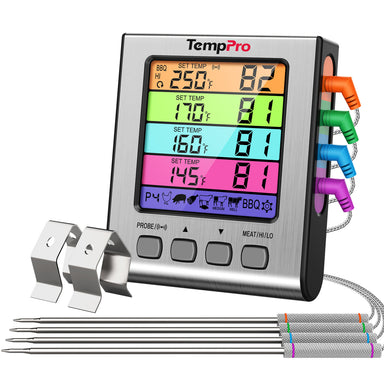
The TempPro TempTrack PLUS TP17 uses two leave-in stainless-steel probes connected by a long mesh cable to a display that remains outside the smoker. Programmable temperature alerts, USDA presets and a timer of up to 99 hours and 59 minutes make it particularly useful for long smoking sessions.
Can the TempPro TempTrack PLUS TP17 probe stay inside the smoker?
Yes. The TempPro TempTrack PLUS TP17 is designed as a leave-in meat thermometer. Its probe can withstand ambient temperatures up to 572°F, while the thermometer base remains outside the smoker.
Final Thoughts
Your first smoked brisket probably won't win any contests. Your first smoked pork shoulder may not finish when the recipe says it will. You may not get the smoke just right or maintain perfectly consistent temperatures. And you’ll probably open the lid more times than you should. None of that matters. What matters is learning how your smoker behaves and building enough confidence to stop reacting to every little temperature fluctuation.
Stick to the basics. Set your target temperature and give your smoker time to settle in. Be patient, even when the cook takes longer than expected. Avoid opening the lid too often, treat recipe times as rough estimates, and don't panic when a large cut of meat hits the "stall." Most importantly, remember that cooking meat to a safe temperature and getting it perfectly tender don't always happen at the same time.
Finally, give yourself a reliable way to monitor what's happening inside the meat. The TempPro TempTrack PLUS TP17 Leave-in Meat Thermometer is ideal for first-time smokers because it's easy to use. Simply place your meat in the smoker, insert the probe, close the lid, and let dinner cook while you monitor the internal temperature.


Comments
Recommended Products